

Ergonomic assembly is not only about comfort; it directly affects torque consistency, defect rates, and audit outcomes. In manual and semi-automatic fastening, wrist angle, grip force, reach distance, and reaction torque all change how an operator seats a fastener and how stable the tool is at shutoff. Consistent torque audits matter because they verify that the process continues to produce joints within specification after tool wear, bit wear, operator changes, and line adjustments. Poor torque verification increases the risk of under-torque (joint separation, vibration loosening, leakage) and over-torque (thread strip, head shear, clamp overload, distortion). Engineers and quality teams must decide how to control reaction forces and part presentation while maintaining traceable torque measurement that holds up in customer and regulatory audits.
Ergonomics as a torque control variable
Most fastening specs assume the tool can reach the joint repeatably and react torque predictably. In reality, ergonomic strain introduces variability:
- Tool alignment changes with reach and wrist deviation, increasing cam-out and inconsistent seating.
- Reaction torque drives micro-movement at shutoff, especially on higher-torque joints, affecting repeatability.
- Cycle fatigue increases over a shift; operators compensate with different grip and trigger technique.
- Regrips and repositioning add time and increase the odds of missed fasteners or cross-threading.
Torque arms and screw feeders address these variables from different angles: torque arms control reaction and tool posture, while screw feeders control fastener presentation and operator motion.
Torque arms for reaction control and repeatability
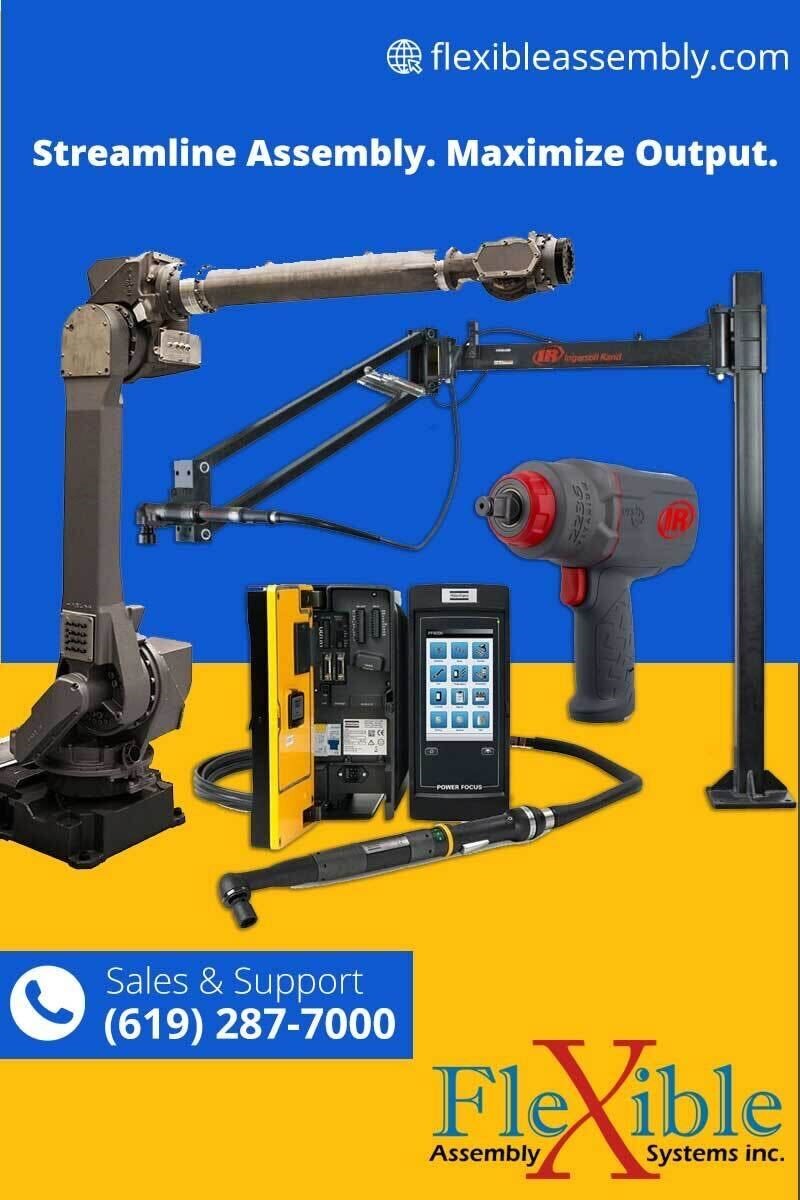
A torque arm (tool balancer/armature with a reaction mechanism) absorbs the reaction torque from a nutrunner or torque screwdriver so the operator does not. For joints above light hand-torque levels, this is often the difference between a controlled shutoff and a “wobble” at final torque.
When a torque arm is a good fit?
Torque arms are typically justified when you see one or more of the following:
- Torque levels that create wrist/forearm strain, especially with frequent cycles.
- Variable shutoff behavior caused by operator bracing or inconsistent body position.
- Access constraints that force awkward tool angles.
- Quality findings related to inconsistent seating, damaged bits, or repeat rework at final torque.
Setup considerations that affect quality
Torque arms improve ergonomics only if configured correctly:
- Reaction point geometry: The reaction shoe/pad must contact a stable surface without slipping. Poor reaction geometry can create side loads that push the bit off-axis.
- Tool center-of-gravity support: Balance the tool so the operator is guiding, not holding weight. This reduces wrist deviation and improves bit engagement.
- Reach envelope: Ensure the arm’s travel matches the station layout so operators don’t “fight” the arm, which can reintroduce variability.
- Maintenance: Worn pivots or loose joints add compliance. That compliance can show up as inconsistent rundown feel and operator compensation.
Limitations are real. Torque arms do not correct for wrong bit selection, damaged threads, or an unstable joint interface. They also require station space and disciplined setup control after line changes.
Screw feeders for consistent presentation and cycle stability
Screw feeders (blow-feed, step feeders, or bowl-fed systems) reduce handling time and variability by delivering one fastener at a predictable orientation. The ergonomic impact is immediate: less reaching into bins, fewer finger pinch actions, and fewer “search” motions.
Quality and productivity effects that matter in audits
Screw feeders can reduce common defects tied to manual pick-and-place:
- Cross-threading and misstarts from poor initial alignment.
- Wrong fastener selection when mixed bins or similar fasteners are present.
- FOD risk from dropped screws and recovery activities.
- Missed fasteners when the operator is interrupted during retrieval.
From a process-control standpoint, stable presentation also improves fastening traceability. When paired with a controller-based tool, you can correlate each rundown to a discrete fastener delivery event and station cycle.
Limitations include feed reliability with oily screws, coated threads, or delicate heads. Feed path wear and nozzle condition can change delivery timing and seating consistency, so preventive checks are part of the control plan.
Torque verification in production and audits
Ergonomic hardware does not replace torque measurement. You still need a verification method that matches the risk and the tooling type.
Torque testers vs. torque screwdrivers
- Torque testers (bench or portable) are used to verify the output of powered nutrunners and manual tools, and to confirm transducer performance. They support higher accuracy, better repeatability, and direct data capture. Use them for scheduled verification, after maintenance, after bit or clutch work, and when audit findings require objective evidence.
- Torque screwdrivers (adjustable or preset, manual or electronic) are production tools; some electronic models can record torque and angle per event. For audit purposes, a torque screwdriver alone is not a tester unless it is specifically rated and calibrated for measurement and used with an appropriate joint simulator.
Operator influence and joint simulation
Verification is only as good as the test method. Joint rate (soft vs. hard), adapter stack-up, and operator technique can shift readings. Manage this by:
- Using the same joint simulator type for trend comparisons.
- Controlling adapter length and reaction method to reduce bending moments.
- Standardizing operator technique for manual verification runs.
Calibration, traceability, and documentation
Most regulated environments expect:
- Defined calibration intervals based on usage and risk (often 6–12 months, adjusted by history).
- Traceable calibration to recognized standards, with as-found/as-left results.
- Audit records that tie tool ID, station, date, verifier, equipment ID, and results to a lot, shift, or build record.
- Data capture where feasible (electronic testers, controller exports), plus documented actions when results drift toward limits.
Verification workflow for ergonomic fastening stations
A practical approach that aligns ergonomics with torque control:
- Daily/shift checks: Quick functional checks (bit condition, feeder delivery, arm reaction contact, obvious air/leak issues).
- Scheduled torque verification: Tester-based checks at defined intervals; include multiple samples and document conditions.
- Event-based checks: After tool rebuild, feeder maintenance, arm adjustment, or station relocation.
- Trend review: Look for drift, increased scatter, or rising rework correlated with arm wear, feeder jams, or operator rotation.
- Corrective actions: Document adjustments, retraining, component replacement, and re-verification results.
Why Choose Flexible Assembly Systems?
Flexible Assembly Systems supports ergonomic fastening setups where torque verification and documentation requirements are non-negotiable. That includes matching torque arms to real reaction geometry constraints, selecting screw feeders that handle specific fastener families and surface conditions, and aligning tooling choices with calibration and traceability expectations. Application support focuses on station layout impacts, joint-rate effects on verification, and practical audit documentation so engineering and quality teams can defend the process during internal reviews and customer audits.
Conclusion
Torque arms and screw feeders reduce ergonomic strain while removing common sources of torque variability: uncontrolled reaction, inconsistent tool posture, and inconsistent fastener presentation. They work best when paired with a verification plan that uses torque testers appropriately, controls operator influence, and maintains calibration traceability. When ergonomics and torque auditing are treated as one system, you get more stable fastening results and fewer surprises during audits.
