

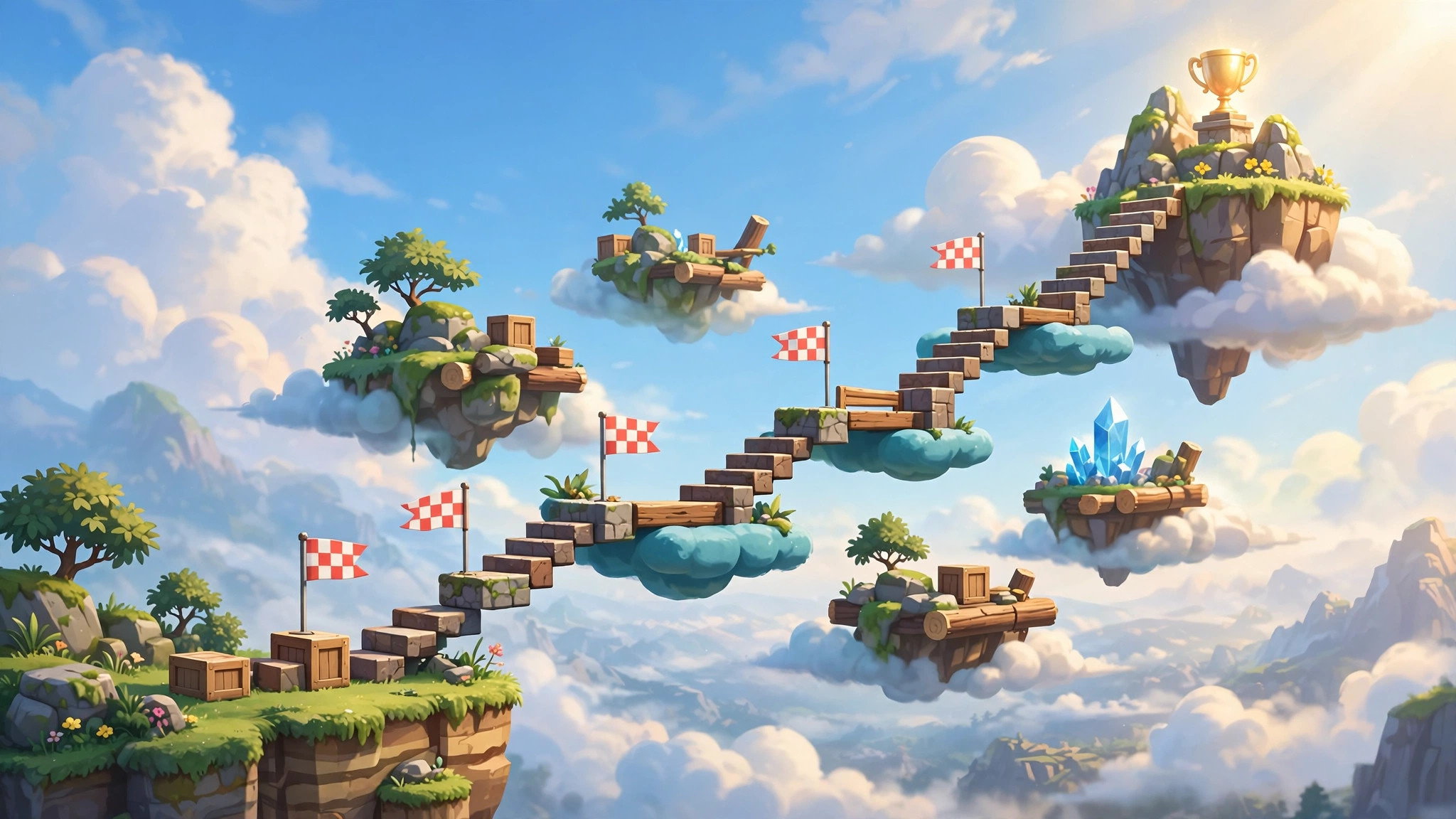
An obby — short for obstacle course — is pure jumping joy: a staircase of platforms between the player and the sky. A Gimkit obby brings that joy into Creative’s platformer style, where every jump is fueled by answering questions. Building a gimkit obby that students love is less about hard jumps and more about fair ones — and this guide shows you how to find that line.
We will set up the platformer course, space jumps honestly, place checkpoints that forgive, add hazards with restraint, and playtest like a designer. New to the style choice? Our platformer vs top-down comparison explains why obbies belong in platformer — and our Creative beginner’s guide covers the editor if this is your first build.
make an obby in gimkit
To make an obby in gimkit, follow this build order:
Step 1 — Create a platformer map. Obbies need gravity and jumping, so choose the Platformer style at creation. (It cannot be changed later — the style is permanent for the map.)
Step 2 — Build the spine. Sketch a route: a series of platforms rising left-to-right or zig-zagging upward. Build it in plain terrain first — a staircase of blocks and ledges — before any decoration. The route should be visible: at any point, the player should see the next platform.
Step 3 — Set the start and the summit. A Spawn Point at the bottom; the goal — a finish area with a Zone to register winners — at the top. The summit deserves ceremony: the best view, the best props, maybe a teleporter back down so winners can lap and encourage climbers.
Step 4 — Tune every jump. Jump onto each platform yourself. The rule: a jump you clear “just barely” in testing will fail half your class. Give every gap a margin — when in doubt, one tile closer or one tile lower.
Step 5 — Add checkpoints. Break the course into stages. At each stage boundary, give falling players a soft landing: a floor area with a Teleporter back up to the last checkpoint, so a fall costs seconds, not the whole run.
Step 6 — Fuel the climb. Scatter Questioners on wider platforms. Jumping burns energy; a starved climber mid-course with no question in reach is a soft-lock, and soft-locks are obby poison.
Step 7 — Decorate last. Theme the ascent — a mountain, a tower, a sky-island chain. Props go on platform edges and backdrops, never where feet land.
gimkit parkour map
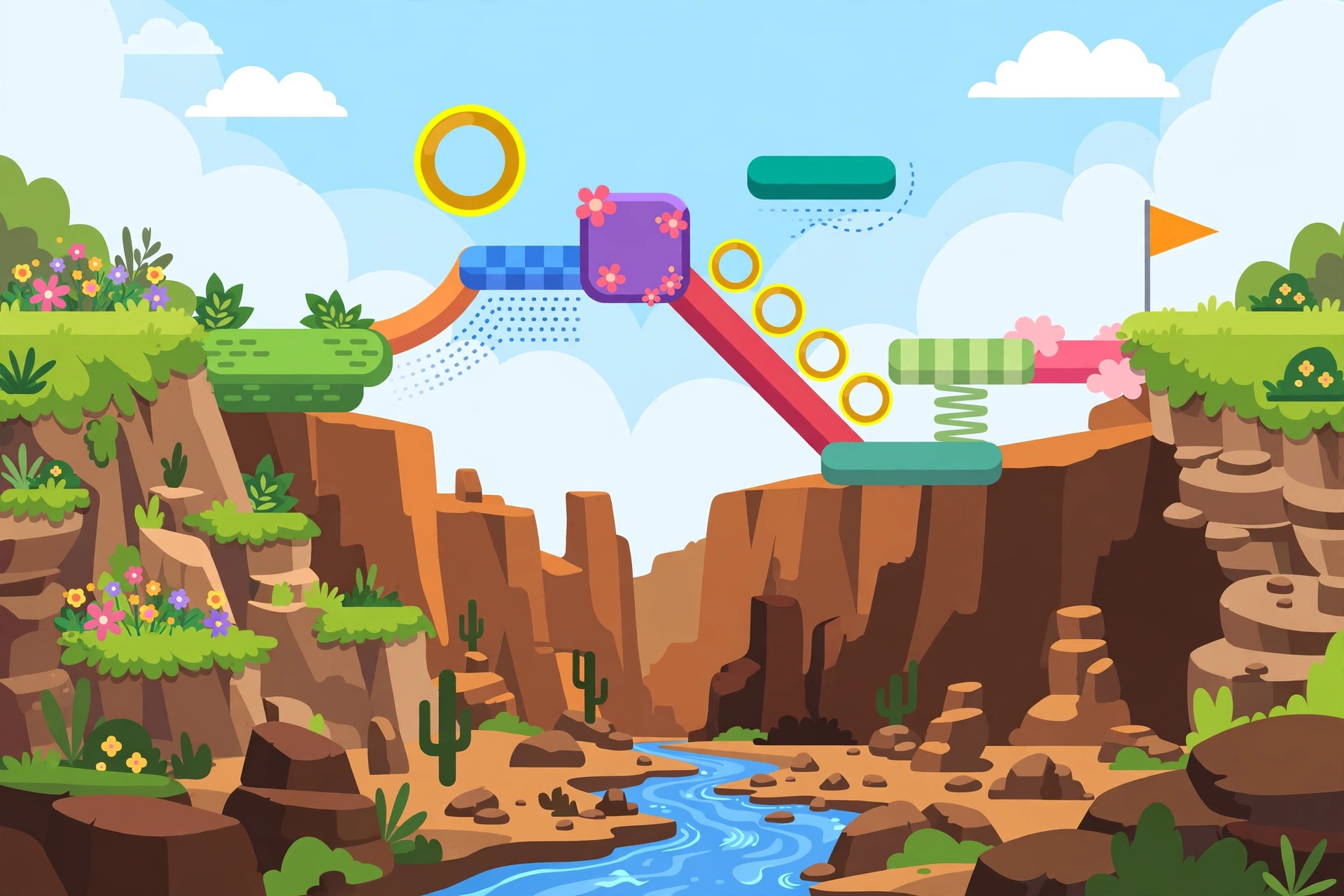
A polished gimkit parkour map layers challenge types, not just challenge amount. Variety is what keeps a course replayable:
- Staircase jumps — steady, rhythmic, confidence-building. Open with these.
- Gap jumps — flat leaps across space; the core skill, tuned by distance.
- Step-up chains — rising single blocks demanding momentum and timing.
- Precision landings — small target platforms late in the course, where falling costs the most and glory is greatest.
- The breather platform — a wide, safe ledge with a Questioner, placed after every hard sequence. Breathers are pacing, and pacing is kindness.
Hazards deserve their own paragraph of restraint. Sentries whose range covers a jump arc, lava-styled terrain (visual only), narrow beams — each raises blood pressure. One hazard type per stage, introduced gently, is plenty. An obby that kills players constantly is not hard; it is broken. The community’s favorite reference is the official Don’t Look Down mode — our guide to the existing Don’t Look Down post shows how the pros pace six summits of climbing, and a custom obby is your chance to design a seventh.
Finally, think about failure cost. Great obbies make falling annoying, not devastating: checkpoint floors, quick teleport-backs, visible progress (“you are past stage 3”). A student who falls at 80% and restarts at 0% closes the tab. A student who falls to a checkpoint floor at 70% jumps again immediately.
Difficulty: The Three-Try Rule
Playtest with this standard: every sequence should be clearable within three tries by the builder. Your students are, on average, less practiced than you. A course tuned to your three-try limit lands at their “hard but doable” sweet spot.
Adjust in this order when a section is too hard:
- Bring the landing one tile closer.
- Lower the landing by one tile.
- Widen the landing platform.
- Only then consider removing the hazard guarding it.
The Gimkit Help Center documents the platformer editor controls; difficulty, though, is not a setting — it is the sum of these small mercies, and only playtesting reveals it.
Building Your First Three Stages
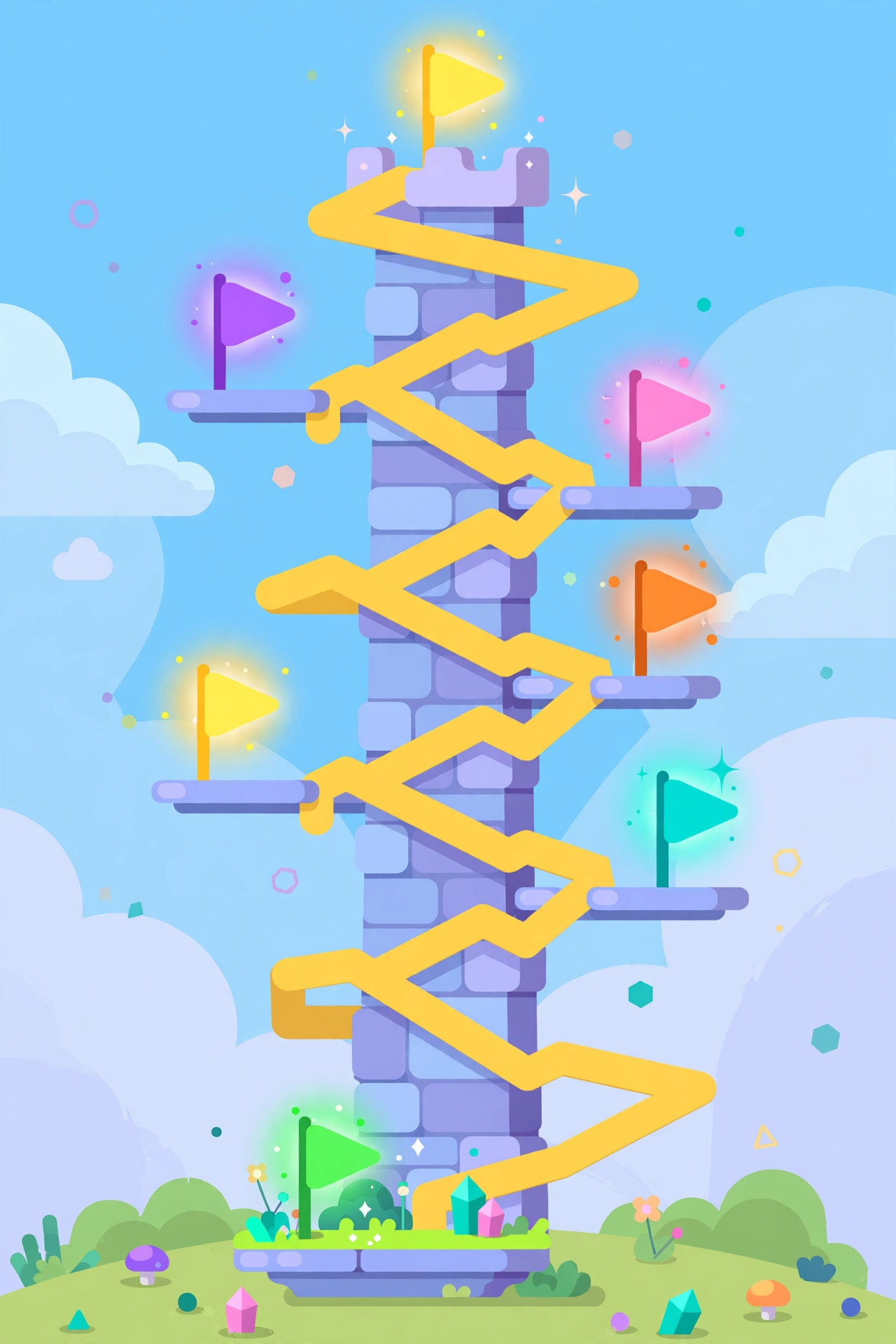
Concrete beats abstract, so here is a proven opening trio for a first obby:
Stage 1 — The Staircase (confidence). Wide blocks rising steadily, gaps of one or two tiles, a generous floor below. Its job is psychological: every single student reaches the first checkpoint. An obby that filters players in stage one has no audience left for stage two.
Stage 2 — The Zigzag (skill). Platforms alternate sides, forcing direction changes mid-climb. Add the first real fall risk (no floor directly below, just the stage’s checkpoint floor) and the first breather platform with a questioner at its end. Players should leave stage two feeling capable, not lucky.
Stage 3 — The Postcard (personality). Your signature sequence: the themed one. A tower window run, a cloud hop chain, a climb up the giant tree’s branches — whatever your theme promises, this is where it pays off. End it at a false summit: a gorgeous rest platform that reveals the true peak above. That reveal — “there’s MORE?” — is the moment students decide your obby is a real game.
From stage three onward, alternate skill types (precision, momentum, height) and insert a breather after each. The rhythm of strain and rest is what makes a ten-minute climb feel like an adventure instead of an exam.
Theming the Climb
An obby’s theme is not decoration sprinkled on mechanics — it is the reason the mechanics make sense.
The mountain wants switchbacks, thinning “air” (sparser props as you rise), and a summit that feels earned: the best view in the map, the trophy, the weather vane. Terrain climbs from grass through rock to snow as altitude increases; the palette is the progress bar.
The tower wants interiors: floor-by-floor rooms connected by jump shafts, each floor a tiny personality (the library floor, the clock floor). Windows in the walls sell height better than any measurement.
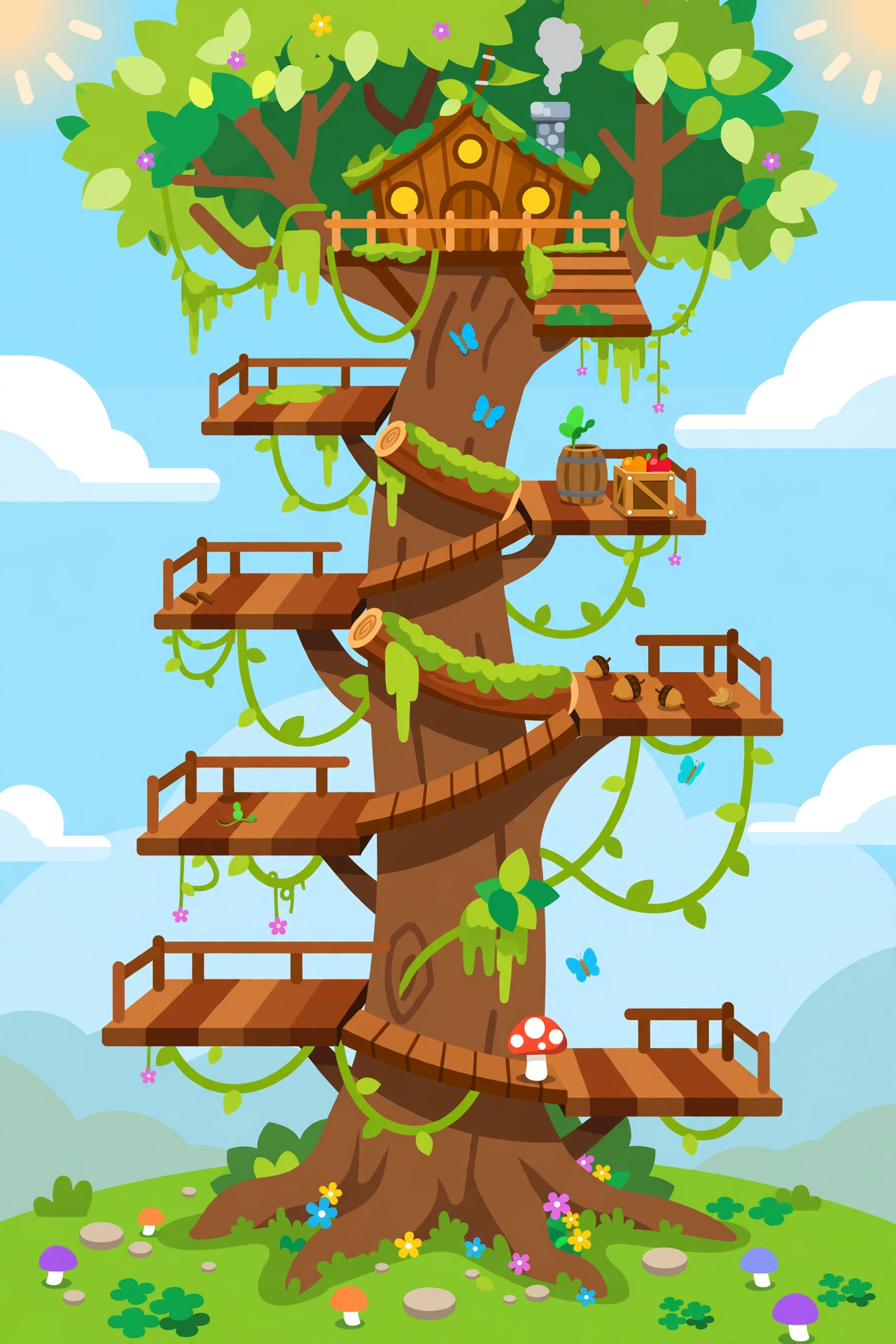
The sky islands want space between: floating platforms over open air, bridges as rewards, clouds as breather platforms. Falling here should land you on a lower island, not a void — islands below islands, all the way down to a forgiving sea of start-line.
Whichever theme you choose, let the summit break the pattern: the only gold, the only flowers, the only snow — something reserved for the top. Players should be able to describe the summit to a friend in one sentence. If they can, your theme worked.
Keeping an Obby Fresh: Weekly Variants
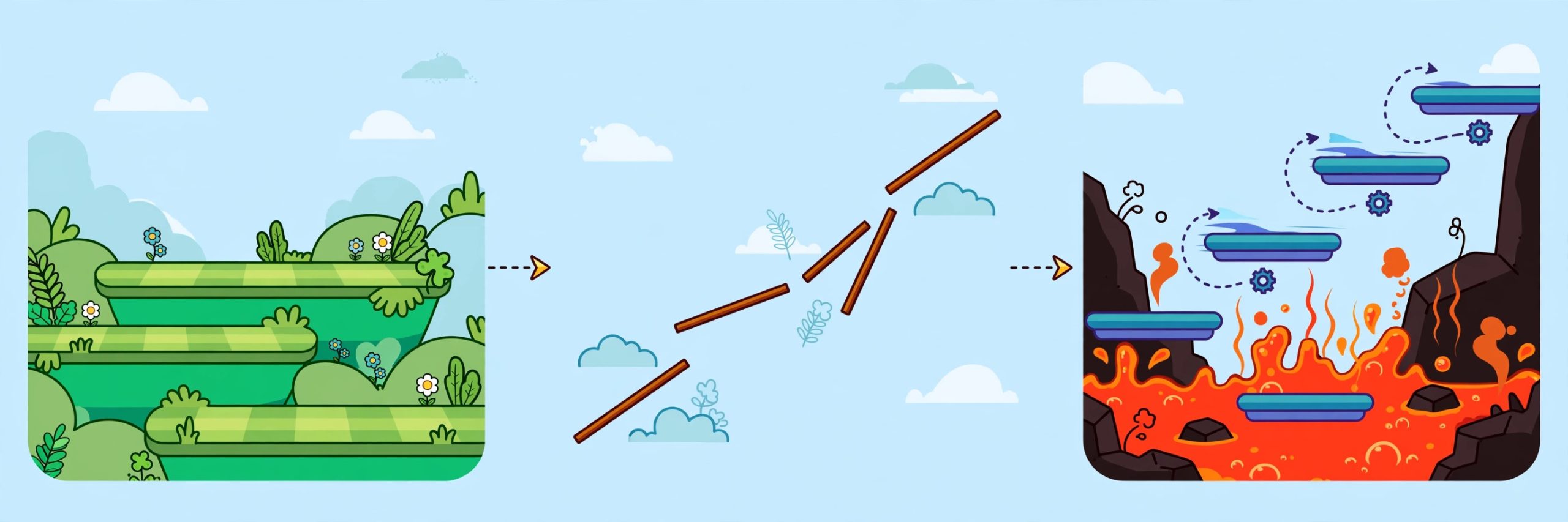
A finished obby is not a finished product — it is a course your class can run under changing rules, and the variants cost you nothing to build:
- The clean-run challenge. Fastest finish with zero falls. Suddenly the safe, boring lines matter, and careful players dethrone the reckless ones.
- The no-dash descent. Everyone climbs, then returns down the course without shortcuts. Descending a course designed for ascent is a new map hiding inside the old one.
- The pairs climb. Two players move as a unit: neither may pass a checkpoint until both reach it. Cooperation emerges instantly from a course built for solo pride.
- The teacher’s ghost. You set a time on Monday; the class spends the week trying to beat it. Few classroom spectacles beat the day a student finally tops the teacher’s mark — and every attempt was stealth practice of the course’s skills.
Post the variant of the week where the class can see it, rotate on a rhythm, and one build becomes a month of Fridays. This is the deepest economic truth of Creative publishing: rules are free content. A builder with five variants needs one map to do the work of five.
Notice what the variants share: none of them asks you to open the editor. That is deliberate advice for teachers with full timetables — the fastest way to double an obby’s classroom life is almost never another stage. It is another way to want the stages you already built. Keep a small card of variants taped near your desk, and the next time a class finishes early, you will not improvise filler; you will deal the next variant like you planned it all along. In a sense, you did.
Frequently Asked Questions
Does an obby have to be a platformer map?
Yes, for real jumping. Top-down maps can fake obstacle courses with mazes, but gravity, falling and vertical climbing — the obby soul — exist only in platformer style.
How long should an obby be?
Five to ten minutes of climbing for a first clear is the sweet spot for class play. Shorter courses get speedrun; longer ones need generous checkpoints.
How do checkpoints work if there is no checkpoint device in my build?
Use floors plus teleporters: a fall lands you on a stage floor, and a teleporter returns you to that stage’s start. It is the standard community pattern and works beautifully.
Can I add a timer feel to my obby?
Competition supplies the pressure: first to the summit wins, and the finish zone crowns them. Keep the focus on finishing together rather than complex timing machinery.
Final Thoughts
An obby is a promise: every jump is makeable, every fall is recoverable, and the summit is worth it. Space honestly, checkpoint generously, fuel the climb — and your parkour map will be the one students ask to replay “just one more time.”
