

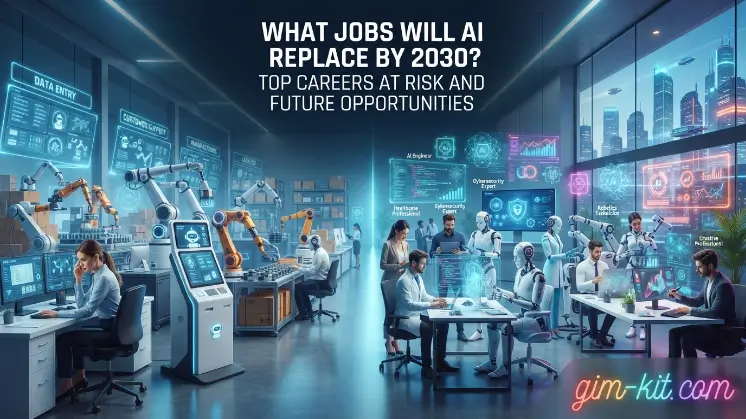
Welcome to Gimkit. Artificial intelligence (AI) is transforming the way people work, communicate, and solve problems. From automating repetitive office tasks to assisting with customer support and content creation, AI has become an essential part of many industries. As businesses continue investing in smarter technologies, many professionals are asking the same question: what jobs will ai replace by 2030? Understanding how AI is reshaping the workplace is essential for anyone planning their career, whether you are a student, a job seeker, or an experienced professional.
The future of work is not simply about machines replacing humans it is about the changing nature of jobs. While AI can perform many routine and data-driven tasks faster and more accurately than people, it still struggles with creativity, emotional intelligence, critical thinking, and complex decision-making. This means some occupations are more vulnerable to automation than others. In this guide, you’ll discover what jobs will ai replace by 2030, which careers are expected to remain in demand, the industries most affected by AI, and the practical steps you can take today to build a future-proof career in an AI-driven world.
Will AI Really Replace Jobs by 2030?
As artificial intelligence continues to evolve, concerns about job security have become more common across nearly every industry. Many people searching for what jobs will ai replace by 2030 wonder whether AI will eliminate millions of positions or simply transform the way work is done. The reality is more balanced than many headlines suggest. Rather than replacing every occupation, AI is expected to automate repetitive and predictable tasks while creating new opportunities that require human creativity, critical thinking, and collaboration. Understanding this distinction is essential for preparing for the future of work and staying competitive in an increasingly technology-driven economy.
AI Replaces Tasks More Than Entire Jobs
One of the biggest misconceptions about AI is that it will completely replace entire professions overnight. In reality, AI is far better at automating specific tasks than taking over an entire job. Many roles consist of dozens of responsibilities, and while AI can efficiently handle repetitive activities such as data entry, scheduling, report generation, and document analysis, it still relies on humans for judgment, creativity, empathy, and strategic decision-making. This is why discussions around what jobs will ai replace by 2030 often focus on task automation rather than total job elimination. AI automation, workplace automation, and digital transformation are already changing how employees work instead of making every role obsolete.
For example, customer service representatives can use AI chatbots to answer routine questions, but human agents are still needed to resolve complex issues and provide personalized support. Similarly, accountants now use AI-powered software to automate calculations and financial reporting, allowing them to spend more time on business strategy and advisory services. As artificial intelligence jobs continue to evolve, professionals who learn to work alongside AI tools will have a significant advantage over those who resist technological change. The future belongs to workers who combine human expertise with AI-powered productivity.
What Experts Predict
Leading research organizations agree that AI will reshape the workforce, but they also emphasize that the technology will create as many opportunities as it disrupts. Reports from the World Economic Forum, McKinsey, and Goldman Sachs suggest that automation will significantly change industries such as finance, retail, administration, customer support, and manufacturing. However, these studies also predict strong demand for professionals with advanced technical skills, leadership abilities, and creative problem-solving capabilities. This balanced outlook helps answer the question of what jobs will ai replace by 2030 by showing that AI is more likely to transform occupations than eliminate the need for human workers altogether. Future of work, AI replacing jobs, and workforce trends are expected to dominate employment discussions throughout the decade.
Experts also predict that workers who continuously improve their skills will benefit the most from AI adoption. Learning how to use AI tools, understanding data, strengthening communication abilities, and developing emotional intelligence will become increasingly valuable across nearly every profession. At the same time, entirely new career paths including AI trainers, AI ethics specialists, automation consultants, and prompt engineers are expected to emerge as businesses expand their use of intelligent technologies. Rather than fearing automation, individuals who embrace reskilling, upskilling, and future careers will be better positioned to succeed in the rapidly evolving job market leading up to 2030.
Top Jobs AI Will Replace by 2030
The rapid advancement of artificial intelligence is changing the employment landscape across multiple industries. While AI is unlikely to eliminate every profession, it is expected to automate many repetitive, rule-based, and predictable tasks. If you’re wondering what jobs will ai replace by 2030, the occupations below are among those considered most vulnerable to automation. As AI automation, future of work, and workplace automation continue to evolve, workers in these roles should focus on developing new skills that complement AI rather than compete with it.
Data Entry Clerks
Data entry clerks are among the professions most likely to be affected by AI. Modern AI systems can process, organize, and validate large amounts of data in seconds with greater speed and accuracy than manual input. Businesses are increasingly adopting automated data processing tools to reduce costs and improve efficiency, making this role highly vulnerable in discussions about what jobs will ai replace by 2030. Automation trends and digital transformation are accelerating this shift across industries.
However, professionals with data management, analysis, or database administration skills can transition into higher-value roles. Learning spreadsheet automation, data visualization, and AI-powered analytics tools can help former data entry clerks remain competitive as organizations continue embracing intelligent technologies.
Customer Service Representatives
AI-powered chatbots and virtual assistants now handle thousands of customer inquiries every day. They can answer frequently asked questions, process orders, track shipments, and resolve basic issues without human involvement. This makes customer support one of the most discussed occupations when evaluating what jobs will ai replace by 2030. AI replacing jobs and customer service automation are becoming common business strategies worldwide.
Despite this trend, human representatives remain essential for handling sensitive complaints, complex technical issues, and emotionally charged conversations. Customer service professionals who strengthen communication, negotiation, and relationship-building skills will continue to have valuable career opportunities alongside AI technologies.
Telemarketers
Telemarketing is highly repetitive, making it an ideal candidate for AI automation. Intelligent voice assistants and conversational AI can make outbound calls, qualify leads, answer customer questions, and schedule appointments around the clock without fatigue. This efficiency is one reason telemarketing frequently appears in discussions about what jobs will ai replace by 2030. Artificial intelligence jobs are increasingly replacing routine sales outreach.
However, high-value sales involving negotiations, relationship management, and customized business solutions still require experienced professionals. Sales representatives who focus on consultative selling and strategic partnerships are less likely to be replaced by automation.
Bookkeepers
Bookkeeping has become significantly more automated with AI-powered accounting software capable of recording transactions, reconciling accounts, generating invoices, and preparing financial reports. As businesses seek faster and more accurate financial management, bookkeeping continues to rank among the jobs most vulnerable when discussing what jobs will ai replace by 2030. Financial automation and machine learning are reshaping accounting functions.
Rather than disappearing completely, bookkeeping roles are evolving into advisory positions. Professionals who understand financial analysis, tax planning, and business consulting can use AI as a productivity tool instead of viewing it as a replacement.
Bank Tellers
The banking industry has steadily embraced automation through digital banking platforms, mobile apps, and AI-powered customer service. Routine transactions such as deposits, withdrawals, balance inquiries, and account management can now be completed without visiting a physical branch. This places bank tellers among the occupations frequently mentioned when evaluating what jobs will ai replace by 2030. Digital banking and AI automation continue to reduce reliance on traditional teller services.
Although routine teller positions may decline, banks still require professionals for financial advising, investment planning, fraud prevention, and customer relationship management. Employees who develop expertise in these areas will remain valuable in the evolving financial sector.
Cashiers
Self-checkout systems, cashierless stores, and AI-powered payment technologies are transforming retail operations. Many supermarkets, convenience stores, and large retailers now rely on automated checkout solutions to reduce waiting times and operating costs. This makes cashier positions one of the most visible examples when discussing what jobs will ai replace by 2030. Retail automation and smart checkout systems are rapidly becoming industry standards.
Even so, retail businesses still need employees for customer assistance, inventory management, merchandising, and problem resolution. Workers who build strong interpersonal and operational skills can transition into more customer-focused retail roles.
Transcriptionists
Speech recognition technology has improved dramatically over the past few years. AI-powered transcription software can convert audio and video recordings into text within minutes, reducing the demand for manual transcription services. As a result, transcriptionists are regularly included in conversations about what jobs will ai replace by 2030. Speech recognition, AI automation, and natural language processing continue to improve transcription accuracy.
Human transcriptionists may still be required for legal proceedings, medical documentation, and highly technical recordings where precision is critical. Developing editing and quality assurance skills can help professionals remain relevant alongside AI-powered tools.
Basic Graphic Designers
AI image generators and automated design platforms now create logos, marketing graphics, presentations, and social media visuals within seconds. Businesses increasingly use these tools for simple design projects, making entry-level graphic design one of the careers impacted by what jobs will ai replace by 2030. Generative AI and AI design tools are changing how visual content is produced.
However, experienced designers who specialize in branding, creative direction, user experience (UX), and original visual storytelling continue to offer value that AI cannot easily replicate. Creativity, strategy, and human insight remain essential competitive advantages.
Basic Content Writers
AI writing assistants can quickly generate product descriptions, blog outlines, summaries, and simple marketing copy. This has raised concerns among beginner writers asking what jobs will ai replace by 2030. AI content creation, generative AI, and digital transformation are reshaping the content marketing industry by automating repetitive writing tasks.
Nevertheless, businesses still need skilled writers who can produce original research, thought leadership articles, persuasive storytelling, brand messaging, and expert analysis. Writers who combine creativity, SEO expertise, and subject-matter knowledge will continue to thrive in an AI-assisted workplace.
Travel Agents
Online booking platforms and AI-powered travel assistants have simplified vacation planning by comparing flights, hotels, transportation, and travel packages within seconds. This automation has significantly reduced the need for traditional travel agents handling routine bookings, making the profession part of discussions surrounding what jobs will ai replace by 2030. Travel technology, AI automation, and digital transformation continue to reshape the tourism industry.
However, travel professionals who specialize in luxury vacations, corporate travel, destination consulting, and personalized itinerary planning still provide valuable expertise that automated systems cannot fully replace. Human experience, personalized recommendations, and problem-solving remain important advantages in the travel industry.
Read Also: how to turn off meta ai on facebook
Jobs That AI Is Unlikely to Replace
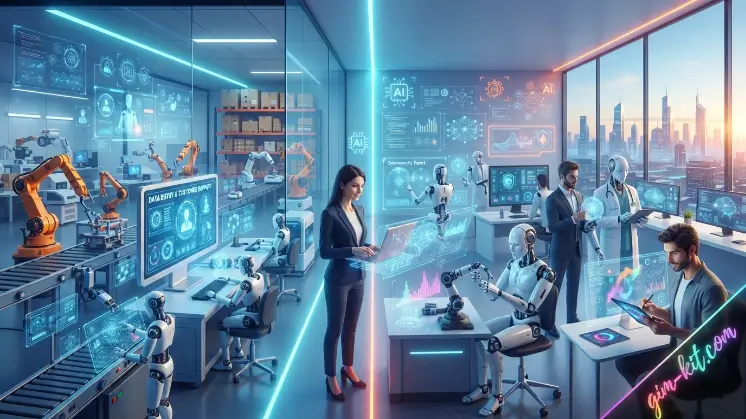
Although artificial intelligence is transforming many industries, not every profession is at risk of being automated. Careers that require emotional intelligence, creativity, complex decision-making, physical adaptability, and human interaction are expected to remain in high demand. If you’re researching what jobs will ai replace by 2030, it’s equally important to understand which careers are likely to thrive. As future-proof careers, human skills, and AI-proof jobs become increasingly valuable, professionals in these fields can expect AI to serve as a tool that enhances their work rather than replaces it.
Doctors
Doctors perform far more than diagnosing illnesses and prescribing treatments. They evaluate complex medical conditions, make critical decisions in emergencies, communicate with patients and families, and develop personalized treatment plans. While AI can analyze medical images and assist in detecting diseases, it cannot fully replace the expertise and judgment of trained physicians. This is why doctors consistently rank among the safest professions when discussing what jobs will ai replace by 2030. Healthcare AI and medical technology are designed to support doctors rather than replace them.
In the coming years, AI will likely become a valuable assistant by helping doctors review patient records, identify health risks, and recommend treatment options more efficiently. However, compassion, ethical decision-making, and patient trust remain uniquely human qualities that technology cannot replicate.
Nurses
Nursing is built on direct patient care, empathy, communication, and quick decision-making in unpredictable situations. Nurses provide emotional support, monitor patients, administer treatments, and respond to medical emergencies responsibilities that require human judgment beyond what AI can offer. As a result, nursing remains one of the strongest answers to those asking what jobs will ai replace by 2030. Patient care and healthcare professionals will continue to play an essential role in the medical field.
Rather than replacing nurses, AI is expected to reduce administrative workloads by automating documentation, scheduling, and routine monitoring. This allows nurses to spend more time focusing on patient care and improving healthcare outcomes.
Electricians
Electricians perform complex installation, maintenance, and repair work in constantly changing environments. Every building presents unique challenges that require practical problem-solving, technical expertise, and strict adherence to safety regulations. These factors make electricians highly resistant to automation despite ongoing advances in AI. For anyone wondering what jobs will ai replace by 2030, skilled electrical work remains a reliable career choice. Skilled trades and hands-on careers continue to show strong long-term demand.
AI can assist electricians by improving project planning, diagnosing electrical issues, and monitoring equipment performance. However, the physical nature of electrical work and the need for on-site decision-making make complete automation highly unlikely.
Plumbers
Plumbers handle a wide variety of installation and repair tasks that often require adapting to unexpected situations inside homes, offices, and industrial facilities. In this blog, you’ll learn why every plumbing problem is different, making it difficult for AI or robots to perform the work independently. This is why plumbing consistently appears among the careers least affected when discussing what jobs will ai replace by 2030. Trade careers and manual skills remain difficult for automation to replicate.
Although AI-powered diagnostic tools may help identify leaks or maintenance issues more quickly, experienced plumbers will still be needed to perform repairs, communicate with customers, and solve complex infrastructure problems.
Teachers
Teaching involves much more than delivering information. Great teachers motivate students, encourage critical thinking, adapt lessons to different learning styles, and build meaningful relationships in the classroom. While AI-powered learning platforms can personalize educational content, they cannot replace the inspiration and mentorship provided by educators. Therefore, teaching remains one of the safest professions when evaluating what jobs will ai replace by 2030. Education technology and AI in education are intended to support teachers rather than replace them.
In the future, teachers will increasingly use AI to automate grading, create lesson plans, and analyze student performance. This technology can save time while allowing educators to focus on developing students’ creativity, confidence, and problem-solving abilities.
Psychologists
Psychologists rely heavily on empathy, trust, active listening, and professional judgment to help individuals manage mental health challenges. Although AI chatbots can provide basic emotional support and self-help guidance, they cannot fully understand the complexity of human emotions or replace therapeutic relationships. As discussions continue around what jobs will ai replace by 2030, psychology remains among the careers least likely to be automated. Mental health services and emotional intelligence continue to require a strong human presence.
AI may become a useful tool for analyzing behavioral patterns or assisting with treatment planning, but licensed psychologists will remain responsible for diagnosis, counseling, and personalized patient care.
Skilled Trades
Skilled trades such as carpentry, welding, construction, HVAC installation, and machinery maintenance involve physical work, technical expertise, and problem-solving in constantly changing environments. These occupations require adaptability that current AI systems and robots struggle to achieve. Consequently, they remain among the most secure professions when considering what jobs will ai replace by 2030. Future careers and trade professions are expected to remain in high demand throughout the next decade.
Technology will continue improving safety, planning, and equipment monitoring within these industries. However, experienced tradespeople will still be essential for performing hands-on work, managing unexpected challenges, and ensuring quality craftsmanship.
Leadership Roles
Executives, business owners, managers, and organizational leaders make strategic decisions that require vision, negotiation, emotional intelligence, and the ability to inspire teams. While AI can analyze data and generate business insights, it cannot replace human leadership, ethical judgment, or the ability to build strong organizational cultures. This makes leadership positions among the safest careers for professionals researching what jobs will ai replace by 2030. Business strategy, leadership skills, and human decision-making remain difficult for AI to replicate.
As AI adoption grows, leaders will increasingly use intelligent tools to improve decision-making, forecast trends, and optimize operations. However, setting company direction, managing people, resolving conflicts, and driving innovation will continue to depend on experienced human leadership.
Industries Most Affected by AI
Artificial intelligence is reshaping entire industries by automating repetitive tasks, improving decision-making, and increasing operational efficiency. While AI creates new opportunities, it also changes how businesses operate and the skills employers expect from their workforce. If you’re researching what jobs will ai replace by 2030, understanding which industries are experiencing the fastest transformation can help you make informed career decisions. As AI automation, digital transformation, and future of work continue to accelerate, the following sectors are expected to experience the greatest impact.
Finance
The financial industry has been one of the earliest adopters of artificial intelligence. AI-powered systems can process transactions, detect fraudulent activities, assess credit risks, generate financial reports, and analyze investment data much faster than humans. These capabilities reduce manual workloads and improve accuracy, making finance one of the industries most affected when discussing what jobs will ai replace by 2030. Financial automation, machine learning, and AI-powered analytics are becoming standard tools across banks and financial institutions.
Although many routine financial tasks are being automated, professionals with expertise in financial planning, investment strategy, compliance, and risk management remain highly valuable. AI is expected to enhance decision-making rather than completely replace experienced financial experts.
Retail
Retail businesses are rapidly integrating AI to improve customer experiences and streamline operations. Self-checkout systems, automated inventory management, personalized product recommendations, and demand forecasting help retailers reduce costs while increasing efficiency. As a result, retail continues to be one of the industries most influenced by what jobs will ai replace by 2030. Retail automation, smart shopping technology, and AI-driven customer experiences are transforming both online and physical stores.
Despite increased automation, retailers still rely on employees for customer engagement, merchandising, store management, and handling complex service situations. Workers who combine technology skills with excellent customer service will continue to find strong employment opportunities.
Customer Support
Customer support has undergone significant transformation with the introduction of AI chatbots and virtual assistants. These systems can answer common questions, process service requests, and provide instant support around the clock, reducing the need for human agents to handle repetitive inquiries. This makes customer support one of the industries most frequently associated with what jobs will ai replace by 2030. Customer service automation, conversational AI, and AI-powered chatbots are becoming increasingly common across businesses.
However, human support remains essential for resolving sensitive issues, managing customer relationships, and handling situations that require empathy and critical thinking. AI is expected to work alongside customer service professionals rather than completely replace them.
Marketing
Artificial intelligence is transforming digital marketing by automating content creation, audience targeting, email campaigns, social media scheduling, and performance analysis. Businesses use AI to gain valuable insights into customer behavior and optimize advertising strategies more efficiently than ever before. This rapid innovation makes marketing one of the industries significantly affected by what jobs will ai replace by 2030. Generative AI, digital marketing automation, and predictive analytics are changing how brands connect with their audiences.
While AI can generate ideas and automate repetitive marketing tasks, successful campaigns still depend on creativity, storytelling, branding, and strategic planning. Marketing professionals who learn to integrate AI into their workflows will remain highly competitive in the future.
Logistics
The logistics industry is becoming smarter through AI-powered route optimization, warehouse automation, inventory forecasting, and supply chain management. Companies use intelligent systems to reduce delivery times, improve efficiency, and minimize operational costs. These innovations place logistics among the sectors experiencing major changes related to what jobs will ai replace by 2030. Supply chain automation, AI logistics, and predictive analytics continue to improve transportation and distribution processes.
Even with advanced automation, logistics companies still require professionals to manage operations, coordinate complex shipments, solve unexpected challenges, and oversee strategic planning. Human expertise remains essential for maintaining efficient global supply chains.
Administration
Administrative departments are increasingly relying on AI to automate scheduling, document management, email handling, meeting coordination, and data organization. Intelligent software can complete many repetitive office tasks within seconds, allowing businesses to improve productivity while reducing manual work. Because of this, administration is one of the sectors most commonly discussed when evaluating what jobs will ai replace by 2030. Office automation, workflow automation, and business process automation are reshaping modern workplaces.
Administrative professionals who develop skills in project management, communication, business analysis, and AI-powered productivity tools will continue to play valuable roles within organizations. Rather than replacing administrators entirely, AI is transforming their responsibilities into more strategic and decision-focused positions.
New Jobs AI Will Create by 2030
While artificial intelligence is expected to automate many repetitive tasks, it is also creating entirely new career opportunities. As businesses continue integrating AI into their operations, the demand for professionals who can develop, manage, improve, and govern these technologies is growing rapidly. Understanding these emerging roles is just as important as knowing what jobs will ai replace by 2030 because the future workforce will rely heavily on people who can work alongside intelligent systems. As future careers, AI jobs, and digital transformation continue to evolve, the following professions are expected to experience significant growth.
AI Trainer
AI trainers play a crucial role in improving the performance of artificial intelligence systems. They teach AI models by labeling data, reviewing responses, identifying errors, and providing feedback that helps algorithms produce more accurate and reliable results. As AI adoption expands across industries, this role is becoming increasingly important in discussions about what jobs will ai replace by 2030. Machine learning, AI model training, and data annotation are essential components of this profession.
Organizations need skilled AI trainers to ensure their systems understand language, recognize patterns, and make accurate predictions. Professionals with analytical thinking, attention to detail, and strong communication skills will find growing opportunities in this rapidly expanding field.
Prompt Engineer
Prompt engineers specialize in designing effective instructions that help generative AI systems produce accurate, useful, and high-quality outputs. Whether generating text, images, code, or business reports, carefully written prompts significantly improve AI performance. This emerging profession highlights that while people ask what jobs will ai replace by 2030, AI is also creating completely new career paths. Generative AI, prompt engineering, and AI content creation are becoming valuable skills across multiple industries.
Successful prompt engineers understand both human communication and AI capabilities. They continuously test, refine, and optimize prompts to improve efficiency, making them highly valuable in industries such as marketing, education, software development, and customer support.
AI Ethics Specialist
As AI becomes more powerful, organizations need experts who ensure these technologies are developed and used responsibly. AI ethics specialists evaluate issues such as fairness, privacy, transparency, bias, and regulatory compliance while helping businesses build trustworthy AI systems. This growing profession demonstrates that discussions about what jobs will ai replace by 2030 should also include the careers AI will generate. Responsible AI, AI governance, and ethical artificial intelligence are becoming major priorities worldwide.
These professionals work closely with developers, legal teams, executives, and policymakers to establish ethical guidelines for AI applications. Their work helps protect users while ensuring organizations comply with evolving regulations and industry standards.
AI Auditor
AI auditors examine artificial intelligence systems to verify that they operate accurately, securely, and fairly. They review algorithms, test model performance, identify biases, and ensure AI systems comply with legal and organizational requirements. As AI adoption continues to increase, AI auditing is becoming one of the fastest-growing professions related to what jobs will ai replace by 2030. AI compliance, algorithm transparency, and risk management are central to this career.
Businesses across finance, healthcare, government, and technology increasingly require AI auditors to maintain accountability and public trust. Professionals with backgrounds in data analysis, cybersecurity, law, or compliance will be well positioned for this emerging role.
Automation Consultant
Automation consultants help organizations identify opportunities to improve efficiency through AI and intelligent automation technologies. They evaluate business processes, recommend automation strategies, oversee implementation, and measure performance improvements. This profession illustrates that while some jobs are changing, entirely new opportunities are emerging alongside what jobs will ai replace by 2030. Business automation, AI implementation, and digital transformation strategy are key areas of expertise for these professionals.
Successful automation consultants combine technical knowledge with strong business skills to help companies reduce costs, increase productivity, and manage organizational change. Their ability to bridge technology and business operations makes them highly valuable across multiple industries.
Human-AI Collaboration Manager
As workplaces increasingly combine human employees with AI-powered systems, organizations will require professionals who can manage this collaboration effectively. Human-AI collaboration managers develop workflows, establish best practices, monitor AI performance, and ensure employees can work productively alongside intelligent technologies. This innovative career reflects the broader reality behind what jobs will ai replace by 2030 AI is transforming work rather than simply eliminating jobs. Future of work, AI workforce management, and human-AI collaboration are expected to become essential business functions.
These managers also oversee employee training, address concerns about AI adoption, and ensure technology supports business goals without disrupting workplace culture. As AI becomes a permanent part of modern organizations, this role is expected to grow significantly throughout the coming decade.
How to Protect Your Career from AI
As artificial intelligence continues to reshape the global workforce, preparing for change is the best way to ensure long-term career success. Instead of fearing automation, professionals should focus on developing skills that complement AI and increase their value in the workplace. If you’re concerned about what jobs will ai replace by 2030, the good news is that there are practical steps you can take to stay relevant and competitive. By embracing future-proof careers, upskilling, and digital transformation, you can turn AI into a powerful career advantage rather than a threat.
Learn AI Tools
One of the smartest ways to protect your career is by learning how to use AI tools effectively. Applications like ChatGPT, Microsoft Copilot, Google Gemini, and AI-powered productivity software are becoming common in workplaces across many industries. Professionals who understand how to use these tools can complete tasks faster, improve efficiency, and deliver better results. As discussions continue around what jobs will ai replace by 2030, employees who work alongside AI will have a clear advantage over those who avoid it. AI productivity tools, generative AI, and workplace automation are becoming valuable workplace skills.
You don’t need to become an AI engineer to benefit from these technologies. Even basic knowledge of AI-assisted writing, research, data analysis, and task automation can improve your productivity and make you a more valuable employee in today’s evolving job market.
Develop Human Skills
While AI can automate repetitive tasks, it still struggles with qualities that are uniquely human. Skills such as communication, creativity, emotional intelligence, leadership, teamwork, and critical thinking remain essential in almost every profession. These abilities are difficult for machines to replicate, making them valuable assets when considering what jobs will ai replace by 2030. Human skills, soft skills, and emotional intelligence will continue to play a major role in future employment.
Professionals who build strong relationships, solve complex problems, and communicate effectively will remain in demand even as AI becomes more advanced. Investing in these skills can significantly improve your long-term career stability.
Continuous Learning
Technology evolves rapidly, and the skills required today may change within just a few years. Continuous learning helps professionals stay current with industry trends, emerging technologies, and changing workplace demands. Rather than viewing education as a one-time achievement, lifelong learning has become essential for anyone concerned about what jobs will ai replace by 2030. Reskilling, upskilling, and career development are now critical strategies for long-term success.
Online courses, certifications, webinars, workshops, and professional training programs provide excellent opportunities to expand your knowledge. Developing a habit of continuous learning ensures you remain adaptable as AI continues transforming the workplace.
Build Technical Skills
Even if you don’t work in technology, developing basic technical knowledge can strengthen your career prospects. Skills such as data analysis, cybersecurity awareness, cloud computing, coding fundamentals, and digital literacy are becoming increasingly valuable across industries. These competencies help professionals work more effectively with intelligent technologies and reduce the risk associated with what jobs will ai replace by 2030. Technical skills, digital skills, and AI literacy are becoming essential in the modern workforce.
Building technical expertise also improves career flexibility, allowing you to transition into new roles as industries evolve. The more comfortable you become with technology, the easier it will be to adapt to future workplace changes.
Adapt to Automation
The most successful professionals are those who embrace change instead of resisting it. AI will continue to automate routine tasks, but it will also create opportunities for people who are willing to learn new ways of working. Adapting to automation means identifying how AI can improve your productivity while focusing your time on responsibilities that require creativity, strategy, and human judgment. This mindset is essential for anyone asking what jobs will ai replace by 2030. Future of work, AI adoption, and workforce transformation will shape careers throughout the coming decade.
Rather than competing against AI, learn how to collaborate with it. Employees who combine industry expertise with AI-powered tools will be better positioned for promotions, career growth, and long-term job security in an increasingly technology-driven world.
Common Mistakes People Make
As artificial intelligence continues to reshape the workplace, many professionals make decisions that increase their risk of being left behind. Instead of preparing for the future, they often ignore technological changes or assume their jobs are completely safe. If you’re concerned about what jobs will ai replace by 2030, avoiding these common mistakes can help you stay competitive and build a successful long-term career. By embracing upskilling, AI automation, and future-proof careers, you can adapt to the changing job market with confidence.
- Ignoring AI advancements: Assuming AI will not affect your industry can leave you unprepared as digital transformation continues to accelerate.
- Refusing to learn new skills: Professionals who avoid reskilling and continuous learning may struggle to remain competitive in an AI-driven workplace.
- Relying only on repetitive tasks: Jobs focused on routine and predictable work are the most vulnerable to AI automation and workplace automation.
- Neglecting human skills: Failing to develop communication, creativity, leadership, and emotional intelligence can reduce your value in roles where human interaction is essential.
- Avoiding AI tools: Ignoring platforms like AI assistants and productivity software can make you less efficient than colleagues who successfully integrate these technologies into their daily work.
- Resisting workplace change: Viewing AI as a threat instead of an opportunity can prevent you from adapting to new roles, improving productivity, and succeeding in the future of work.
Frequently Asked Questions
Is AI expected to replace more jobs than it creates by 2030?
While AI will automate certain roles, it is also expected to create new opportunities in AI development, cybersecurity, healthcare, and digital services. The overall impact will depend on how quickly workers adapt to changing skill requirements.
Which skills should I learn now to prepare for what jobs will ai replace by 2030?
Focus on developing AI literacy, problem-solving, communication, data analysis, and leadership skills. Combining technical knowledge with human-centered abilities will make you more competitive in the future job market.
Can small businesses benefit from AI without replacing employees?
Yes. Small businesses can use AI to automate repetitive tasks, improve customer service, and increase productivity while allowing employees to focus on higher-value work that requires creativity and decision-making.
Will remote jobs be more vulnerable to AI than on-site jobs?
Not necessarily. Jobs based on repetitive digital tasks are generally more susceptible to automation, while remote positions involving creativity, strategy, or client relationships are likely to remain in demand despite advances in AI automation.
How often should professionals update their skills in the age of AI?
Rather than waiting several years, professionals should invest in continuous learning by updating their knowledge regularly through courses, certifications, and hands-on practice to keep pace with rapidly evolving AI technologies.
Conclusion
Artificial intelligence is transforming the workplace at an unprecedented pace, changing how businesses operate and how employees perform their daily tasks. While many people worry about what jobs will ai replace by 2030, the reality is that AI is more likely to automate repetitive tasks than eliminate entire professions. Careers that depend on creativity, critical thinking, emotional intelligence, leadership, and hands-on expertise will continue to play a vital role in the future workforce. At the same time, new opportunities are emerging in fields such as AI development, prompt engineering, AI ethics, and automation consulting, creating exciting career paths for those willing to adapt.
The key to long-term success is embracing change instead of fearing it. By learning AI tools, strengthening human skills, investing in continuous learning, and staying informed about future of work trends, you can remain competitive in an AI-driven economy. Whether you’re a student planning your career or a professional looking to future-proof your skills, understanding what jobs will ai replace by 2030 will help you make smarter career decisions and confidently prepare for the opportunities that lie ahead.
