

Welcome to Gimkit. Artificial intelligence has transformed the way students research, write, and complete assignments. Tools like ChatGPT, Gemini, and Claude can generate essays, answer questions, and even help with coding projects within seconds. As AI becomes more common in education, many students are asking what ai detector do colleges use to identify AI-generated assignments and whether these tools are accurate.
The answer isn’t as simple as naming one software. Different colleges and universities rely on different AI detection tools depending on their academic policies, budgets, and learning management systems. Some institutions primarily use Turnitin’s AI writing detector, while others prefer GPTZero, Copyleaks, or additional review methods. In this guide, you’ll discover the most common AI detectors used by colleges, how they work, their limitations, and how to use AI responsibly without risking academic penalties.
Do Colleges Really Use AI Detectors?
Yes, many colleges and universities now use AI detection software as part of their academic integrity process. As AI writing tools become more common, institutions are adopting technologies that help instructors evaluate assignments more effectively. If you’re wondering what ai detector do colleges use, the answer varies by institution, but most rely on a combination of AI detection software, plagiarism checkers, and instructor review rather than a single tool to determine whether an assignment contains AI-generated content.
Why Universities Use AI Detection Software
Universities use AI detection software to protect the quality and fairness of academic assessments. These tools help instructors identify assignments that may rely too heavily on artificial intelligence instead of a student’s own work. While detection software can highlight potentially AI-generated text, it is generally used alongside AI writing detection, AI-generated content, and plagiarism detection reviews to provide a more complete evaluation rather than serving as the sole basis for disciplinary action.
Another reason colleges adopt these systems is to encourage responsible use of AI technology. Many institutions recognize that tools like ChatGPT can support brainstorming, research, or editing, but they expect students to produce original work and follow assignment guidelines. By combining AI detection reports with instructor judgment, universities aim to uphold academic standards while adapting to the growing role of AI in education.
Academic Integrity Policies
Every college and university has its own academic integrity policy regarding artificial intelligence. Some institutions prohibit submitting AI-generated assignments unless an instructor explicitly allows it, while others permit limited use when students properly disclose AI assistance. These policies often work alongside university AI policy, academic integrity, and college essay AI detector guidelines to ensure transparency and maintain educational standards.
Because these policies differ from one institution to another, students should always review their course syllabus and university regulations before using AI tools for assignments. Understanding the rules can help avoid accidental violations, reduce the risk of false accusations, and ensure that AI is used ethically as a learning aid rather than as a replacement for independent thinking.
What AI Detector Do Colleges Use?
If you’re searching for what ai detector do colleges use, you’ll find that there isn’t a single answer. Colleges and universities use a variety of AI detection platforms depending on their academic needs, budget, and existing learning management systems. Most institutions rely on trusted solutions that combine AI writing detection, AI-generated content analysis, and plagiarism detection to help instructors review assignments while supporting academic integrity.
Turnitin AI Detection
Turnitin is the most widely used AI detection platform in higher education. Originally developed as a plagiarism checker, it now includes AI writing detection features that estimate whether sections of a document may have been generated by artificial intelligence. Because Turnitin is already integrated into many university learning platforms, it has become the preferred solution for colleges worldwide.
The platform analyzes writing patterns, sentence structure, and language consistency to identify AI-generated content. Instead of making a final judgment, Turnitin provides instructors with an AI writing score that serves as one piece of evidence. Most professors review this report alongside academic integrity guidelines, student writing history, and assignment requirements before making any decisions.
GPTZero
GPTZero is a dedicated AI detection tool created specifically to identify text produced by AI language models. It gained popularity shortly after ChatGPT became widely available and is now used by some educators, schools, and universities as an additional resource for evaluating written assignments.
The software examines factors such as sentence complexity, predictability, and writing variation to estimate whether content appears human-written or AI-generated. Although GPTZero is known for its focus on AI writing detection, many colleges use it as a supplementary tool rather than replacing established systems like Turnitin for official academic reviews.
Copyleaks
Copyleaks is another popular platform used by educational institutions to detect both plagiarism and AI-generated writing. Its advanced detection capabilities support multiple languages and integrate easily with learning management systems, making it a practical choice for colleges that manage large numbers of student submissions.
One of Copyleak’s strengths is its ability to identify content generated by different AI models rather than focusing on a single writing system. By combining AI plagiarism checker features with AI detection accuracy improvements, the platform helps instructors review assignments more efficiently while reducing the need for manual screening.
Originality.ai
Originality.ai is primarily designed for publishers, businesses, and content marketing teams, but some educators also use it to evaluate AI-generated writing. The platform combines AI detection with plagiarism checking, making it useful for users who want a broader assessment of content originality.
Although Originality.ai is less common in colleges than Turnitin or Copyleaks, it is recognized for its strong AI-generated content detection capabilities. Some instructors may use it independently when reviewing research papers or essays, especially if their institution does not provide a dedicated AI detection platform.
Winston AI
Winston AI is an AI content detector that has gained attention for its user-friendly interface and detailed analysis reports. While it is more widely used by businesses and publishers, some colleges and educators have started exploring it as part of their AI detection toolkit.
The platform evaluates writing patterns and assigns a probability score indicating whether the content is likely AI-generated. Its reports can support instructors during assignment reviews, but like other AI detector colleges, Winston AI is most effective when combined with human evaluation rather than used as the sole source of evidence.
Other AI Detection Tools
In addition to the leading platforms, some colleges experiment with other AI detection tools depending on their institutional requirements. New technologies continue to emerge as AI writing systems become more advanced, giving educators additional options for reviewing assignments and maintaining academic standards.
Many universities also combine multiple solutions to improve AI detection accuracy and reduce the risk of false positives. Rather than relying on a single report, instructors often compare AI detection results with plagiarism reports, writing style analysis, previous student submissions, and institutional university AI policy before concluding the originality of a student’s work.
Read Also: How to remove ai overview from google
How Do AI Detectors Work?
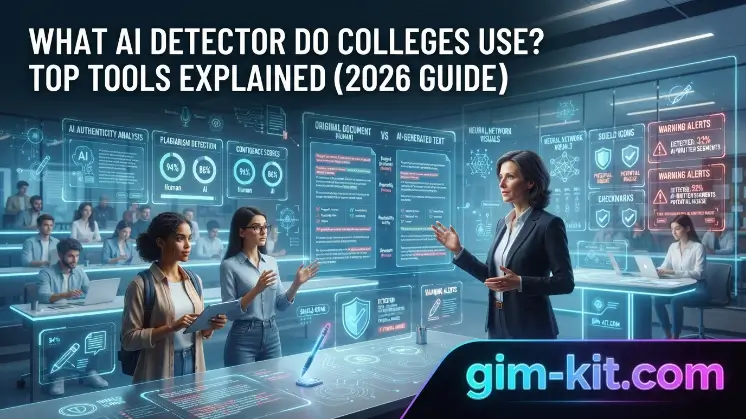
Understanding how AI detectors function can help answer what ai detector do colleges use and why their results are not always perfect. Rather than identifying AI-generated content with absolute certainty, these tools analyze writing patterns, statistical language models, and linguistic characteristics to estimate whether a document was likely written by a human or artificial intelligence. Most colleges combine AI writing detection, AI-generated content analysis, and instructor evaluation to make informed decisions.
Language Pattern Analysis
AI detectors examine the structure and style of written content to identify patterns commonly associated with AI-generated text. They analyze sentence length, vocabulary usage, grammar consistency, punctuation, and overall writing flow. Because AI models often produce highly predictable and grammatically consistent responses, detection tools can compare these characteristics against patterns found in AI-generated content.
However, language pattern analysis is not foolproof. Skilled human writers can produce clear and consistent writing that resembles AI-generated text, while advanced AI models are becoming increasingly capable of mimicking natural human writing styles. For this reason, AI detection accuracy depends on multiple factors, including the quality of the writing and the sophistication of the detection software.
Perplexity & Burstiness
Two of the most common concepts used in AI detection are perplexity and burstiness. Perplexity measures how predictable a piece of text is, while burstiness evaluates the variation in sentence length and complexity. Human writing often includes a mix of short and long sentences with varying vocabulary, whereas AI-generated text tends to follow more consistent patterns.
Modern AI detectors analyze these characteristics to estimate whether content is likely human-written or machine-generated. Although AI writing detection systems rely on perplexity and burstiness as useful indicators, they cannot guarantee accurate results in every case. As AI language models continue to improve, these measurements become less reliable when used on their own.
Human Review Process
Most colleges do not rely solely on AI detection software when reviewing student assignments. Instead, instructors examine AI reports alongside previous writing samples, assignment requirements, citations, and the student’s overall academic performance. This human review process helps reduce the risk of incorrect conclusions based only on automated analysis.
Human judgment remains one of the most important parts of maintaining academic integrity. If an AI detector flags an assignment, professors typically investigate further before taking action. By combining technology with instructor expertise, colleges can make fairer decisions while recognizing the limitations of current AI detector colleges use technologies.
Are AI Detectors Accurate?
One of the biggest concerns for students researching what ai detector do colleges use is whether these tools are actually accurate. While modern AI detectors have improved significantly, none of them can determine with complete certainty whether a piece of writing was created by artificial intelligence. Instead, they provide probability-based assessments using AI writing detection, AI-generated content analysis, and statistical language models, which means mistakes can still occur.
False Positives
A false positive occurs when an AI detector incorrectly identifies human-written content as AI-generated. This can happen when a student’s writing is highly structured, grammatically consistent, or uses simple and predictable language. Even original essays written without AI assistance have occasionally received high AI detection scores because they resemble the patterns that detection tools are trained to identify.
False positives are one of the biggest limitations of AI detection accuracy. For this reason, most universities instruct faculty members not to treat an AI score as definitive proof of misconduct. Instead, instructors review additional evidence, such as writing history, research sources, and assignment context, before making any academic decisions.
False Negatives
A false negative happens when AI-generated content is mistakenly classified as human-written. As AI writing models continue to evolve, they produce more natural and varied text that can bypass some detection systems. Students who heavily edit AI-generated drafts may also reduce the likelihood of their work being flagged by detection software.
Because of these challenges, AI-generated content can sometimes go undetected even by advanced platforms. This is why colleges continuously update their detection tools and encourage instructors to use their professional judgment rather than relying entirely on automated results.
Why Colleges Don’t Rely Only on AI Scores
Most colleges understand that AI detection software has limitations, so they rarely make disciplinary decisions based solely on an AI score. Instead, instructors consider multiple factors, including a student’s previous assignments, writing style, citation quality, classroom participation, and compliance with academic integrity policies before concluding.
Using a combination of technology and human evaluation creates a fairer review process while reducing the risk of incorrect accusations. Although what ai detector do colleges use is an important question, the more important fact is that AI detection reports are intended to support instructor judgment—not replace it. This balanced approach helps institutions maintain educational standards while acknowledging the current limitations of AI plagiarism checkers and AI detection technologies.
Can Professors Detect ChatGPT Without AI Software?
Even without specialized AI detection tools, professors can often recognize signs that an assignment may have been generated or heavily assisted by artificial intelligence. While many students search for what ai detector dolleges use, instructors also rely on their experience, familiarity with a student’s writing style, and academic judgment. In many cases, AI-generated content, academic integrity, and assignment quality are evaluated together rather than depending solely on software.
Writing Style Changes
One of the most noticeable indicators for professors is a sudden change in a student’s writing style. If an assignment is significantly more polished, uses advanced vocabulary, or follows a structure that differs from previous submissions, it may raise questions. Experienced instructors who have reviewed a student’s earlier work can often identify inconsistencies that software might overlook.
However, a change in writing style does not automatically mean AI was used. Students naturally improve their writing skills over time or receive assistance from tutors and writing centers. For this reason, professors compare writing patterns alongside AI writing detection reports and other evidence before making any conclusions.
Missing Citations
AI tools sometimes generate factual statements without providing reliable sources or proper citations. If a paper includes unsupported claims, inaccurate references, or fabricated citations, professors may suspect that AI played a role in creating the content. These issues are especially concerning in research-based assignments where source credibility is essential.
To maintain academic integrity, students should always verify information, cite credible references, and review AI-assisted content carefully before submission. Proper citations not only strengthen an assignment but also demonstrate that the research was completed responsibly rather than relying entirely on AI-generated content.
Oral Follow-Up Questions
Some professors ask students follow-up questions about their assignments when they have concerns about originality. During these discussions, instructors may request explanations of key arguments, research methods, or conclusions to confirm that the student understands the submitted work. This approach can help determine whether the assignment reflects the student’s own knowledge and effort.
Oral discussions are often more effective than relying only on technology because they allow instructors to assess genuine understanding. Even if a student uses AI responsibly for brainstorming or editing, they should be able to explain every part of their work confidently. This combination of human evaluation and college essay AI detector tools provides a more balanced approach to maintaining academic standards.
Tips to Use AI Responsibly in College
As artificial intelligence becomes a regular part of education, learning how to use it responsibly is just as important as understanding what ai detector do colleges use. AI can be a valuable learning tool when used ethically, but relying on it to complete assignments without permission can lead to academic consequences. By following best practices and respecting academic integrity, students can benefit from AI while meeting their university’s expectations.
Use AI as a Research Assistant
AI works best as a research assistant rather than a replacement for your own thinking. It can help you brainstorm ideas, explain difficult concepts, create outlines, or suggest topics for further study. Using AI in this way allows you to save time while still producing original work based on your own understanding.
Before including any AI-generated information in an assignment, verify the facts using credible academic sources. Since AI can occasionally provide outdated or inaccurate information, combining its suggestions with reliable research improves both the quality and credibility of your work while supporting responsible use of AI-generated content.
Edit Everything Yourself
Never submit AI-generated text without carefully reviewing and editing it. Even advanced AI tools can produce repetitive language, factual inaccuracies, or writing that does not fully address your assignment requirements. Personal editing ensures that your work reflects your own voice, knowledge, and critical thinking skills.
Revising AI-assisted content also helps improve originality and reduces the likelihood of your assignment being flagged by AI writing detection systems. Adding your own analysis, examples, and insights makes the content more authentic while demonstrating genuine learning and understanding.
Cite AI When Required
Some colleges and instructors require students to disclose when AI tools have been used during the writing process. If your institution has such a policy, always acknowledge AI assistance according to the recommended citation style or instructor guidelines. Being transparent about AI usage demonstrates honesty and respect for academic integrity standards.
Even when AI is used only for brainstorming or editing, it is important to follow your instructor’s expectations. Proper disclosure helps avoid misunderstandings and ensures that your assignment complies with your university’s policies regarding AI-generated content and responsible technology use.
Follow University Policies
Every college has its own rules governing the use of artificial intelligence in coursework. Some universities allow AI for research and editing, while others restrict or prohibit its use for specific assignments. Understanding these policies is essential before using any AI tool to complete academic work.
Reading your course syllabus and institutional guidelines can help you avoid accidental policy violations. Regardless of what ai detector do colleges use, following your university’s AI policy and assignment instructions is the most effective way to use AI ethically while protecting your academic reputation.
Common Mistakes Students Make
Many students worry about what ai detector do colleges use, but the biggest problems often come from using AI carelessly. Understanding these common mistakes can help you follow academic integrity guidelines and submit original, high-quality assignments.
- Submitting AI-generated content without editing: Always review and personalize AI-generated text before submitting it.
- Ignoring university AI policies: Read your college’s university AI policy to ensure you’re using AI appropriately.
- Skipping proper research: Use AI for ideas, but support your work with reliable sources and your own analysis.
- Not citing AI when required: If your instructor requires disclosure, acknowledge your use of AI-generated content.
- Trusting AI without fact-checking: Verify all facts and references because AI can make mistakes.
- Using AI humanizers to avoid detection: Humanizer tools don’t guarantee success and may still be identified by AI writing detection systems.
Frequently Asked Questions
Can colleges detect AI-generated content in online exams?
Yes, colleges may use online proctoring software, browser monitoring tools, and assignment reviews to identify suspicious AI-assisted responses during online assessments.
Does using AI for grammar correction violate college rules?
In most cases, using AI for grammar or spelling improvements is acceptable, but students should always check their instructor’s guidelines and university AI policy before submitting work.
Is what ai detector do colleges use the same for every university?
No. Different colleges choose different AI detection platforms based on their budget, academic needs, and institutional policies, so there is no single tool used by every university.
Can AI detectors identify content translated from another language?
Some advanced AI writing detection tools can analyze translated text, but their accuracy varies depending on the language pair and how much the content has been edited.
What should I do if my original work is flagged as AI-generated?
Stay calm and provide supporting evidence, such as research notes, drafts, or document version history, to demonstrate that the work is your own and discuss the results with your instructor.
Conclusion
Understanding what ai detector do colleges use can help students make informed decisions about using artificial intelligence in their academic work. While tools like Turnitin, GPTZero, and Copyleaks are commonly used, no AI detector is completely accurate. Most colleges combine AI writing detection, instructor judgment, and academic integrity policies to evaluate assignments fairly rather than relying on software alone.
The best approach is to use AI as a learning aid instead of a shortcut. By creating original work, verifying information, following your university’s guidelines, and using AI responsibly, you can benefit from modern technology while protecting your academic reputation and achieving long-term success.
