

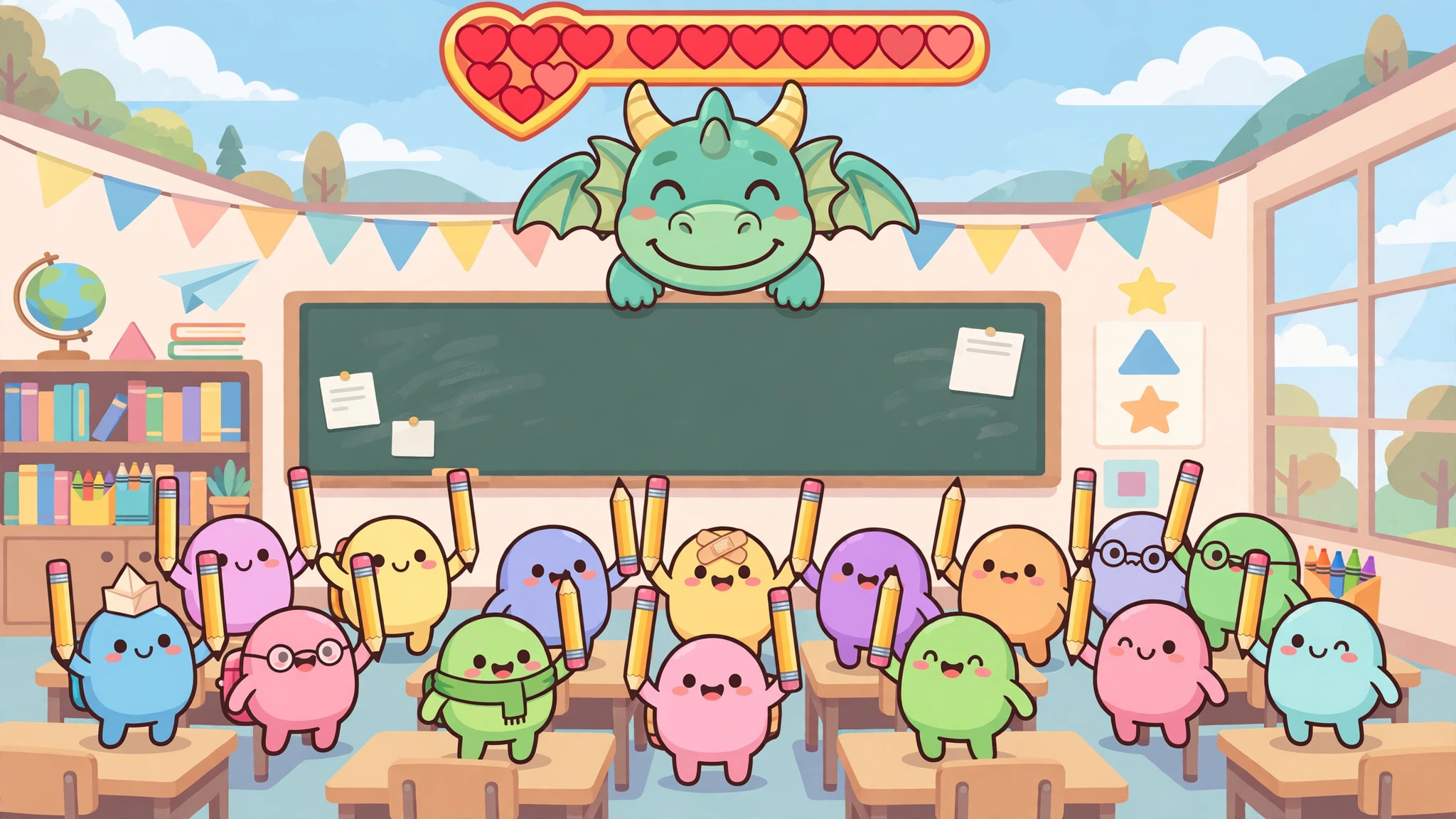
There is one enemy, it has an enormous health bar, and the only weapon your class has is knowing the material. Gimkit Boss Battle takes the cooperative idea further than any other mode on the platform: instead of competing with each other, the entire class attacks a single boss together, and every correct answer from every student chips away at the same giant health bar until, with luck and a lot of correct answers, it finally hits zero.
Gimkit Boss Battle solves the oldest problem in classroom games: what do you do with the students who always lose? In competitive modes, the bottom of the class quietly gives up by mid-game. Here, there is no bottom. The weakest student’s correct answer damages the boss exactly the same as the strongest student’s, so everyone’s effort visibly matters, all the time, to the whole room. This guide explains how a fight works, the strategy that wins it, and why teachers reach for this mode when a class needs a shared victory.
how to play boss battle gimkit
The host builds the fight like any other game: choose a kit, select Boss Battle in the mode picker, set the game options, and share the code. When the game begins, the class faces the boss together. There are no teams and no opponents in the room; the only scoreboard that matters is the boss’s health.
The fight flows in a simple, relentless loop:
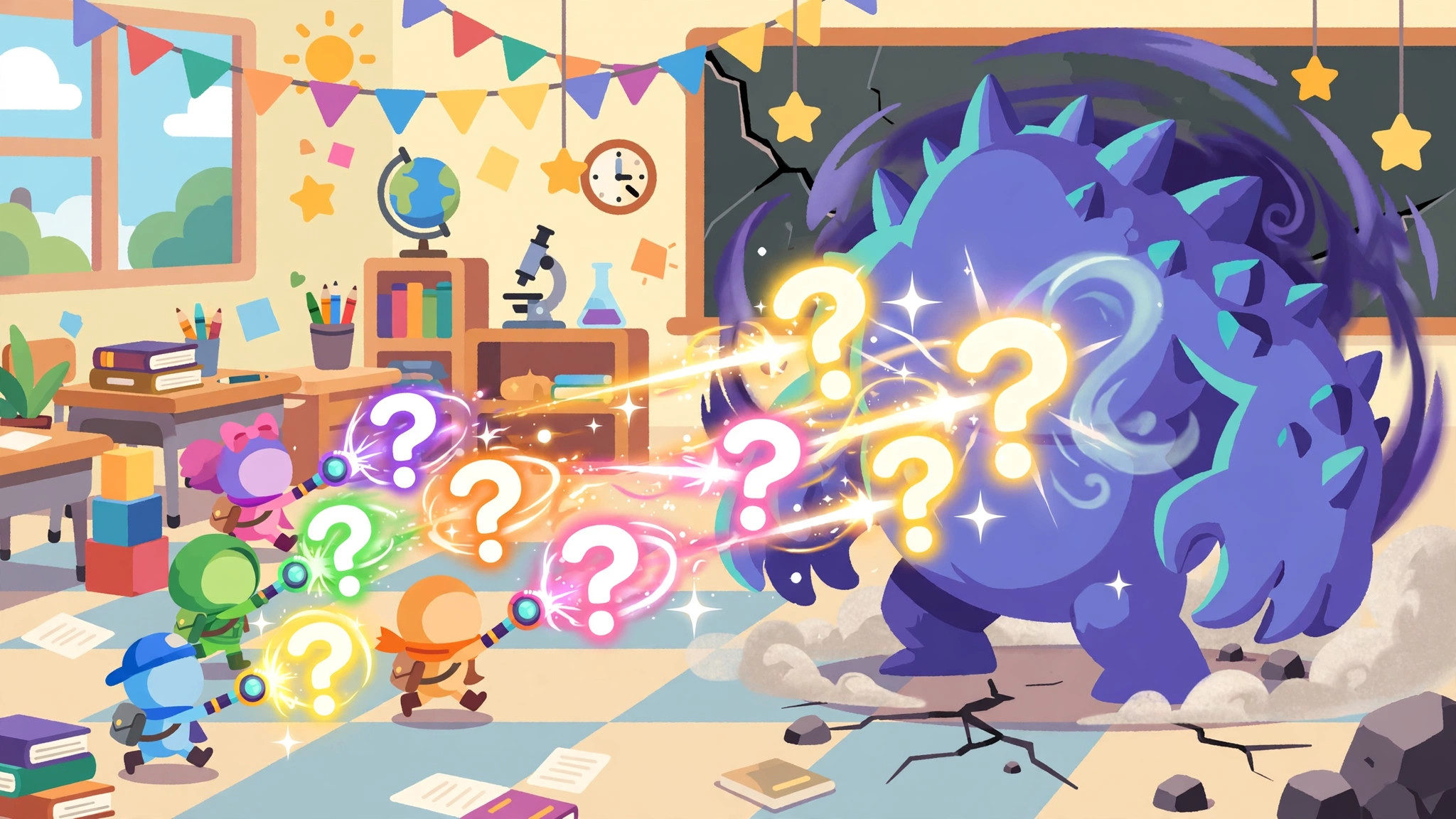
- Answer questions to attack. Every correct answer deals damage to the boss. Your question accuracy is your weapon’s strength, and your answering speed is its firing rate.
- Watch the health bar. The whole class can see the boss’s remaining health, which makes progress tangible. Every few percent the bar drops, the room gets louder.
- Keep the pressure collective. Because damage pools from everyone, a student who struggles alone in other modes contributes fully here. Thirty students answering steadily out-damage any individual hot streak.
- The boss pushes back. The fight is not a target-practice session: as it goes on, the boss makes the class work for the win, and careless stretches where answering slows down are exactly when momentum drains away.
- Empty the bar to win. If the class brings the boss’s health to zero, the whole class wins together. If the class runs out of game first, the boss survives, and the only respectable response is a rematch with lessons learned.
That shared health bar does something subtle to student behavior: it turns other people’s success into your success. Students start calling out encouragement when the bar moves, groaning together when it stalls, and coaching the students around them, because a neighbor’s correct answer is quite literally your damage too. Teachers who have watched a class play Boss Battle describe it as the closest a review game gets to a team sport where nobody sits on the bench.
For more modes that trade competition for teamwork, see how Gimkit Humans vs Zombies splits a class into sides, and keep classroom energy healthy with our Gimkit classroom management guide.
boss battle strategy
A boss fight is a damage race, and damage races are won by sustained output, not by moments of brilliance. These are the habits that take health bars down:
- Accuracy before speed. A correct answer always damages the boss; a fast wrong one does nothing at all. Students who slow down half a beat to actually read the question out-damage the guessers by a wide margin over a full fight.
- Never let the room go quiet. The bar stalls when the class stalls. If your section of the room has slowed, restart your own rhythm first; momentum in a boss fight is contagious in both directions.
- Carry the strugglers openly. The student who is stuck on the material is not dead weight; their next correct answer is real damage. Quiet help (“it’s the second one, think about the river question”) is a strategy, not cheating, in a cooperative fight.
- Pace for the whole fight. The boss’s bar is big by design. Classes that sprint for two minutes and coast spend the rest of the fight watching a barely moving bar. Steady pressure from the first question to the last is the actual skill.
- Use the bar as a metronome. Set micro-goals as a class (“ten percent before the halfway mark”). Shared checkpoints keep thirty individual efforts synchronized, and synchronization is what melts health bars.
- Learn from a loss. If the boss survives, the debrief writes itself: where did the class’s damage stall? Almost always, it is the same five-minute window where everyone got tired at once. Fix the pacing, run it back.
Why Boss Battle lands differently
It is worth a teacher’s attention that Boss Battle produces a different emotional signature from every other mode. Competitive modes produce winners, losers, and a spread of feelings a teacher must manage. Boss Battle produces one feeling, shared: the class either slays the dragon or it doesn’t, and both outcomes are stories the whole room owns together.
That makes it the mode of choice for specific moments: the review before a big test, when you want effort without anxiety about individual ranking; the class that has been fractious and needs a win together; the group with a few students who believe games are “not for them” because they always finish last. There is no last place in a boss fight. There is only the bar, and the class, and the noise when it finally breaks.
The rematch culture deserves a mention too. When a boss survives, students do not ask to switch modes; they demand the same boss again, immediately, with the fury of athletes who lost by one play. Teachers can ride that demand straight into a second full round of review questions, which is more voluntary practice than any worksheet has ever produced.
The three phases of every boss fight
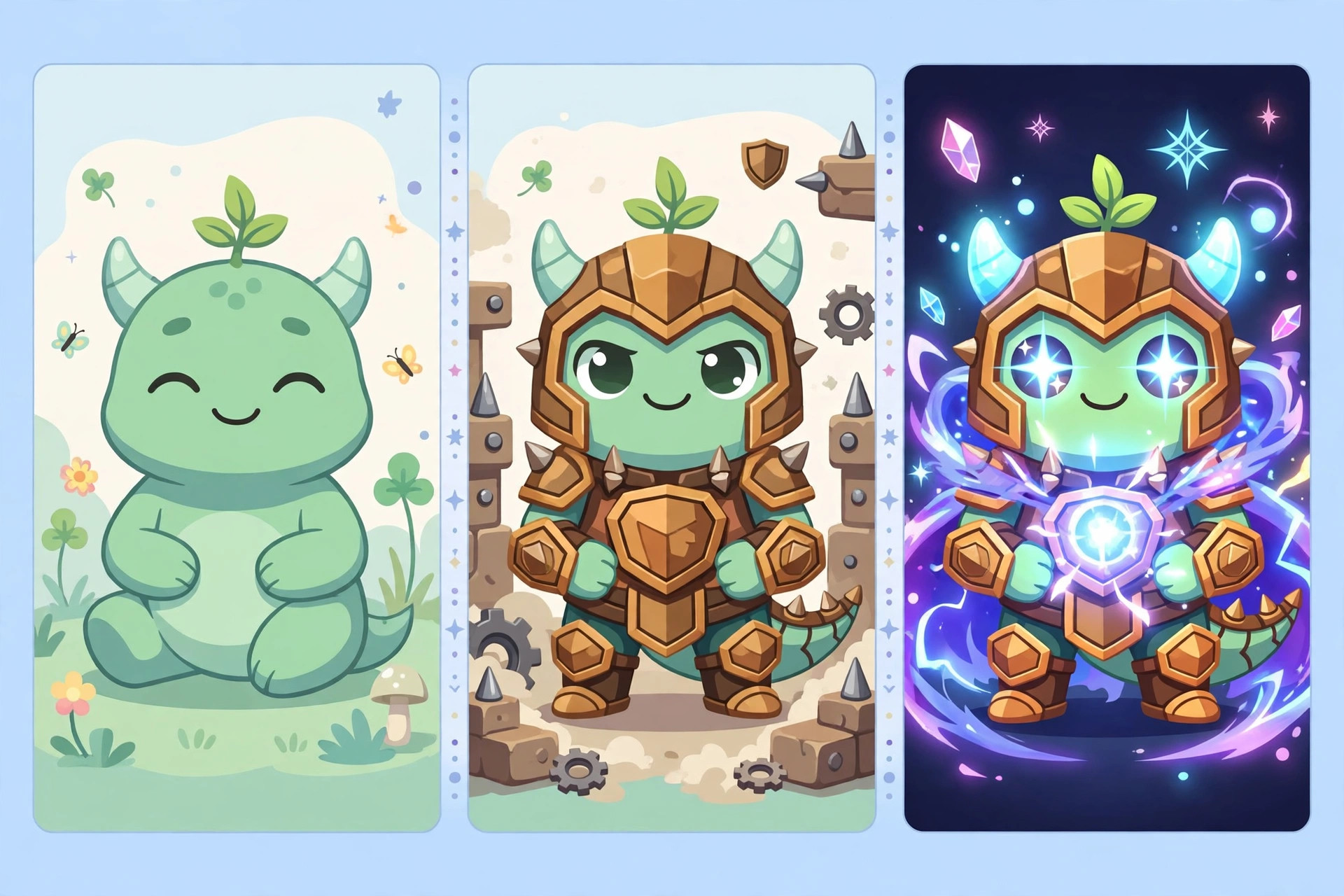
Teachers who run Gimkit Boss Battle a few times start to recognize a rhythm in every fight, and naming the phases for a class (briefly, without spoiling the fun) makes the second run dramatically better than the first.
Phase one: the rush. The bar starts dropping fast because the whole class is fresh, excited, and answering at full speed. This phase feels easy, and that feeling is a trap: classes that burn their concentration in a two-minute frenzy often discover the boss still has most of its health when their energy runs out. The goal of phase one is not damage; it is finding a pace the class can hold for fifteen minutes.
Phase two: the grind. Somewhere in the middle, every fight gets quieter. The bar moves slowly, students glance at it and do math they do not enjoy, and this is where bosses survive. The classes that win treat the grind as the actual game: they set micro-goals, encourage each other out loud, and accept that cooperative damage is supposed to accumulate rather than spike. A teacher’s only job in this phase is morale: point at the bar, note the percentage honestly, and let the class feel itself progressing.
Phase three: the frenzy. When the bar gets low, something wonderful happens: the whole room realizes the win is real, and answering speed doubles on pure adrenaline. This phase needs no coaching. It does, however, produce the loudest classroom moment of the week, and a wise teacher plans the lesson so the frenzy lands near the end of the period rather than with twenty minutes of class still to fill afterwards.
Understanding the phases turns Boss Battle from a fun diversion into a repeatable lesson structure: rush, grind, frenzy, debrief. The debrief matters most. Ask where the class’s damage stalled and what fixed it, and you have taught pacing, teamwork, and collective problem-solving with a dragon as your teaching assistant.
Hosting notes
Gimkit Boss Battle runs on kits like everything else, so the difficulty of the fight is really the difficulty of your questions: a brutal kit makes a brutal boss, whatever the settings say. For a first fight, pick a kit the class mostly knows, so the drama comes from the bar rather than from confusion. If your class wins too easily, the rematch with a harder kit writes the sequel. If it loses narrowly, the same kit and a calmer phase two usually writes a happier ending the second time around.
Access works as usual: featured modes rotate on the free plan while Gimkit Pro unlocks all of them, so confirm Boss Battle is in your picker before the lesson, and check the official Gimkit Help Center for the platform’s own hosting documentation. For a hidden-role change of pace after a cooperative win, Gimkit Trust No One will have the same class cheerfully accusing each other within the hour.
Frequently asked questions
How do you damage the boss in Boss Battle?
By answering questions correctly. Every correct answer from every student chips away at the boss’s shared health bar, so the whole class’s knowledge is the weapon.
Can one strong student carry a Boss Battle?
Not really, and that is the design. The health bar is sized for a whole class’s output, so the win comes from everyone answering steadily, not from a single star.
What happens if the class does not beat the boss?
The boss survives and the class loses together. In practice, this always produces an immediate rematch demand, which teachers can happily grant with the same or a harder kit.
Is Boss Battle good for struggling students?
It is arguably the best mode for them. There is no individual ranking and no elimination, and every correct answer visibly damages the boss, so every student’s effort counts publicly.
Does Boss Battle give XP and GimBucks?
Boss Battle is a classic-format mode rather than a 2D mode, so it does not feed the 2D XP-and-GimBucks loop. Its reward is the shared win itself.
