

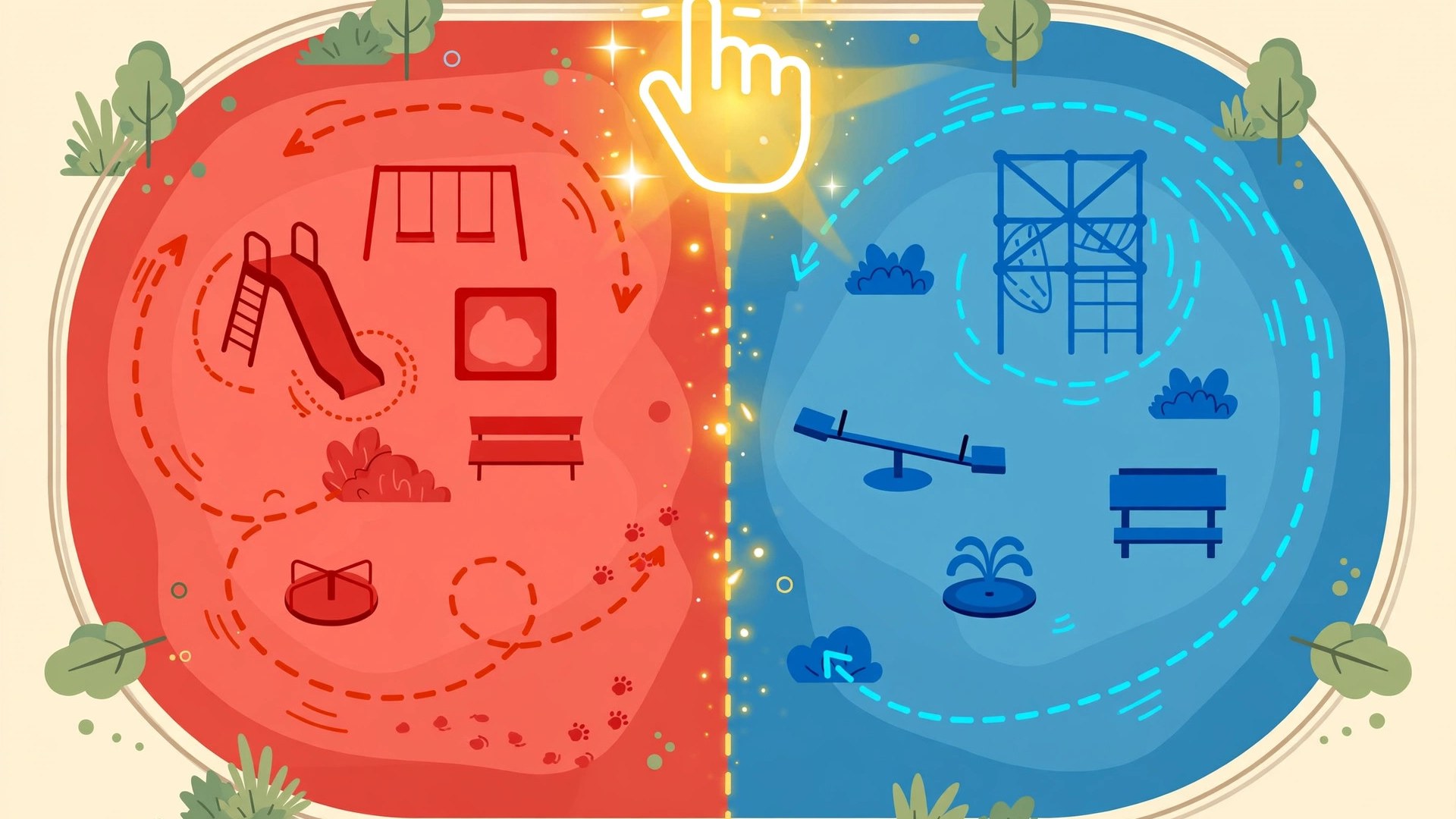
Tag was the first game most of us ever played, and Gimkit tag domination is its gloriously upgraded descendant: two teams, a map of contested zones, and a simple rule with endless consequences — if they tag you, you are out, and if your team controls the ground, your team controls the game.
This guide explains how Tag: Domination works, the team strategy that holds territory, and the mistakes that hand maps to the opposition. It is one of the most movement-hungry modes in the 2D family, and team-play fans arriving from Capture the Flag will feel at home immediately: this is its faster, more chaotic sibling.
how to play tag domination
Here is how to play tag domination. The class divides into two teams on a shared map dotted with zones. Your job is twofold: tag opponents to tag them out of the action, and keep your team’s presence strong in the zones, because dominating territory is how your side builds its win.
As in every 2D mode, questions are the engine:
- Answer questions to earn energy — movement and momentum run on answers; a player who stops answering becomes a statue for the other team to collect.
- Tag opponents — make contact with an enemy player to tag them out and swing the numbers your way.
- Contest the zones — territory held is advantage banked; drifting teams lose ground without noticing until it is gone.
The match flows in waves: skirmishes break out at zone borders, a team’s numbers swell after a good run of tags, then respawns and regrouping reset the fight. The winning side is rarely the one with the single fastest player — it is the side whose average positioning is better, minute after minute. Students discover quickly that this mode is a geography exam disguised as tag: where you are matters as much as what you do.
For teachers, the mode doubles as a surprisingly sharp observation tool. Zone-based team play exposes who plans, who communicates, who panics and who quietly organises the people around them — social information that a term of worksheets would never surface. Watch one match with that lens and you will seat your next group project differently.
It is also, frankly, superb exercise for a classroom brain at the end of a long day: constant movement decisions, light tactics, real questions. If a revision session must compete with the gravitational pull of the final bell, Tag: Domination is the format that gives it a fighting chance — students stay for the territory, and the questions keep landing whether they notice them or not.
Hosts shape the match through the usual settings, so teachers can tune pace and length to a lesson slot. Short, intense Tag games are a legendary way to burn off the last ten minutes of a Friday — with revision smuggled inside.
tag domination strategy
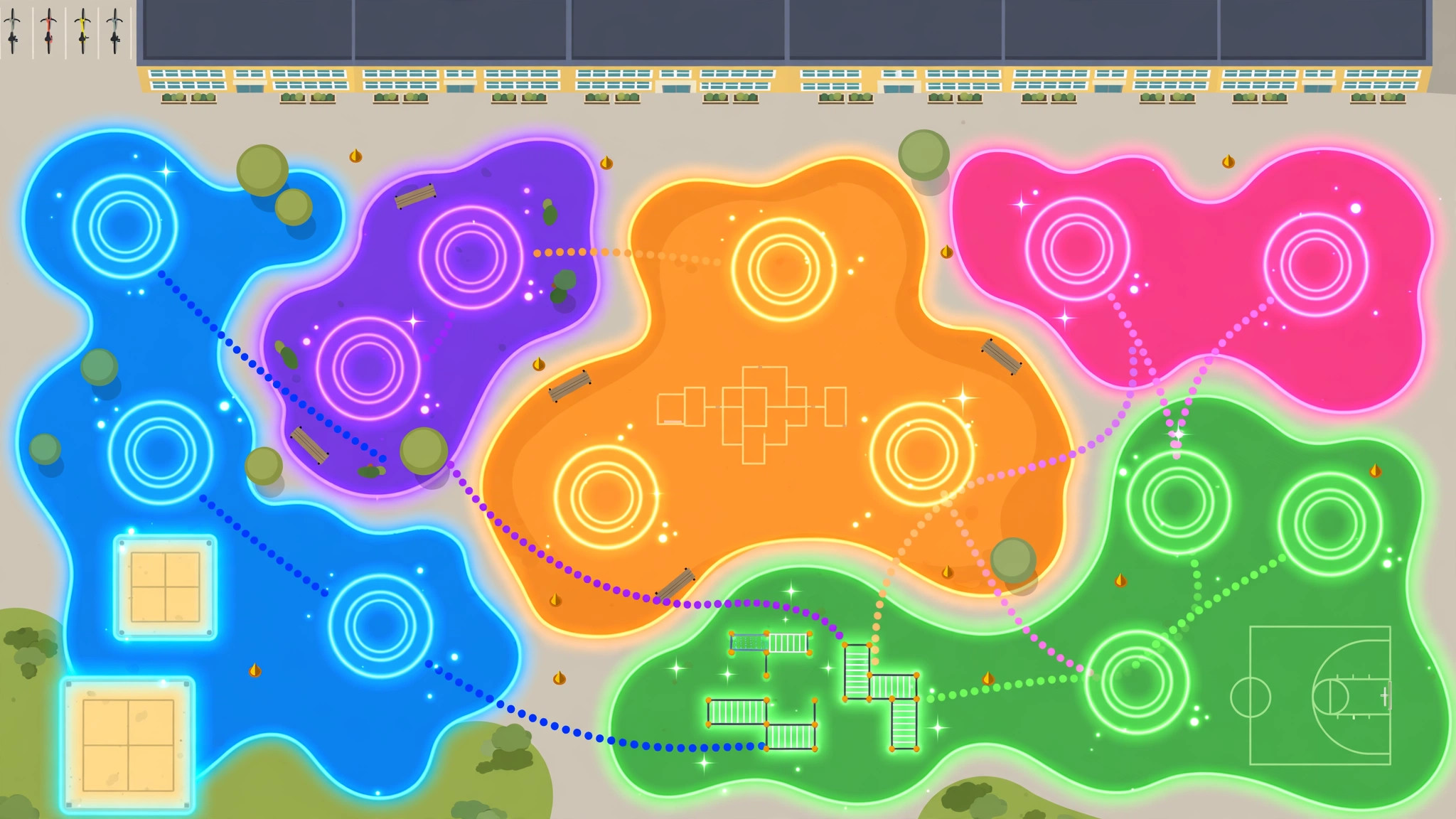
Sound tag domination strategy is built on one word: numbers. Local numbers, at the point of contact, decide almost every fight — so winning teams manufacture 2-on-1 situations and refuse 1-on-2 ones, even when pride objects.
The principles that hold maps:
- Move as a pack, not a parade of soloists — pairs and trios roaming together tag more, get tagged less, and hold zones simply by existing in them together.
- Anchor the zones — keep at least one teammate near each contested zone your team owns. Territory abandoned to chase a distant tag is territory donated.
- Tag with an exit — every lunge at an opponent should end with you somewhere safe. A tag that costs your own elimination is a trade, and trades favour the team already winning.
- Keep the questions flowing while you move — energy discipline is invisible and decisive. The team answering steadily late in the game is the team still sprinting when everyone else walks.
- Hunt the stragglers, ignore the bait — a lone opponent dancing at your border often wants your whole team chasing them across the map while their friends take your zones. Smile, wave, hold position.
Communicate constantly: “two pushing left,” “zone’s empty, rotate.” In Tag, information travels faster than any Gim, and the team sharing it plays with a map-wide brain.
Roles inside a domination team
Organised teams quietly adopt roles, exactly as in Gimkit Capture the Flag, and naming them before the match transforms the quality of play:
- Anchors — position-first players who live near your zones and make them miserable to attack.
- Roamers — pairs who patrol the borders, punishing solo opponents and reporting movement.
- Sweepers — fast finishers who join fights already started, converting your team’s pressure into tags.
- The caller — often the teacher’s favourite discovery: a student whose real gift is reading the map aloud for everyone else.
Rotate roles between games. Students who have anchored appreciate roamers properly, roamers who have anchored stop abandoning zones, and the whole team’s game intelligence compounds. It is sport’s oldest coaching trick, delivered by a browser game between maths questions.
Mistakes that donate the map
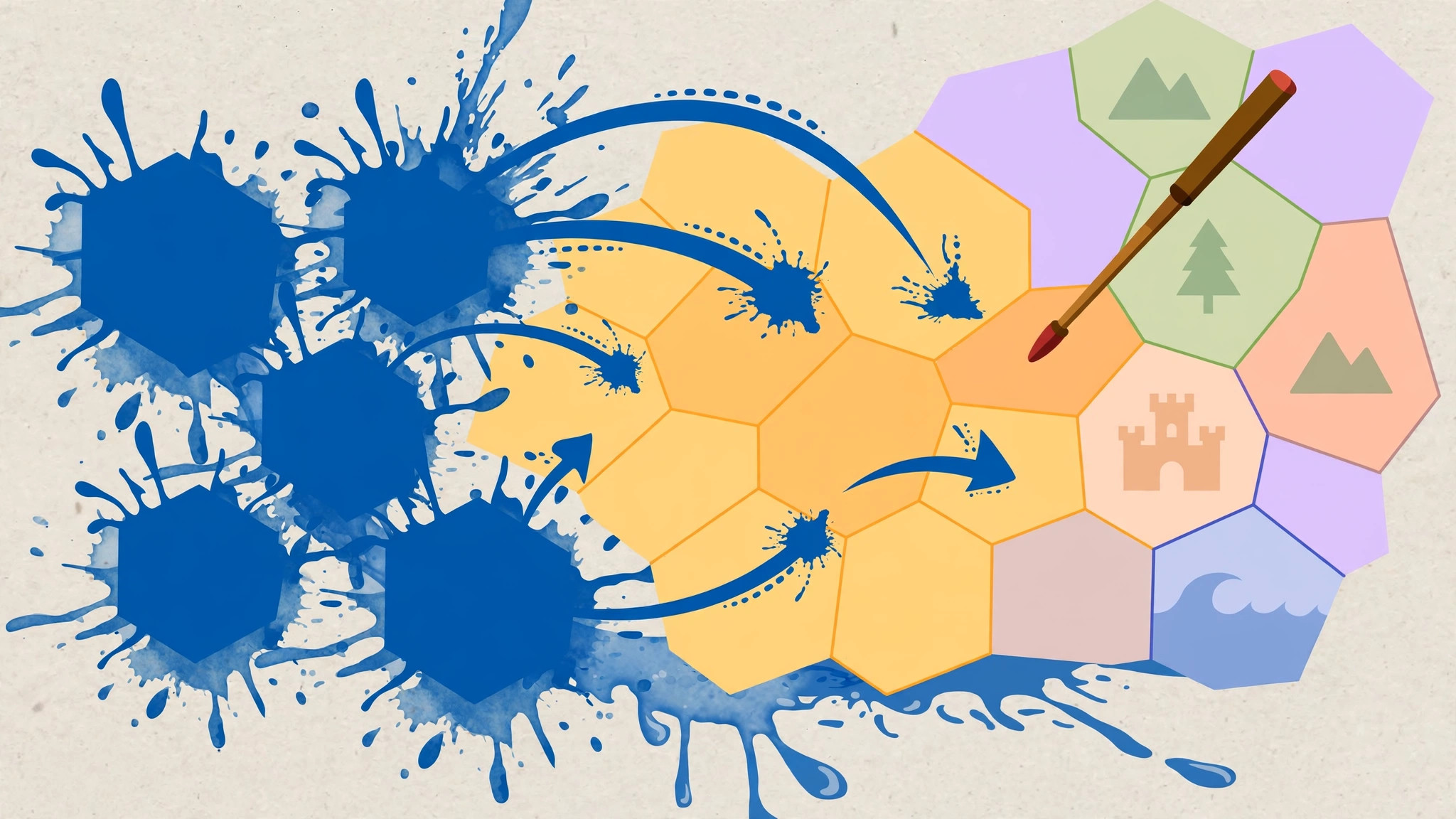
Three errors lose more Tag matches than any opponent’s brilliance. First, the glory chase: sprinting across the map after one elusive opponent while your zones empty behind you. Second, bunching: the entire team clumped in one fight, letting the opposition stroll into undefended territory on the other side. Third, the silent drift: nobody calling rotations, so three teammates independently decide to defend the same already-safe zone.
All three share a root cause — playing the player in front of you instead of the map in front of everyone. Coach the map view, in thirty-second huddles between rounds, and the improvement is startling. Students who master that map sense tend to carry it into Knockback and Color Clash too, where positioning is equally decisive.
Own the ground, own the game
Tag: Domination rewards teams that think in zones, move in packs, answer relentlessly, and talk. It is recess’s oldest game rebuilt as a lesson in territory and teamwork — and your students will have strong opinions about it by the second match, which is exactly what a great mode should cause.
For official mode details and availability on your plan, the Gimkit Help Center is the definitive reference. Next game, assign an anchor before the lobby even opens — and watch your zones stop leaking.
small-sided and full-class: scaling gimkit tag domination
Numbers change this mode’s character, so plan the format to the register. In a small class, shrink your ambitions to two zones and short rounds: gimkit tag domination at low counts becomes a duel of wits — feints, traps, one-versus-one heroics — and accuracy matters even more because a single slow player is a visible hole in the line. Call out the chess of it; small groups love being told their game is the clever version.
At full-class scale, lean the other way: longer rounds, explicit role cards for the first match (“you three are anchors, whatever happens”), and a mid-match huddle where teams may re-plan once. The huddle matters — full-class gimkit tag domination can otherwise drown its own strategy in noise, and thirty seconds of regrouping converts chaos back into a contest of plans. Between the two scales, the mode offers two genuinely different games, which is why classes rarely tire of it across a term: master the duel, and the war is waiting.
the debrief: two questions that make tag educational out loud
Close every session with ninety seconds of structured talk. Ask first: “Where did we lose the map?” — a geography question that forces the class to narrate positioning, not blame people. Ask second: “Which question kept stopping us?” — and let the content difficulty surface in the students’ own words. Write both answers where the class can see them next lesson. The rematch then begins with intelligence instead of amnesia, and the debrief quietly converts adrenaline into analysis.
Do this three matches running and the ritual embeds itself: students start debriefing mid-match, in whispers, unprompted. Gimkit tag domination at that point is teaching metacognition with a tag mechanic — the match was always the hook; the reflection is the education.
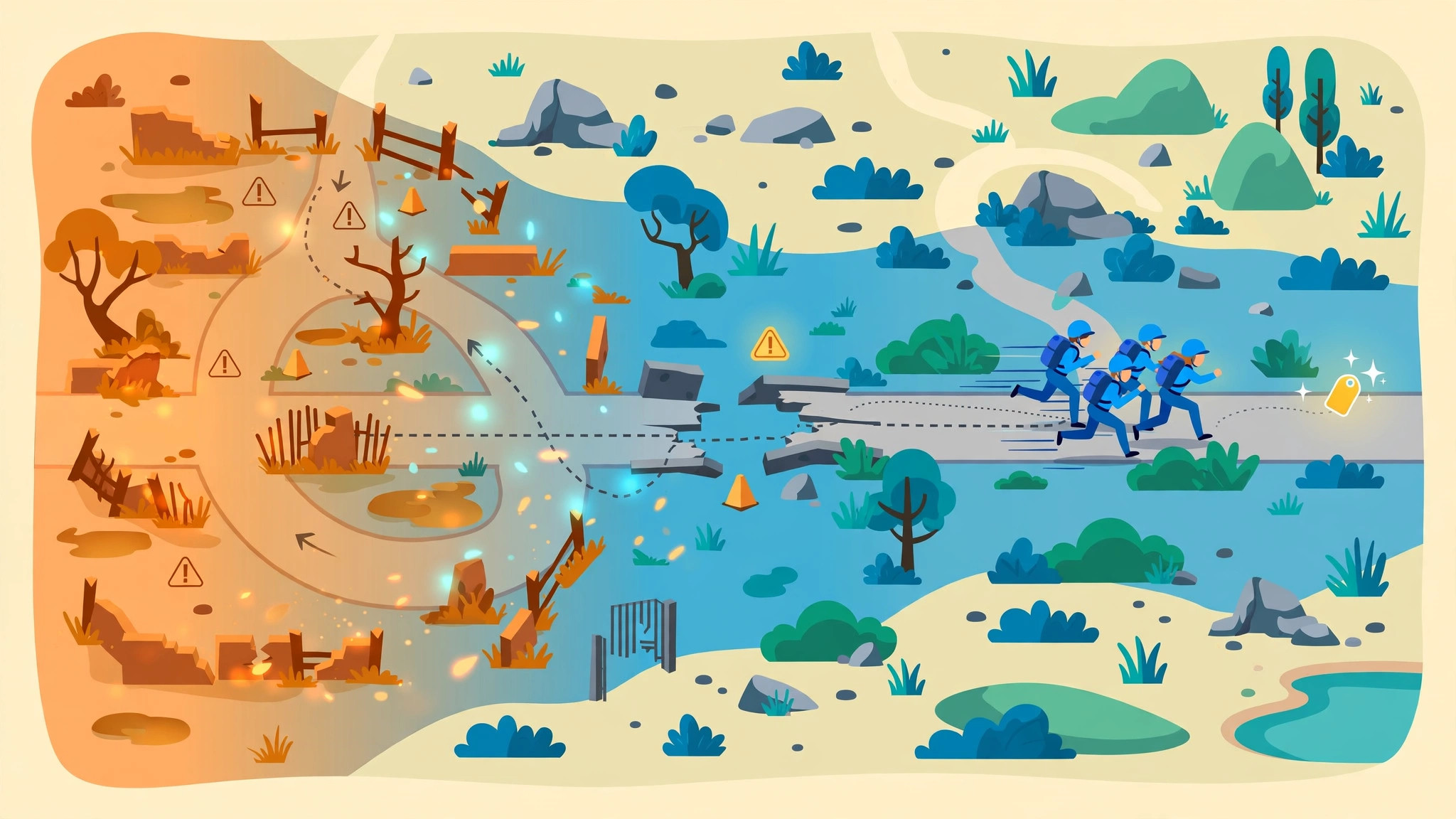
territory and the quiet student
Watch the anchors: they are frequently the students who say least in discussion and most in outcomes. Zone defence gives conscientious, positionally-minded learners a stage where their virtues — patience, reliability, awareness — are the winning virtues, publicly. Every mode crowns a different kind of excellence; a wise rotation across the term makes sure every student in the room eventually plays a game that was, in some deep way, designed for them.
frequently asked questions
How do you win Tag: Domination? By controlling the map: hold your zones with anchors, roam in pairs to win local fights, and keep your team’s numbers strong where the territory is contested. Individual tagging brilliance helps, but average team positioning across the whole match is what actually banks wins.
What happens when you get tagged? You are tagged out of the immediate action and return through the mode’s respawn flow, while your team fights a player down until you are back. Either way, the lesson lands instantly: survival is a team statistic, and reckless tags trade your presence for a moment of glory.
Do questions really matter in a running-around mode? They are the fuel — energy for movement comes from answering, so a team that neglects questions literally slows down. The steadiest answering side is still sprinting, tagging and contesting zones in the final minutes when everyone else is walking.
Is Tag: Domination good for big classes? It thrives on them: more players means real zones battles, meaningful roles, and packs that can actually organise. Very small groups still work, but the mode’s personality — territory, numbers, waves of pressure — fully wakes up with a full classroom on the map.
