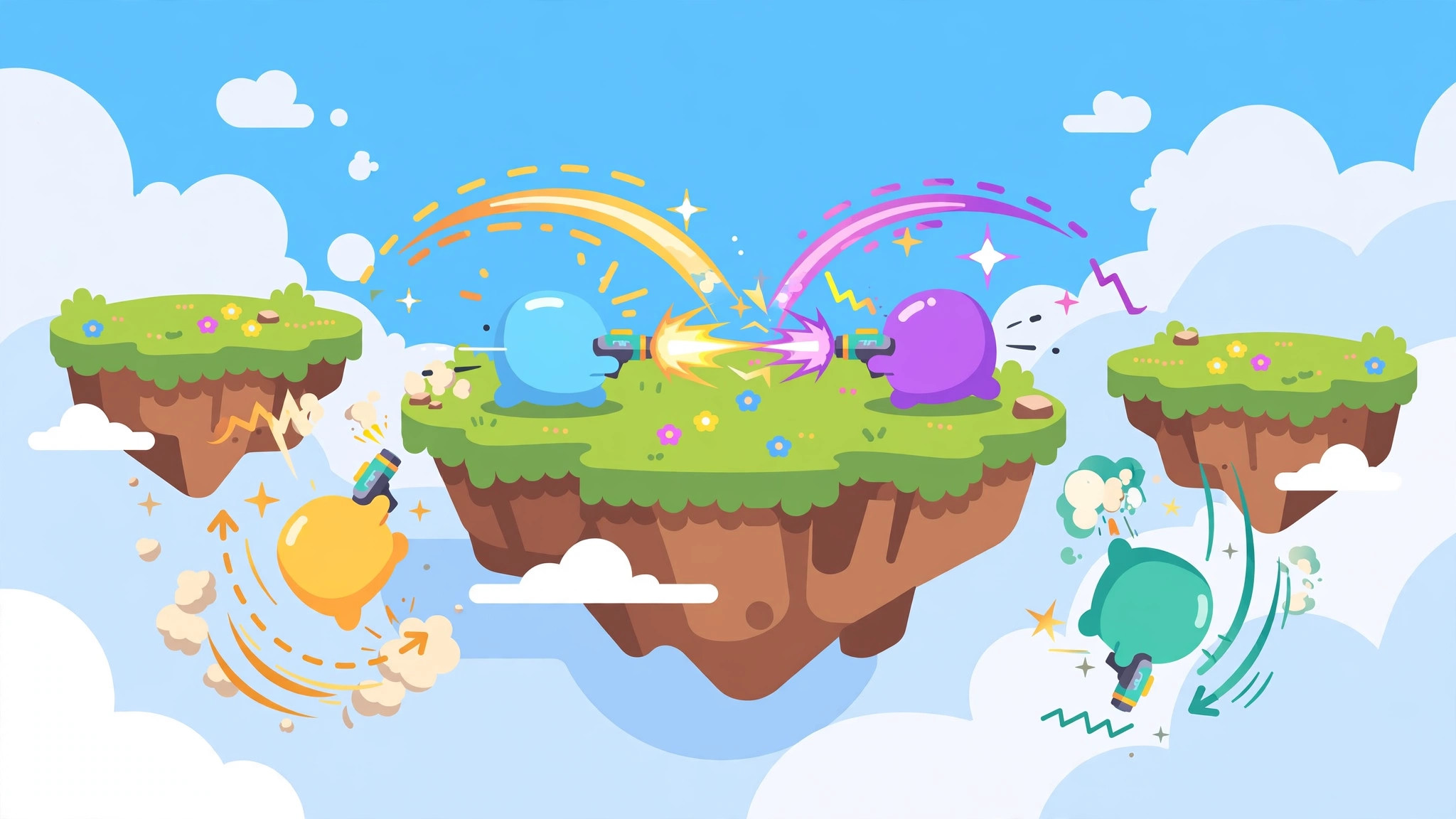
There is a special kind of classroom silence that falls right before somebody gets launched off a floating platform. Gimkit Knockback is built entirely around that moment. It is a platformer PvP mode where players battle on floating stages, using gadget blasts to knock each other off the edge, and where the farther you have already been knocked around, the farther the next hit sends you flying.
Knockback is one of the purest skill modes in Gimkit’s 2D lineup, but it is not only about quick hands. Your attacks run on energy, energy comes from correct answers, and the player who keeps answering calmly while everyone else button-mashes usually ends the match still standing on the stage. This guide covers how a match works, how stage control actually functions, and the strategy that turns random blasting into consistent wins.
how to play knockback
Knockback is a 2D platformer mode. You control your Gim on a stage made of floating platforms suspended over a drop: fall off the stage and you are out of the round or lose ground, depending on the match flow. Movement is WASD or arrow keys, or the joystick on touch devices, with jumping between platforms just like other platformer modes.
The combat loop works like this:
- Answer questions to earn energy. As in every 2D mode, correct answers are your fuel. Energy powers your movement and your attacks, so a player who stops answering becomes a sitting target.
- Aim and fire your gadget. Your gadget blasts opponents. Hits do not just sting; they physically shove the other player across the stage.
- Knockback builds up. The more a player gets hit, the more vulnerable they become to being launched. A fresh player barely budges; a battered player can be sent flying by a single well-placed blast.
- Play the edges. Most eliminations happen when a player is caught near a ledge. The center of the stage is safe ground; the edges are where matches are decided.
- Survive and eliminate. The goal is to be the last Gim standing, or to rack up the most knockouts before the game ends, depending on how the host’s game plays out.
That building-knockback mechanic is the heart of the mode, and it changes how you should think about every fight. Early hits matter less for the damage and more for the setup: each one makes the next one more dangerous. Smart players think in combinations: soften a target, reposition, then finish them at the edge. Reckless players blast whoever is closest and wonder why their victims keep landing back on the stage.
If the platforming appeals to you, the territory platforming of Gimkit Color Clash is the gentlest next step, while Gimkit Snowbrawl offers projectile combat without the heights. Our full list of Gimkit 2D modes maps out the rest of the family.
knockback strategy
Winning at Gimkit Knockback is mostly about positioning, and positioning is a learnable skill. These are the habits that separate the last Gim standing from the first one launched.
- Live in the center. The middle of the stage is the farthest point from every edge. Fight from there whenever you can, and only chase opponents toward the edges when they are already battered enough to launch.
- Fight facing the stage. When you are near an edge, keep your character between the drop and your opponent, and angle your blasts so their knockback carries them outward, not inward.
- Track who is battered. A player who has taken several hits is one good blast from elimination. Finishing vulnerable targets is worth more than starting fresh fights.
- Use platforms as shields. Verticality is defense. Dropping to a lower platform or hopping above an incoming blast line breaks your opponent’s aim and resets their combo.
- Keep answering under pressure. The natural instinct when attacked is to stop everything and dodge. The winning instinct is to keep answering while you move, because energy is both your escape and your counterattack.
- Recover with purpose. If you do get launched, spend your energy getting back to the stage immediately rather than saving it. A stylish recovery beats an efficient fall.
- Do not chase into the corner. Two players dueling at the very edge are both one hit from elimination, and a third player will happily collect both. Let greedy opponents make that mistake instead.
There is also a classroom-level truth worth knowing: Gimkit Knockback rounds are loud. It is one of the highest-energy modes on the platform, closer to a fighting game than a quiz with decorations. Teachers who set expectations first tend to get the fun without the chaos, and shorter rounds with quick rematches work better than one long match, because eliminated players rejoin the action quickly.
Gimkit Knockback awards XP like other 2D modes, so matches also feed the GimBucks-and-cosmetics loop that keeps students invested across the term. Hosts can review game options before starting, and the official Gimkit Help Center has the platform’s own documentation if a setting behaves unexpectedly. Featured modes rotate on the free plan, while Gimkit Pro unlocks the full mode list at any time.
Reading your opponents
At higher levels, Gimkit Knockback stops being a reaction game and becomes a reading game. Every opponent broadcasts their intentions through their movement, and learning to read those signals wins more fights than raw aim does.
Watch the answerers first. A player who suddenly stops moving has not frozen; they are answering questions to rebuild energy, and for those two seconds they cannot dodge. That is your window to line up a blast. Conversely, a player who is moving constantly but never firing is out of energy and mostly harmless; they are saving for one attack, so keep your distance until they spend it.
Watch the edge-huggers next. Some players live near ledges trying to bait chasers into bad positions. The counter is patience: refuse the bait, hold the center, and make them come to you, where the knockback math favors the player with stage behind them. And watch the finishers, the players who ignore fresh opponents and hover near fights they are not in. They are waiting to steal eliminations on battered players. If you have taken hits, assume a finisher is tracking you and heal your positioning before starting a new duel.
Finally, read the scoreboard habits of the room. In a class match, alliances form silently: students avoid eliminating their friends and gang up on the current leader. You cannot prevent this, but you can stop feeding it. If you are leading, play boring, central, defensive Knockback, and let the rest of the lobby spend its knockback on each other.
None of this requires faster hands. It requires looking at the other players instead of your own character, which is the same leap every platform fighter asks of its players, scaled down kindly for a classroom.
Practice drills that actually help
Knockback skill improves quickly with the right practice, and teachers can run these as two-minute warm-ups before a real match. They also give students who keep getting eliminated early something concrete to work on besides “get better.”
Center control drill. For the first minute of a practice round, nobody is allowed to cross into the outer third of the stage. Forcing everyone to fight from the middle teaches the single most valuable habit in the mode, and it makes students viscerally feel how much harder they are to launch when there is stage behind them.
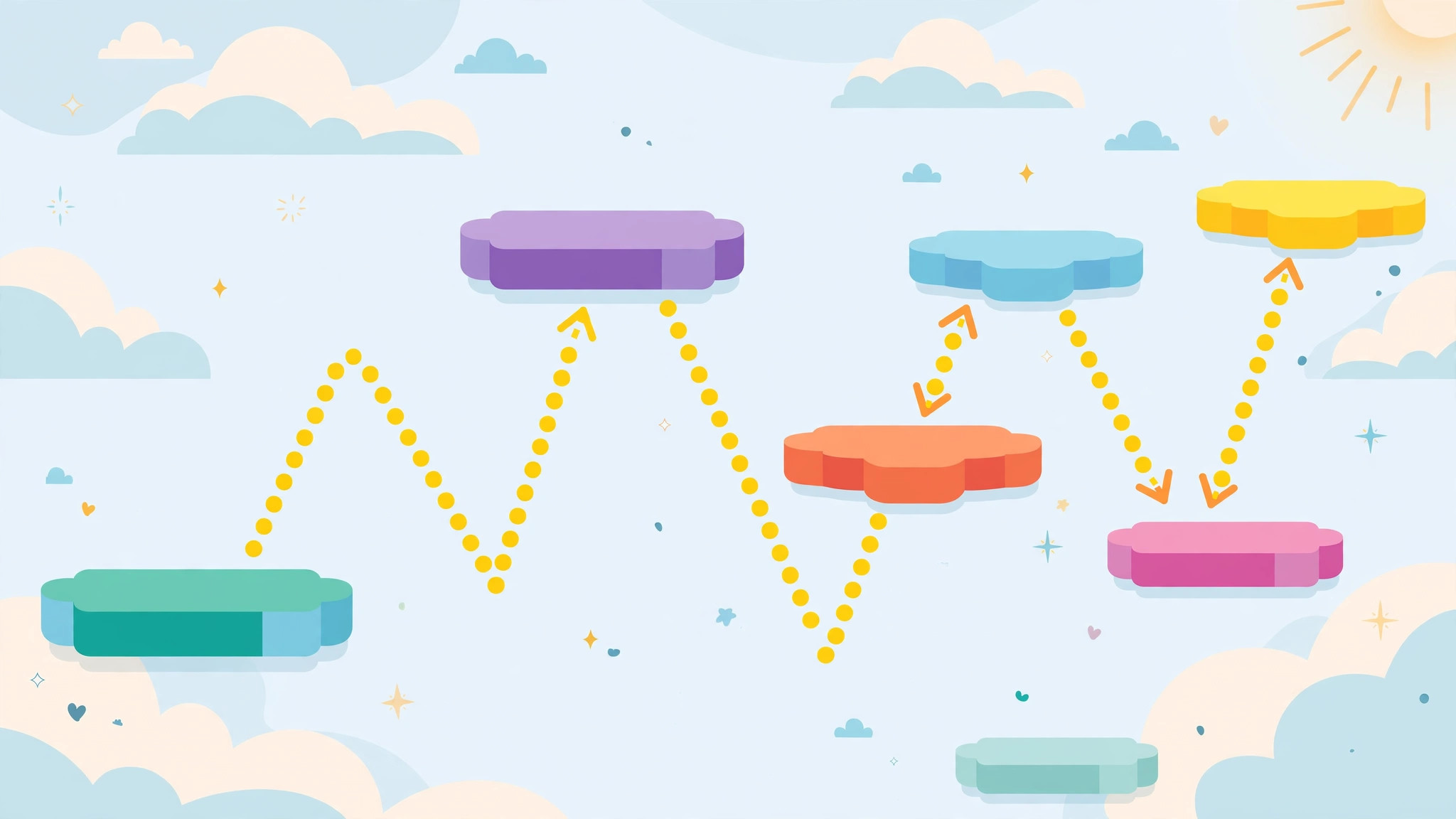
Recovery drill. Players deliberately jump off the stage and practice recovering back onto it with movement and energy management. In real matches, half of all eliminations are players who could have recovered but panicked; two minutes of deliberate falling removes the panic.
Silent answering drill. Play a round where nobody may fire until they have answered three questions in a row. It feels strange for thirty seconds, then students discover how much energy they normally waste, and their real-match play becomes calmer and better funded.
Edge awareness callouts. In one practice round, any player standing near an edge must say “edge” out loud. It sounds silly, it gets laughs, and it builds the habit of constantly knowing where the drop is, which is the entire defensive game in Knockback.
Run one drill before a tournament day and the quality of the matches jumps noticeably. Students also enjoy the ritual of it: drills make the rematch feel like a sport rather than a free-for-all, and the students who drill are disproportionately the ones still standing at the end.
Frequently asked questions
How do you win in Knockback?
By knocking your opponents off the stage. Hits build up a player’s knockback, so battered players fly farther with each blast. Be the last Gim standing, or score the most knockouts, depending on the match.
Why do some players fly farther than others?
Because they have taken more hits. Knockback accumulates: the more a player has been blasted, the farther the next blast sends them. Fresh players are much harder to launch.
What is the safest place on the stage?
The center. It is the farthest point from every edge, so fight from the middle and only move outward to finish opponents who are already vulnerable.
Does Knockback give XP and GimBucks?
Yes. Knockback is a 2D mode, and 2D modes award XP for correct answers and objectives, which converts into GimBucks for cosmetics.
What should a beginner focus on first in Knockback?
Two things: staying near the center of the stage, and never stopping answering questions. Beginners lose most fights before the first blast, because they wander to the edges and run dry on energy. A new player who simply holds central ground and keeps a steady question rhythm will outlast most of the lobby while they learn the finer points of aiming and combos.
It is fast and physical by Gimkit standards, so it suits classes ready for direct PvP. For a gentler platformer, Color Clash offers platform play without eliminations.