


Answering questions is only half of a Gimkit game. The other half happens in the shop, where students spend their earnings on gimkit power ups and upgrades that multiply their income, protect their streaks, or gleefully sabotage a rival’s screen. Master the shop and you master the game.
This guide explains the two families of purchases — permanent upgrades and one-use power-ups — what the important ones do, which to buy first, and the mistakes that bankrupt beginners. It is the companion to our strategy coverage of Gimkit Tycoon, where these purchases decide who wins classic mode.
gimkit power ups list
Any gimkit power ups list starts with a distinction students constantly blur: upgrades versus power-ups. Upgrades are permanent improvements bought once that keep paying you back for the rest of the game. Power-ups are one-use effects — bought, fired, gone — usually aimed at another player or at protecting yourself in a key moment.
The classic power-up family includes effects in these flavours:
- Disruptors — effects that briefly interfere with a rival: freezing or obscuring their screen for a few precious seconds while the race tightens.
- Protectors — insurance-style effects that shield you from losing cash or a streak when you answer wrong or get targeted yourself.
- Boosters — short bursts that multiply your earnings or supercharge a streak, best fired when you are answering confidently.
Exact names, prices and availability vary by mode and update, so treat any list (including this one) as a map of the types you will meet rather than a museum catalogue. The strategic lesson survives every rebalance: one-use effects are swing plays. Fired at the right moment — the final minute, or at the leader — they change outcomes. Fired randomly in minute two, they are money evaporated.
It also helps to understand why the shop is designed this way. Power-ups exist to create stories: the underdog who froze the leader at the death, the runaway winner caught at the line. That drama is deliberate — it keeps the whole class emotionally invested to the final answer, including students whose economies never took off. A pure income race would be decided by minute five and dead by minute ten; the shop’s chaos keeps every place on the leaderboard worth fighting for. Teachers should read that as a design feature, not noise: engagement that survives to the last question is engagement you can teach through.
The balance to strike as a host is simply dosage. Full power-ups for celebration games, a calmer shop environment for focused revision, and the off switch when you want exam conditions — the settings are yours, and the next section’s buying order works in all three worlds.
Hosts can also switch power-ups off entirely for calmer games, a setting covered in our Gimkit host settings guide.

best power ups in gimkit
Ask a room of students about the best power ups in gimkit and you will start an argument; ask the game’s mathematics and the answer is boring but true: the best early purchases are the ones that raise what you earn. Before any sabotage, these earners rule the early game:
- Money per question upgrades — every correct answer pays more, forever. The single most reliable investment in the shop.
- Streak bonuses — rewards for consecutive correct answers, which you are aiming for anyway.
- Multipliers — anything that compounds the first two turns a good streak into a runaway lead.
Among one-use power-ups, the crown goes to protectors in most game states: insurance against a broken streak is worth more than revenge on a rival, because your income engine is worth more than their inconvenience. Disruptors are the exception near the end — in the final minute of a close game, freezing the leader’s screen for a few seconds is worth more than any upgrade that has no time left to pay back.
The real “best power-up,” though, is timing. A mediocre effect fired perfectly beats a premium effect fired idly. Teach students to ask “what does this buy me right now?” and the whole shop suddenly makes sense.
gimkit shop upgrades
The gimkit shop upgrades follow a classic escalator: each tier costs more and pays more, and they are arranged so the early game is about buying your first multiplier and the late game is about maxing the ladder. This compounding is the soul of Tycoon-style play — the leader is rarely the fastest answerer; they are the earliest investor.
Shop discipline separates winners from nearly-winners:
- Buy income before cosmetics — in modes where both exist, earnings first; flair can wait until the engine hums.
- Never hoard early — cash sitting unspent in minute three is a loan you gave your rivals. Early upgrades pay for themselves many times over; the same cash spent near the end barely returns.
- Watch the clock when buying late — an upgrade needs remaining questions to refund its price. In the last stretch, one-use effects and simply answering are often the better spend.
Modes reshape the shop, too: Super Rich Mode inflates the whole economy, making the upgrade ladder climbable at cartoon speed, which is why it feels so different despite the same shop logic.

gimkit upgrades guide
As a gimkit upgrades guide, everything above compresses into one buying order you can teach any class in thirty seconds:
- Phase one (opening minutes): buy money-per-question. Every spare coin goes into income until your earnings per answer feel healthy.
- Phase two (mid-game): add streak bonuses and multipliers. Your income compounds; this is where leaders are made.
- Phase three (late game): stop investing when purchases cannot pay back before the goal; switch to protectors, a well-timed disruptor, and raw answering speed.
Two beginner mistakes deserve naming. The first is the revenge purchase — spending your engine money to annoy the student who froze you. It feels great and loses games. The second is upgrade tourism: buying a little of everything instead of climbing one ladder properly. Focused compounding beats a diversified portfolio of mediocrity every single time.
Finally, a teacher’s angle: the shop is a stealth economics lesson. Compound growth, opportunity cost, investment horizons — your students are living these ideas at high speed. A two-minute debrief (“who bought what first, and did it work?”) converts a raucous game into genuine numeracy talk, and students barely notice it happened.
Spend like a tycoon
Buy income early, protect the streak that funds you, time your one big play for when it decides something, and stop investing when the clock says so. That is the entire shop, mastered. The questions win the cash — but the shop decides who wins the game.
For the official, current shop contents in each mode, the Gimkit Help Center is the authoritative source. Next game, try the discipline: no purchases except income until your per-answer earnings double — and feel the difference by mid-game.
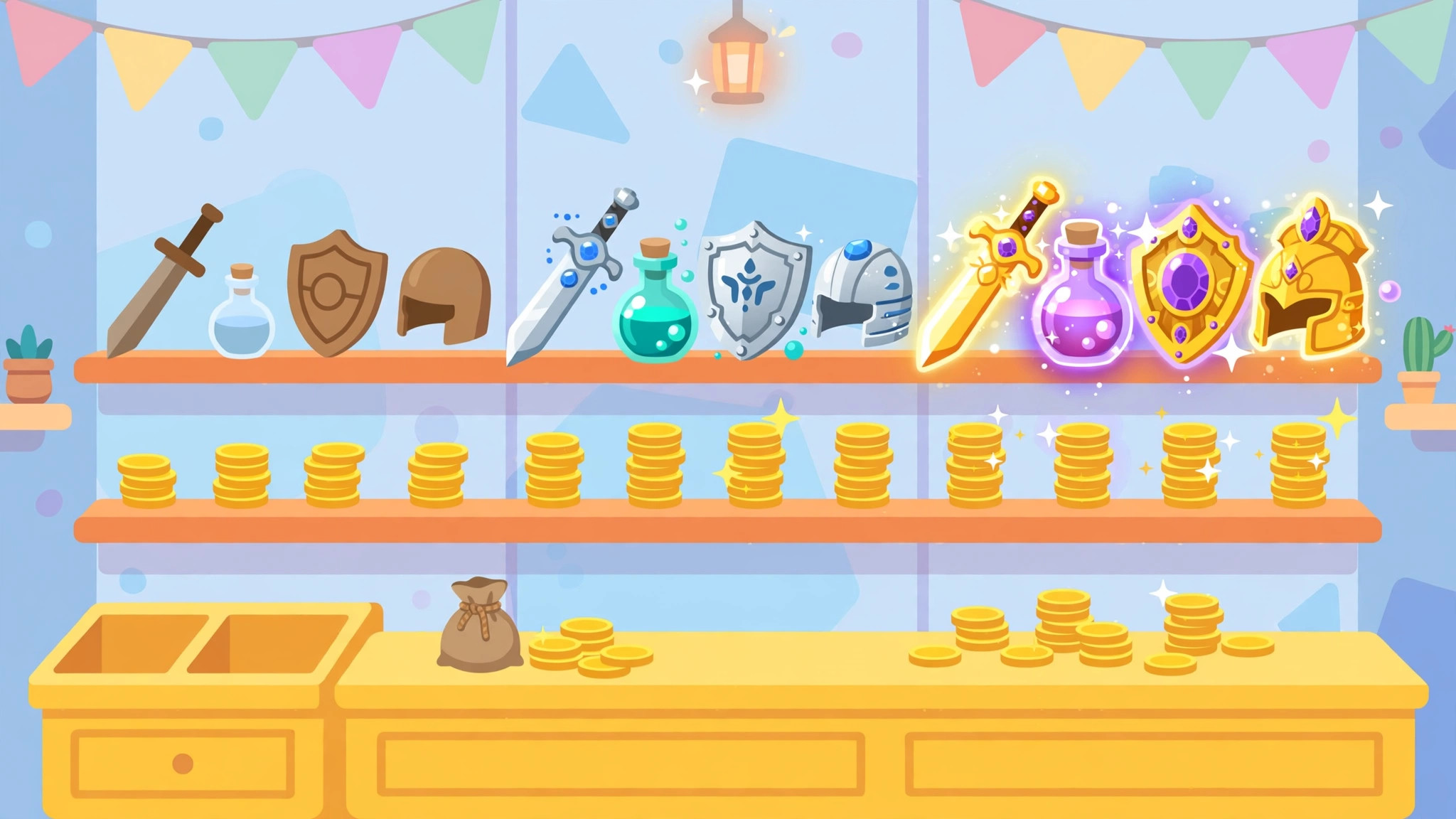
teaching the shop: a two-minute lesson before the game
Because gimkit power ups reward judgment, a two-minute pre-game briefing pays for itself many times over. Say three things. One: buy income first, always, before it is fun to buy anything else. Two: a one-use effect is a photograph moment — save it for when the leaderboard can see it. Three: if you cannot explain why you are buying something, do not buy it yet. Then start the game and let experience grade the lecture.
Repeat the briefing, word for word, before the next three games. By the fourth, the class chants it back at you — which is the joke, and also the sound of a strategy becoming culture. Classes with a shared purchasing doctrine play noticeably fairer, richer games: fewer bankruptcies by minute three, more comebacks at the death, and post-game arguments about decisions instead of luck. That argument, sustained over a term, is a financial-literacy curriculum smuggling itself inside a quiz game.
power-ups and fairness: the question every class asks
“Is it fair that they can freeze me?” deserves a better answer than “life isn’t fair.” The honest version: the shop is open to everyone, its prices are identical, and what differs is when people buy and what they buy — decisions, not dice. Gimkit power ups create drama inside rules that are equal for all, which is the same defence sport makes for the counter-attack and the underdog’s late goal. Classes that argue about this are doing ethics with live ammunition; let the argument run for one minute, then start the rematch they are really asking for.

frequently asked questions
What should I buy first in Gimkit? A money-per-question upgrade, the moment you can afford it. No other purchase pays you back on every single answer for the rest of the game, which is why every serious buying order in this guide starts with income and only later turns to streak bonuses, multipliers and one-use plays.
Are power-ups available in every mode? The shop is a Tycoon-family feature at heart; 2D modes run on a different economy (XP, energy and mode-specific resources) rather than the classic upgrade shop. Where a mode offers purchases, the same rule travels well: buy whatever compounds your progress first.
Can the host turn power-ups off? Yes — hosts can disable power-ups when setting up a game, producing a calmer, purely economy-driven session. Teachers often do this for assessment-style games or for classes where the sabotage, however harmless, reliably derails the room’s focus.
Is it ever right to spend everything on one big power-up? Only at the death: in the final minute of a close game, an upgrade cannot pay itself back, so a single decisive disruptor aimed at the leader is mathematically respectable. At any earlier point, that same purchase is a story you will tell about the game you nearly won.
