

Welcome to gim-kit. Creating high-quality 3D models has traditionally required advanced design skills, expensive software, and hours of manual work. Today, artificial intelligence is transforming that process by allowing anyone to generate detailed 3D assets with just a text prompt or an image. Among the leading AI-powered platforms, Meshy AI has quickly become a favorite for game developers, designers, content creators, and beginners looking to streamline their creative workflow.
Whether you’re building assets for video games, creating product prototypes, developing AR/VR experiences, or experimenting with AI-generated art, Meshy AI offers an intuitive solution that significantly reduces production time. This comprehensive guide explores everything you need to know about Meshy AI, including its features, pricing, workflow, advantages, limitations, and practical tips to help you get the best results.
What Is Meshy AI and How Does It Work?
Meshy AI is an AI-powered 3D content generation platform that enables users to create three-dimensional models from simple text descriptions or reference images. Instead of manually sculpting objects in traditional 3D software, users can describe what they want, and the AI generates a usable 3D model within minutes.The platform leverages advanced generative AI models trained on large datasets of 3D assets. These models understand natural language prompts and visual references to produce meshes, textures, and materials automatically.
How Meshy AI Works
The workflow is designed to be simple:The platform leverages advanced generative AI models trained on large datasets of 3D assets. These models understand natural language prompts and visual references to produce meshes, textures, and materials automatically.
- Enter a detailed text prompt or upload an image.
- The AI analyzes your input.
- It generates a 3D mesh based on your request.
- AI automatically creates textures and materials.
- Preview, refine, and export the finished model.
This process eliminates many of the repetitive tasks associated with traditional 3D modeling while allowing creators to focus on refining their ideas instead of building every detail from scratch.
Why Meshy AI Is Popular
Several factors contribute to the growing popularity of Meshy AI:This process eliminates many of the repetitive tasks associated with traditional 3D modeling while allowing creators to focus on refining their ideas instead of building every detail from scratch.
- Fast AI-powered 3D generation
- Beginner-friendly interface
- Text-to-3D and Image-to-3D support
- AI-generated textures
- Compatibility with popular 3D software
- Continuous feature updates
- Reduced production costs
Whether you’re an experienced 3D artist or someone exploring AI tools for the first time, Meshy AI provides an accessible way to create impressive digital assets.
Read also: Law Insider AI: Features, Benefits, Pricing & How It Works
Key Features of Meshy AI
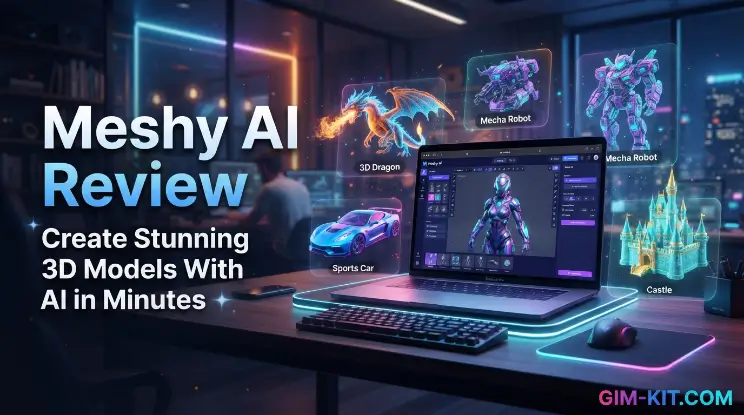
One of the key reasons behind the growing popularity of Meshy AI is its powerful all-in-one feature set. The platform combines multiple AI-driven technologies into a single, easy-to-use workspace, allowing users to generate, texture, and refine 3D models with minimal effort. By automating many of the time-consuming steps involved in traditional 3D modeling, Meshy AI helps creators work faster, improve productivity, and bring their ideas to life more efficiently.
Image-to-3D Conversion
Another standout capability of Meshy AI is Image-to-3D generation.Instead of writing a prompt, users upload a reference image, and the AI converts it into a three-dimensional model.By automating many of the time-consuming steps involved in traditional 3D modeling, Meshy AI helps creators work faster, improve productivity, and bring their ideas to life more efficiently.
This feature is especially useful for:
- Product designers
- Game artists
- Concept artists
- E-commerce businesses
- Educational projects
AI Texture Generation
Creating realistic textures is one of the most time-consuming aspects of traditional 3D modeling. Meshy AI simplifies this process with built-in AI texture generation. By automating many of the time-consuming steps involved in traditional 3D modeling, Meshy AI helps creators work faster, improve productivity, and bring their ideas to life more efficiently. Instead of manually painting surfaces, the AI automatically applies realistic materials based on the model and user input.
Examples include:
- Wood
- Metal
- Stone
- Fabric
- Plastic
- Glass
- Leather
The platform also supports physically based rendering (PBR) textures, making assets suitable for modern rendering engines and game development pipelines.
AI Animation and Rigging
Beyond static models, Meshy AI also supports AI-assisted animation workflows for compatible assets.Rigging is the process of creating a virtual skeleton that allows a character or object to move naturally. Traditionally, this requires technical expertise and can take hours to complete.With AI assistance, much of this process is automated, enabling creators to prepare characters for animation more efficiently.
Potential applications include:
- Video game characters
- Animated videos
- Virtual reality experiences
- Augmented reality projects
- Interactive simulations
Although complex animation projects may still require additional refinement in professional software, AI-assisted rigging provides an excellent starting point that can significantly reduce production time.
Export Options and Integration
A great AI model generator is only useful if it fits into existing creative workflows. Meshy AI addresses this by offering export options that integrate with popular 3D software and game engines.Creators can export generated assets for further editing, animation, rendering, or game development.
Common use cases include:
- Refining models in Blender
- Importing assets into Unity
- Building Unreal Engine environments
- Creating AR and VR experiences
- Preparing models for 3D printing
This flexibility allows creators to combine the speed of AI generation with the precision of traditional 3D
How to Use Meshy AI Step by Step
Whether you’re just starting your 3D design journey or you’re an experienced professional, Meshy AI simplifies the entire model creation process. Its intuitive interface and AI-powered tools allow you to transform a simple idea into a detailed, fully textured 3D model in just a few steps. Instead of spending hours building assets manually, you can generate, refine, and export high-quality models within minutes, making the platform ideal for rapid prototyping and creative workflows.
Step 1: Create an Account
Getting started with Meshy AI is quick and straightforward. Visit the official Meshy AI website and create an account using your email address, Google account, or another supported sign-in method. After registering, verify your email if required, then log in to access your personal dashboard. The platform is cloud-based, so you don’t need to install complex software before you begin creating 3D models.
Once you’re inside the dashboard, spend a few minutes exploring the available tools and features. You’ll find options such as Text-to-3D, Image-to-3D, AI Texturing, project history, and export settings, all organized in an intuitive interface. Familiarizing yourself with these features before starting your first project will make the creation process smoother and help you take full advantage of Meshy AI‘s powerful AI-driven capabilities.
Step 2: Choose Text-to-3D or Image-to-3D
The next step is to choose how you want to create your 3D model in Meshy AI. The platform offers two powerful generation methods: Text-to-3D and Image-to-3D. If you have a creative concept in mind but don’t have a reference image, the Text-to-3D feature is the best option. Simply type a detailed description of the object, character, or scene you want to create, and the AI will generate a 3D model based on your prompt. The more specific your description, the more accurate and detailed the final result is likely to be.
If you already have a concept sketch, product photo, or digital illustration, the Image-to-3D feature is a better choice. Upload your image, and Meshy AI will analyze its shape, structure, and visible details to create a corresponding 3D model. This option is especially useful for designers, artists, and businesses looking to transform existing visuals into editable 3D assets. Selecting the most suitable generation method for your project not only improves the quality of the output but also saves time by producing more accurate results on the first attempt.
Step 3: Write Better AI Prompts
The quality of your prompt has a significant impact on the final result. A detailed description gives the AI more context, leading to more accurate and visually appealing models.This option is especially useful for designers, artists, and businesses looking to transform existing visuals into editable 3D assets. Selecting the most suitable generation method for your project not only improves the quality of the output but also saves time by producing more accurate results on the first attempt.
- Describe the object’s shape and size.
- Mention colors and materials.
- Specify the artistic style.
- Include lighting or environmental details if relevant.
- Avoid vague or overly short descriptions.
The more descriptive your prompt, the better Meshy AI can understand your creative vision.
Step 4: Review, Refine, and Export
Once Meshy AI has generated your 3D model, take the time to review it carefully from different angles. Inspect the model for details such as shape, proportions, textures, and overall accuracy to ensure it matches your original idea. If you’re not completely satisfied with the result, you can modify your text prompt, upload a better reference image, or regenerate the model to achieve a more refined output. Since AI-generated models can vary with each generation, experimenting with different prompts often leads to better results.
After you’re happy with the model, you can further improve it by enhancing textures, adjusting materials, or making minor refinements within the platform or in external 3D software. Meshy AI supports exporting models in formats compatible with popular applications like Blender, Unity, Unreal Engine, and other 3D design tools. This seamless export process allows you to continue editing, animating, or integrating your assets into games, virtual reality experiences, product visualizations, or other creative projects.
Meshy AI Pricing and Plans
One of the advantages of Meshy AI is its flexible pricing structure, making it accessible to hobbyists, freelancers, and professional studios alike.Typically, the platform offers a free plan that allows users to explore its core features with limited AI generation credits. Paid plans provide additional credits, faster processing, higher-quality outputs, and advanced tools for commercial projects.
| Plan | Best For | Main Features |
| Free | Beginners | Limited AI credits, basic features |
| Pro | Freelancers | More credits, faster generation, priority processing |
| Studio | Teams | Collaboration features, larger credit limits |
| Enterprise | Businesses | Custom solutions, API access, dedicated support |
Before choosing a subscription, consider how often you generate models and whether you need commercial usage or collaboration features.
Benefits of Using Meshy AI
Meshy AI offers numerous advantages for creators who want to produce high-quality 3D models quickly and efficiently. By combining advanced artificial intelligence with an easy-to-use interface, it eliminates many of the challenges associated with traditional 3D modeling. Whether you’re a beginner exploring 3D design or a professional working on complex projects, Meshy AI helps streamline the creative process while saving valuable time and effort.
Faster 3D Model Creation
One of the biggest advantages of Meshy AI is its ability to dramatically speed up the 3D modeling process. Traditional 3D modeling often requires hours or even days to create detailed assets, especially for complex characters, environments, or product designs. With Meshy AI, users can generate high-quality base models from a simple text prompt or reference image in just a few minutes. This rapid generation process allows creators to quickly visualize ideas, build prototypes, and iterate on designs without spending excessive time on manual modeling.
By automating many of the repetitive and technically demanding aspects of 3D creation, Meshy AI enables designers, developers, and artists to focus more on creativity and innovation. Instead of starting every project from scratch, users can refine AI-generated models, enhance textures, and make adjustments to suit their specific needs. This streamlined workflow not only improves productivity but also reduces development costs, making Meshy AI an excellent solution for individuals and teams working on game development, animation, product visualization, and other creative projects.
Beginner-Friendly Interface
One of the standout benefits of Meshy AI is its intuitive and user-friendly interface, which makes 3D model creation accessible to everyone. Unlike traditional 3D modeling software that often requires weeks or even months of learning, Meshy AI is designed with simplicity in mind. Its clean dashboard, guided workflow, and AI-powered automation allow users to create professional-looking 3D assets without needing advanced technical skills or prior modeling experience.
Whether you’re a beginner exploring 3D design for the first time or a professional looking to speed up your workflow, Meshy AI provides an easy and efficient solution. Users can generate models using simple text prompts or images, refine the results with built-in tools, and export their creations with just a few clicks. This beginner-friendly approach significantly reduces the learning curve, allowing creators to focus on bringing their ideas to life instead of mastering complex software.
Supports Multiple Industries
The flexibility of Meshy AI makes it useful across a wide range of industries, including: Users can generate models using simple text prompts or images, refine the results with built-in tools, and export their creations with just a few clicks. This beginner-friendly approach significantly reduces the learning curve, allowing creators to focus on bringing their ideas to life instead of mastering complex software.
- Game development
- Animation
- Product design
- Architecture
- E-commerce
- Education
- Virtual Reality (VR)
- Augmented Reality (AR)
- Marketing and advertising
Its ability to quickly generate assets makes it valuable for rapid prototyping and creative experimentation.
Limitations and Common Problems With Meshy AI
Although Meshy AI is a powerful AI-driven 3D modeling platform, it is not without its limitations. Like most generative AI tools, the quality of the output depends on factors such as the prompt, reference image, and the complexity of the object being created. While the platform can produce impressive results in a matter of minutes, some AI-generated models may require additional editing and refinement before they are ready for professional use.
AI Models May Require Manual Editing
While Meshy AI can generate high-quality 3D models quickly, the results may not always be production-ready. Depending on the complexity of the prompt or reference image, some models can include imperfections such as uneven topology, extra geometry, missing details, or minor texture inconsistencies. These issues are common with AI-generated assets and can usually be resolved with a small amount of post-processing.
For professional projects, artists often import models created with Meshy AI into software like Blender, Maya, or other 3D editing tools for further refinement. They may optimize the mesh, improve edge flow, adjust textures, or add finer details to ensure the asset meets production standards. By combining the speed of Meshy AI with manual editing, creators can significantly reduce development time while still achieving high-quality, professional results.
Complex Designs Can Produce Inconsistent Results
Although Meshy AI is capable of generating impressive 3D assets, highly complex designs can sometimes produce inconsistent or less accurate results. Objects with intricate mechanical components, realistic human anatomy, detailed facial features, or complex architectural structures often require multiple generations before achieving the desired quality. In some cases, certain details may be missing, proportions may need adjustment, or the generated geometry may require further refinement using professional 3D software.
To improve the accuracy of AI-generated models, it’s important to provide detailed text prompts and high-quality reference images whenever possible. Clearly describing the object’s shape, materials, style, and important design elements gives Meshy AI more context to work with, resulting in better outputs. Experimenting with different prompts, regenerating models, and making small manual adjustments can significantly enhance the final result and help create assets that are suitable for professional workflows.
Licensing and Commercial Use
If you plan to use assets created with Meshy AI for commercial purposes, it’s essential to review the platform’s latest licensing terms and usage policies before publishing or selling your work. AI-generated content may be subject to specific rules regarding ownership, commercial rights, and redistribution, which can vary depending on your subscription plan and the platform’s current policies. Understanding these terms helps ensure that your projects comply with legal requirements and protects you from potential copyright or licensing issues.
It’s also a good practice to carefully inspect and refine AI-generated models before using them in professional productions. Making necessary adjustments to the geometry, textures, or design not only improves the overall quality of the asset but also ensures it meets your project’s technical and creative standards. By combining responsible licensing practices with proper quality checks, you can confidently use Meshy AI to create assets for games, animations, marketing materials, product visualization, and other commercial applications.
Meshy AI vs Traditional 3D Modeling
Making necessary adjustments to the geometry, textures, or design not only improves the overall quality of the asset but also ensures it meets your project’s technical and creative standards. By combining responsible licensing practices with proper quality checks, you can confidently use Meshy AI to create assets for games, animations, marketing materials, product visualization, and other commercial applications.
| Feature | Meshy AI | Traditional 3D Modeling |
| Speed | Very Fast | Time-consuming |
| Learning Curve | Beginner-friendly | Steep |
| Cost | Affordable | Often expensive |
| Automation | High | Low |
| Creative Control | Moderate | Very High |
| Best For | Rapid prototyping | Professional production |
For concept development and quick asset creation, Meshy AI offers a major advantage. However, traditional modeling software still provides greater precision and creative control for complex, production-ready projects.
Who Should Use Meshy AI?
Meshy AI is designed for a wide range of users, from complete beginners to experienced professionals. Its AI-powered tools simplify the 3D creation process, making it suitable for anyone who wants to generate high-quality 3D assets quickly without spending hours on manual modeling. Whether you’re creating content for games, animations, product designs, or educational projects, Meshy AI offers a fast and efficient solution.
Game Developers
Meshy AI is an excellent tool for game developers who need to create high-quality 3D assets quickly and efficiently. Instead of spending hours modeling characters, weapons, vehicles, props, or environmental objects from scratch, developers can use AI-powered text prompts or reference images to generate detailed base models within minutes. This significantly speeds up the asset creation process, making Meshy AI especially valuable during concept development, rapid prototyping, and early-stage game production.
After generating a model, developers can refine and optimize it using professional 3D software such as Blender before importing it into popular game engines like Unity or Unreal Engine. This hybrid workflow combines the speed of AI generation with the precision of traditional modeling, allowing teams to reduce production time while maintaining high visual quality. By automating repetitive tasks, Meshy AI enables developers to focus more on gameplay mechanics, level design, storytelling, and creating engaging player experiences.
3D Artists
For professional 3D artists, Meshy AI serves as a powerful creative assistant rather than a replacement for traditional modeling software. It helps accelerate the early stages of the design process by generating concept models, base meshes, and initial textures in just a few minutes. Instead of starting every project from scratch, artists can use AI-generated assets as a foundation, allowing them to focus on refining the model, adding intricate details, and achieving their desired artistic vision.
By automating repetitive tasks such as base model generation and AI-powered texturing, Meshy AI significantly improves productivity and streamlines creative workflows. Artists can export generated models to professional software like Blender, Maya, or ZBrush for further sculpting, retopology, and texture enhancement. This combination of AI-assisted generation and manual refinement enables creators to produce high-quality, production-ready assets more efficiently while maintaining complete creative control over the final result.
Product Designers
Meshy AI is a valuable tool for product designers who need to transform ideas into realistic 3D prototypes quickly. Instead of spending hours creating models manually, designers can generate detailed 3D concepts using simple text prompts or reference images. Whether developing consumer electronics, furniture, packaging, home décor, or industrial equipment, Meshy AI helps visualize design concepts in minutes, making the early stages of product development faster and more efficient.
By accelerating the prototyping process, Meshy AI enables designers to experiment with multiple design variations, evaluate different concepts, and gather feedback before investing in full-scale production. The generated models can also be refined in professional 3D software to improve details, materials, and functionality. This streamlined workflow not only saves time and development costs but also helps businesses bring innovative products to market more quickly while maintaining high design quality.
Beginners Learning 3D
For beginners, Meshy AI removes many of the technical challenges associated with traditional 3D modeling software. Instead of spending weeks learning complex tools and modeling techniques, new users can create impressive 3D models using simple text prompts or reference images. Its intuitive interface and AI-powered workflow guide users through the creation process, making it easy to generate, customize, and export 3D assets without requiring extensive technical knowledge or prior experience.
This beginner-friendly approach makes Meshy AI an excellent learning platform for students, hobbyists, educators, and anyone interested in exploring AI-assisted 3D design. As users gain confidence, they can gradually learn advanced concepts by refining AI-generated models in professional software like Blender or Unity. By combining ease of use with powerful AI capabilities, Meshy AI provides an accessible starting point for anyone looking to enter the world of 3D modeling and digital content creation.
Tips to Get Better Results From Meshy AI
Getting the best results from Meshy AI depends not only on the platform’s AI capabilities but also on how you use its features. While the AI can generate impressive 3D models automatically, the quality of the final output is heavily influenced by the prompts you write, the reference images you upload, and the adjustments you make after generation. Taking a thoughtful approach to each step can greatly enhance the accuracy, detail, and overall realism of your models.
By following a few proven best practices, you can consistently produce higher-quality 3D assets and reduce the need for extensive manual editing. From writing detailed prompts and using high-resolution reference images to refining models in professional 3D software, these techniques help you unlock the full potential of Meshy AI. Whether you’re creating assets for games, animations, product design, or educational projects, these tips will help you achieve more professional and visually appealing results.
Use Detailed Prompts
One of the most effective ways to improve the quality of your AI-generated models is to write clear, detailed, and descriptive prompts. Instead of using short or vague descriptions, include important information such as the object’s shape, size, colors, materials, textures, artistic style, and any unique design features. The more context you provide, the better Meshy AI can understand your vision and generate a model that closely matches your expectations.
For example, rather than entering a simple prompt like “chair,” try describing it as “a modern wooden dining chair with a curved backrest, light oak finish, black metal legs, and a minimalist Scandinavian design.” This level of detail helps Meshy AI produce more accurate, realistic, and visually appealing 3D models while reducing the need for multiple generations or extensive manual refinements.
Upload High-Quality Reference Images
When using the Image-to-3D feature in Meshy AI, the quality of your reference image plays a crucial role in the final output. Always upload sharp, high-resolution images with good lighting, a clean background, and a clear view of the object. Images that are blurry, poorly lit, or partially obscured can make it difficult for the AI to accurately identify shapes, textures, and fine details, resulting in less precise 3D models.
High-quality reference images provide Meshy AI with more visual information, enabling it to better understand the object’s structure, proportions, and surface characteristics. For the best results, use images that clearly highlight the subject from a useful angle and avoid unnecessary distractions in the background. Following these best practices will improve the accuracy of the generated model, reduce the need for manual corrections, and help you create more realistic and professional-looking 3D assets.
Generate Multiple Variations
Don’t rely solely on the first model generated by Meshy AI. Since AI-generated results can vary with each generation, creating multiple versions of the same prompt allows you to compare different outputs and choose the one that best matches your vision. Even small changes in the AI’s interpretation can lead to noticeable improvements in the model’s shape, details, textures, and overall quality.
Generating several variations also gives you the flexibility to combine the best elements from different models during the editing process. If the initial result isn’t satisfactory, try regenerating the model or making slight adjustments to your prompt or reference image. This iterative approach helps you achieve more accurate, realistic, and visually appealing 3D assets while making the most of Meshy AI‘s powerful AI generation capabilities.
Refine Models in 3D Software
While Meshy AI can generate impressive 3D models in a matter of minutes, professional projects often require additional refinement to meet production standards. After generating your model, import it into industry-standard software such as Blender, Maya, or Cinema 4D for further editing. These applications provide advanced tools for adjusting geometry, refining shapes, improving edge flow, and enhancing textures, giving you greater control over the final asset.
Refining AI-generated models ensures they are optimized for their intended use, whether it’s game development, animation, product visualization, or 3D printing. Tasks such as optimizing topology, fixing mesh imperfections, enhancing materials, and adding fine details can significantly improve the model’s quality and performance. By combining the speed of Meshy AI with the precision of professional 3D software, you can create production-ready assets that meet industry standards while reducing overall development time.
Experiment With Different Prompt Styles
One of the best ways to maximize the potential of Meshy AI is to experiment with different prompt styles and descriptions. Try changing the wording, artistic style, level of detail, or specific design elements in your prompts to see how the AI interprets them. Even small adjustments such as replacing a single adjective, adding material descriptions, or specifying a particular art style can produce significantly different and often better results.
Don’t hesitate to test multiple prompt variations until you achieve the look you’re aiming for. You can also combine descriptive keywords such as realistic, low-poly, cartoon, cyberpunk, or photorealistic to guide Meshy AI toward a specific visual style. By experimenting with different prompt structures and refining your descriptions over time, you’ll gain a better understanding of how the AI responds and consistently create more accurate, detailed, and visually appealing 3D models.
Best Alternatives to Meshy AI
While Meshy AI is widely recognized as one of the leading AI-powered 3D modeling platforms, it isn’t the only option available. Several other AI 3D generation tools offer unique features, specialized workflows, and different pricing models that may better suit your specific needs. Whether you’re focused on game development, product design, animation, or photorealistic 3D reconstruction, exploring alternative platforms can help you find the solution that best fits your creative and technical requirements.
| Tool | Best For | Key Strength |
| Tripo AI | Fast AI-generated 3D models | Quick text-to-3D generation |
| Luma AI | Photorealistic captures | NeRF and realistic 3D reconstruction |
| Spline AI | Interactive web design | Browser-based 3D creation |
| Kaedim | Game asset production | AI-assisted production-ready models |
| Masterpiece X | Creative artists | AI-assisted character and object modeling |
Each platform has its own strengths, so comparing features, pricing, export options, and workflow compatibility will help you choose the right solution for your needs.
Frequently Asked Questions
What is Meshy AI used for?
Meshy AI is an AI-powered platform that generates 3D models from text prompts and images. It is commonly used for game development, animation, product design, architecture, AR/VR experiences, and rapid prototyping.
Is Meshy AI free to use?
Yes, Meshy AI offers a free plan with limited AI generation credits. Users who need additional features, higher generation limits, or commercial capabilities can upgrade to one of the paid subscription plans.
Can Meshy AI create game-ready models?
Meshy AI can generate high-quality game assets suitable for prototyping and development. However, professional game studios often refine the models further to optimize topology, textures, and performance before using them in production.
Does Meshy AI support Image-to-3D conversion?
Yes. The platform allows users to upload reference images and automatically converts them into editable 3D models, making it ideal for product visualization, concept art, and design workflows.
Is Meshy AI suitable for beginners?
Absolutely. Meshy AI features an intuitive interface and AI-powered tools that make 3D modeling accessible to users with little or no prior experience. Beginners can create impressive 3D assets using simple text prompts or images without learning complex modeling techniques.
Conclusion
Meshy AI has established itself as one of the most innovative AI-powered 3D modeling platforms available today. Its ability to generate detailed 3D models from text prompts and images significantly reduces the time and effort required to create digital assets. Features like AI texturing, user-friendly workflows, and compatibility with popular software make it an excellent choice for beginners, freelancers, designers, and game developers alike.
While the platform is highly capable, it’s important to remember that AI-generated models may still require manual refinement for professional production. Complex projects can benefit from additional editing in traditional 3D software to improve topology, textures, and overall quality. Despite these limitations, Meshy AI provides exceptional value by accelerating the creative process and making 3D content creation more accessible than ever before.
If you’re looking for a fast, intuitive, and AI-powered solution for creating 3D models, Meshy AI is definitely worth exploring. Whether you’re prototyping new ideas, developing game assets, designing products, or learning 3D modeling, it offers an impressive combination of speed, convenience, and creative flexibility.
