

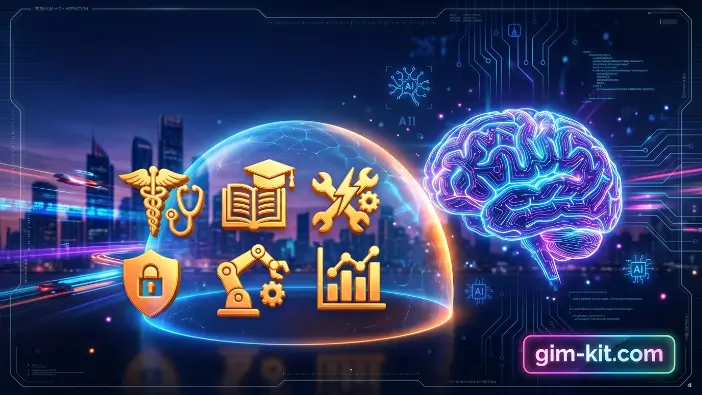
Welcome to Gimkit. Artificial intelligence is transforming the way we work, automate tasks, and solve problems. From customer service chatbots to advanced data analysis, AI is becoming part of almost every industry. As this technology continues to evolve, many professionals and students are asking the same important question: what jobs are safe from AI? Understanding which careers are likely to remain valuable can help you make smarter education and career decisions while preparing for the future job market.
The good news is that AI is designed to assist humans, not replace every profession. Jobs that require empathy, creativity, complex decision-making, leadership, and hands-on expertise remain difficult for machines to perform effectively. While routine and repetitive tasks are increasingly being automated, careers that rely on uniquely human skills continue to offer strong long-term opportunities. In this guide, you’ll learn what jobs are safe from ai, why these careers are more resistant to automation, and the essential skills you can develop today to stay competitive in an AI-driven world.
Why AI Cannot Replace Every Job
As artificial intelligence becomes more advanced, many people worry that it will eventually take over most occupations. While AI can automate repetitive tasks and improve efficiency, it is far from replacing every profession. The reality is that many careers depend on qualities such as empathy, creativity, critical thinking, leadership, and real-world decision-making abilities that machines still struggle to replicate. Understanding these limitations is essential when exploring what jobs are safe from ai and identifying AI-proof careers that are likely to remain valuable for years to come.
What AI Does Best
Artificial intelligence excels at processing massive amounts of data, recognizing patterns, and completing repetitive tasks with remarkable speed and accuracy. It can analyze customer behavior, generate reports, translate languages, automate administrative work, and even assist in writing or coding. These capabilities help businesses reduce costs, improve productivity, and streamline everyday operations. As a result, jobs centered on routine and predictable tasks are becoming increasingly vulnerable to automation, making careers safe from automation more attractive for long-term job security.
Another major strength of AI is its ability to learn from historical data and provide recommendations based on algorithms. For example, AI can detect fraudulent financial transactions, recommend personalized products, or support doctors by analyzing medical images. However, these systems still rely on human oversight to interpret complex situations, manage ethical concerns, and make final decisions. This is why understanding what jobs are safe from ai requires looking beyond technical efficiency and focusing on roles where human judgment remains essential.
Where AI Still Struggles
Despite its impressive capabilities, AI continues to face significant limitations when dealing with human emotions, social interactions, and unpredictable real-world situations. It cannot genuinely understand empathy, build meaningful relationships, or provide emotional support in the way people can. Professions such as healthcare, counseling, education, and leadership rely heavily on trust, communication, and compassion, making them strong examples of future-proof jobs that are difficult to automate completely.
AI also struggles with original creativity, ethical reasoning, and complex decision-making in situations where there is no clear or predictable answer. While it can generate content, suggest ideas, or analyze available information, it cannot replace the experience, intuition, and adaptability that humans bring to challenging environments. These uniquely human qualities explain why many jobs AI cannot replace continue to offer excellent career prospects and why understanding what jobs are safe from ai is more important than ever in today’s rapidly evolving workplace.
Read Also: how to disable google ai
What Makes a Job Safe From AI?
Not every profession faces the same risk of automation. While AI is excellent at handling repetitive and data-driven tasks, it struggles with responsibilities that require human judgment, emotional intelligence, creativity, and hands-on expertise. The safest careers are those that combine technical knowledge with uniquely human abilities that machines cannot easily replicate. Understanding these characteristics will help you identify what jobs are safe from ai and choose AI-resistant careers that offer long-term stability in an evolving job market.
Human Interaction
Jobs that rely heavily on personal relationships and emotional connections are among the most difficult for AI to replace. Professionals such as teachers, nurses, therapists, social workers, and sales consultants build trust, understand emotions, and adapt their communication to each individual. These interactions require empathy, compassion, and cultural awareness qualities that artificial intelligence cannot genuinely experience or reproduce. This is one of the main reasons why many future-proof careers continue to depend on human involvement.
Even when AI tools assist with scheduling, documentation, or basic customer support, the human element remains irreplaceable. Patients, students, clients, and customers often seek reassurance, guidance, and personalized advice that goes beyond data analysis. As technology continues to evolve, strong interpersonal skills will remain a defining factor when determining what jobs are safe from AI, making careers centered on human interaction highly valuable.
Physical Presence
Many occupations require hands-on work in constantly changing environments where AI-powered machines still face significant limitations. Electricians, plumbers, construction workers, mechanics, and emergency responders perform tasks that demand physical coordination, adaptability, and practical problem-solving. These professionals regularly encounter unexpected situations that cannot be solved through pre-programmed instructions alone, making them excellent examples of careers safe from automation.
Although robotics continues to improve, replacing skilled workers who operate in unpredictable real-world conditions remains extremely challenging. Repairing complex systems, responding to emergencies, or performing detailed manual work often requires experience, precision, and instant decision-making. Because these responsibilities depend on physical presence and flexibility, they play an important role in understanding what jobs are safe from ai for the future.
Critical Thinking
Critical thinking enables professionals to evaluate information, question assumptions, and solve complex problems that have no straightforward answers. Careers in law, engineering, medicine, research, and business strategy often require analyzing multiple perspectives before making informed decisions. Unlike AI, which depends on existing data and algorithms, humans can think creatively, recognize context, and adjust their reasoning when faced with new challenges. These qualities make AI-proof careers more resilient to technological disruption.
In many workplaces, AI serves as a valuable assistant by organizing information or generating recommendations, but professionals must still verify results and determine the best course of action. Human judgment is especially important when ethical considerations, uncertainty, or conflicting priorities are involved. This ability to think critically remains one of the strongest indicators of what jobs are safe from ai in the modern workforce.
Complex Decision Making
Many professions involve making decisions that affect people’s health, finances, safety, or overall well-being. Executives, surgeons, judges, project managers, and military leaders must consider ethical responsibilities, long-term consequences, and changing circumstances before concluding. These situations often require balancing logic with experience, intuition, and emotional intelligence, making them ideal examples of jobs AI cannot replace.
Artificial intelligence can provide valuable insights and predictive analysis, but it cannot fully understand human values, organizational culture, or unique real-world contexts. Final decisions frequently involve uncertainty that cannot be resolved by algorithms alone. This is why careers requiring complex decision-making continue to rank among the jobs are safe from ai, even as AI becomes more advanced.
Creativity
Creativity is one of the most uniquely human abilities and remains difficult for artificial intelligence to replicate authentically. Designers, architects, writers, filmmakers, marketers, and entrepreneurs create original ideas by combining imagination, personal experiences, and emotional understanding. Although AI can generate images, text, or music based on existing patterns, it lacks genuine inspiration and independent creative vision. These characteristics make creative careers increasingly valuable in the AI era.
Successful innovation also depends on understanding audiences, solving unique problems, and producing meaningful work that connects with people emotionally. Human creativity evolves through experimentation, collaboration, and life experiences that machines cannot truly possess. For this reason, creative professions continue to demonstrate what jobs are safe from ai, proving that originality and innovation will remain essential skills in tomorrow’s workplace.
25 Best Jobs Safe From AI
As artificial intelligence continues to automate repetitive tasks, many professionals are searching for careers that offer long-term security and growth. The safest occupations combine technical expertise with human qualities such as empathy, creativity, leadership, critical thinking, and adaptability. While no career is completely immune to technological change, the following professions are among the strongest examples of what jobs are safe from ai because they require skills that machines cannot easily replicate. These AI-proof careers are expected to remain in high demand for years to come.
Healthcare Careers
Healthcare professionals play a vital role in diagnosing illnesses, treating patients, and providing emotional support during difficult situations. Careers such as doctors, nurses, surgeons, physical therapists, psychologists, and occupational therapists rely on empathy, communication, and clinical judgment. Although AI can assist with medical imaging, data analysis, and administrative tasks, it cannot replace the trust and compassion that patients expect from healthcare providers. This makes healthcare one of the strongest categories of future-proof jobs.
In addition to patient care, healthcare workers frequently encounter complex medical cases that require personalized treatment plans and ethical decision-making. Every patient has unique needs, medical histories, and emotional concerns that demand human expertise. These responsibilities explain why healthcare remains one of the top answers to what jobs are safe from ai, offering both career stability and meaningful work.
Skilled Trades
Skilled trade professionals perform hands-on work that requires precision, adaptability, and practical problem-solving in constantly changing environments. Electricians, plumbers, HVAC technicians, welders, carpenters, mechanics, and construction workers regularly handle situations that cannot be solved through automation alone. These occupations depend on physical presence, technical knowledge, and experience, making them excellent examples of careers safe from automation.
While robotics continues to improve, machines still struggle to perform complex repairs or installations in unpredictable real-world conditions. Every project presents unique challenges that require quick thinking and manual expertise. As a result, skilled trades continue to rank among the jobs are safe from AI, with strong demand expected across residential, commercial, and industrial sectors.
Education
Teachers, professors, tutors, and special education professionals do much more than deliver information. They inspire students, encourage critical thinking, adapt lessons to different learning styles, and provide emotional support throughout the learning process. Although AI-powered educational tools can assist with grading and personalized learning, they cannot replace the mentorship and human connection offered by experienced educators. This makes education one of the most reliable AI-resistant careers.
Effective teaching also involves motivating students, resolving classroom challenges, and fostering collaboration among diverse groups of learners. These responsibilities require patience, communication, and emotional intelligence that technology cannot fully replicate. Because of these human-centered skills, education remains an important category when considering what jobs are safe from ai.
Engineering
Engineering careers require innovation, analytical thinking, and the ability to solve complex technical problems. Civil engineers, mechanical engineers, aerospace engineers, environmental engineers, and chemical engineers design systems and infrastructure that improve everyday life. While AI can assist with simulations and calculations, engineers must evaluate safety standards, manage projects, and make informed decisions based on real-world conditions. These responsibilities contribute to jobs AI cannot replace.
Engineering projects often involve collaboration with clients, government agencies, contractors, and multidisciplinary teams. Professionals must balance technical performance, budget constraints, environmental concerns, and public safety throughout the design process. This combination of creativity and critical thinking explains why engineering remains one of the strongest answers to what jobs are safe from ai.
Emergency Services
Emergency service professionals work in high-pressure environments where every decision can have life-saving consequences. Firefighters, police officers, paramedics, disaster response teams, and rescue specialists respond to unpredictable situations that demand courage, teamwork, and rapid decision-making. Although AI can assist with emergency planning and resource management, it cannot replace the physical presence and judgment required during real emergencies. These occupations represent dependable future-proof careers.
Every emergency is different, requiring professionals to assess risks, communicate with victims, and adapt to changing circumstances within seconds. Human compassion and situational awareness remain essential for protecting communities during crises. This makes emergency services one of the most secure fields for individuals researching what jobs are safe from ai.
Creative Careers
Creative professionals transform ideas into meaningful products, experiences, and stories that connect with audiences. Architects, graphic designers, filmmakers, writers, interior designers, fashion designers, musicians, and advertising specialists depend on originality, imagination, and emotional understanding. Although AI can generate images or text, it lacks genuine inspiration and the ability to create work based on personal experiences and cultural context. This makes creative professions valuable, creative careers in the AI era.
Successful creative projects also require collaboration with clients, interpreting feedback, and developing unique solutions that reflect brand identity or artistic vision. Human creativity continues to evolve through experimentation and innovation rather than simply by analyzing existing data. For these reasons, creative industries remain a key part of what jobs are safe from AI.
Leadership Roles
Strong leaders guide organizations through uncertainty, inspire employees, and make strategic decisions that shape long-term success. Careers such as chief executives, project managers, business consultants, operations managers, and human resource leaders require communication, negotiation, emotional intelligence, and vision. AI can provide reports and predictive insights, but it cannot replace the trust and leadership needed to manage people effectively. These responsibilities define many AI-proof careers.
Leadership also involves resolving workplace conflicts, building organizational culture, mentoring employees, and making ethical decisions during periods of change. These complex human interactions require experience and interpersonal skills that algorithms cannot replicate. As businesses continue adopting new technologies, leadership positions remain among what jobs are safe from ai.
Technology Jobs
Ironically, many technology careers are becoming even more valuable because of the rapid growth of artificial intelligence. AI engineers, cybersecurity specialists, data scientists, cloud architects, robotics engineers, software architects, and machine learning professionals design, maintain, and improve the technologies that businesses rely on every day. Rather than being replaced by AI, these professionals help create and manage advanced systems, making them highly sought-after and in high demand.
Technology professionals also solve unique technical challenges, secure sensitive information, and develop innovative digital solutions that require continuous learning and adaptation. As AI evolves, skilled experts will remain essential for ensuring these systems operate responsibly, securely, and efficiently. This ongoing need for human expertise makes technology one of the strongest sectors when evaluating what jobs are safe from ai in the years ahead.
Jobs Most Likely to Be Replaced by AI
While artificial intelligence is creating new career opportunities, it is also transforming jobs that rely heavily on repetitive, predictable, and rule-based tasks. Occupations involving routine data processing, basic customer interactions, or standardized workflows are the most vulnerable to automation because AI can perform these tasks faster, more accurately, and at a lower cost. However, this does not necessarily mean these jobs will disappear entirely. Instead, many roles will evolve, requiring workers to develop new skills and collaborate with AI-powered tools. Understanding which careers face the greatest risk can help you make informed decisions about what jobs are safe from ai and focus on building future-proof careers.
| Job Role | Risk of AI Replacement | Why It Is at Risk | Human Skills That Can Increase Job Security |
| Data Entry Clerk | Very High | Repetitive data input can be automated quickly and accurately. | Data analysis, AI tool management, problem-solving |
| Telemarketer | Very High | AI voice assistants and chatbots can handle routine sales calls. | Relationship building, negotiation, consultative selling |
| Basic Bookkeeper | High | AI accounting software automates invoices, payroll, and financial records. | Financial planning, auditing, and business consulting |
| Customer Service Representative (Basic Support) | High | AI chatbots can answer common questions 24/7. | Conflict resolution, empathy, and complex customer support |
| Cashier | High | Self-checkout systems and automated payment technologies reduce manual transactions. | Customer experience, sales, and retail management |
| Manufacturing Assembly Worker | High | Industrial robots efficiently perform repetitive production tasks. | Equipment maintenance, quality control, and technical supervision |
| Proofreader (Routine Work) | Moderate to High | AI grammar tools detect spelling and grammar errors instantly. | Editing, content strategy, creative writing |
| Basic Content Writer | Moderate to High | AI can generate simple articles, product descriptions, and summaries. | Research, storytelling, SEO strategy, brand voice development |
| Travel Agent (Routine Bookings) | Moderate | AI-powered booking platforms simplify travel planning. | Luxury travel consulting, personalized itinerary planning |
| Bank Teller | Moderate | Online banking and AI-powered financial services reduce branch visits. | Financial advising, customer relationship management |
Although these jobs face a higher risk of automation, professionals can remain competitive by learning new technologies and strengthening uniquely human abilities. Skills such as communication, creativity, leadership, emotional intelligence, and critical thinking continue to provide a significant advantage in today’s workforce. By adapting to technological change instead of resisting it, workers can transition into AI-resistant careers and better position themselves for long-term success. This is why understanding what jobs are safe from ai is not just about avoiding automation; it’s also about developing the skills that AI cannot replace.
Skills That Will Keep You Employable
As artificial intelligence continues to reshape industries, technical knowledge alone is no longer enough to guarantee long-term career success. Employers increasingly value professionals who combine industry expertise with strong human skills that AI cannot easily replicate. Developing these abilities will not only help you adapt to workplace changes but also increase your value across different industries. If you want to understand what jobs are safe from ai, focusing on these essential skills is just as important as choosing the right profession. These future-proof skills will help you remain competitive in an AI-driven economy.
Emotional Intelligence
Emotional intelligence is the ability to understand, manage, and respond effectively to your own emotions as well as the emotions of others. Professionals with high emotional intelligence build stronger relationships, resolve conflicts, and create positive working environments. Careers in healthcare, education, leadership, sales, and customer service depend heavily on empathy and interpersonal understanding, making this one of the most valuable human skills in the modern workplace.
Although AI can recognize patterns in language or facial expressions, it cannot genuinely experience empathy or build authentic human connections. Employees who demonstrate compassion, active listening, and emotional awareness are more likely to succeed in roles that require trust and collaboration. These qualities remain a key factor when evaluating what jobs are safe from ai in the years ahead.
Leadership
Leadership involves inspiring teams, making strategic decisions, and guiding organizations through challenges and opportunities. Effective leaders motivate employees, manage change, solve workplace conflicts, and create a shared vision for success. These responsibilities require confidence, communication, and ethical judgment that technology cannot fully replicate, making leadership one of the most valuable AI-proof skills.
While AI can generate reports, forecasts, and performance data, it cannot replace the human ability to inspire people or build strong organizational cultures. Companies will continue to depend on skilled leaders who can balance business goals with employee well-being and long-term planning. This is why leadership remains closely connected to understanding what jobs are safe from ai.
Adaptability
Technology evolves rapidly, and professionals who embrace change are more likely to thrive in the future job market. Adaptability means learning new skills, adjusting to changing workplace demands, and remaining open to innovation. Employees who can quickly adopt new tools and workflows are highly valued across industries, making adaptability one of the most important future-ready skills.
Rather than viewing AI as a threat, adaptable professionals see it as a tool that can improve productivity and create new opportunities. Continuous learning, professional development, and a willingness to experiment with emerging technologies help individuals stay competitive. These qualities significantly increase your chances of succeeding in what jobs are safe from ai.
Communication
Strong communication skills allow professionals to explain ideas clearly, collaborate effectively, and build productive relationships with colleagues and clients. Whether speaking, writing, presenting, or negotiating, effective communication remains essential in almost every profession. Roles involving teamwork, leadership, education, and consulting especially depend on excellent soft skills that AI cannot fully imitate.
Although AI can generate emails, reports, and presentations, it cannot understand audience emotions, adjust messaging in real time, or build meaningful conversations. Human communication involves empathy, persuasion, and cultural awareness that remain difficult for machines to replicate. These abilities continue to play a major role in determining what jobs are safe from ai.
Problem Solving
Problem-solving is the ability to identify challenges, analyze available information, and develop practical solutions for complex situations. Engineers, healthcare professionals, business consultants, project managers, and entrepreneurs regularly face unique problems that require creativity, experience, and sound judgment. These responsibilities highlight the importance of critical thinking skills in today’s workforce.
AI can process data and recommend possible solutions, but it often lacks the contextual understanding needed for unpredictable situations. Human professionals can evaluate ethical considerations, adapt to changing circumstances, and think beyond existing patterns. This makes problem-solving one of the strongest skills associated with what jobs are safe from ai.
AI Literacy
Understanding how artificial intelligence works is becoming an essential workplace skill, even for professionals outside the technology industry. AI literacy includes knowing how to use AI tools responsibly, evaluate AI-generated information, and integrate automation into daily workflows. Employees who understand these technologies can improve efficiency while maintaining human oversight, making AI literacy one of today’s most valuable high-demand skills.
Learning to work alongside AI rather than competing against it will provide a significant career advantage. Professionals who combine technical knowledge with creativity, communication, and ethical decision-making will remain highly sought after across many industries. Developing AI literacy is, therefore, an important step toward preparing for what jobs are safe from ai and building a successful long-term career.
How to Future-Proof Your Career
Preparing for the future of work requires more than simply choosing the right profession. As artificial intelligence continues to reshape industries, professionals who continuously improve their skills and embrace new technologies will have the greatest advantage. Instead of fearing automation, focus on becoming someone who can work alongside AI while offering uniquely human value. If you’re wondering what jobs are safe from ai, following this step-by-step roadmap will help you build a resilient career and strengthen your position in future-proof careers.
Step 1: Learn AI Tools
The first step is to understand how AI tools can improve productivity in your field. Familiarize yourself with technologies such as AI chatbots, content assistants, data analysis platforms, and automation software that are relevant to your profession. Learning how to use these tools effectively makes you more valuable to employers rather than easier to replace.
You don’t need to become an AI engineer to benefit from artificial intelligence. Even basic knowledge of AI-powered applications can help you work more efficiently, make informed decisions, and stay competitive. Combining AI skills with your professional expertise is an important part of preparing for what jobs are safe from ai.
Step 2: Build Soft Skills
Technical skills may change over time, but soft skills remain valuable across every industry. Focus on improving communication, emotional intelligence, teamwork, leadership, adaptability, and critical thinking. These uniquely human abilities are difficult for AI to replicate and continue to be essential in AI-resistant careers.
Employers increasingly seek professionals who can collaborate effectively, solve problems creatively, and build strong relationships with clients and colleagues. Developing these skills will help you stand out even as automation becomes more common in the workplace.
Step 3: Continue Learning
The job market evolves rapidly, making lifelong learning one of the best investments you can make. Stay updated with industry trends by reading professional publications, attending workshops, participating in webinars, and taking online courses. Continuous learning helps you adapt to changing technologies and workplace demands while preparing for high-demand jobs.
Expanding your knowledge also increases your confidence and opens doors to new career opportunities. Professionals who embrace continuous education are better equipped to understand which jobs are safe from ai and adjust their career paths when necessary.
Step 4: Gain Certifications
Professional certifications demonstrate your expertise and commitment to career growth. Earning recognized certifications in your field can improve your credibility, strengthen your resume, and increase your chances of promotion or employment. Whether you work in healthcare, cybersecurity, project management, finance, or digital marketing, certifications can help you remain competitive in careers safe from automation.
Many certifications also include training on emerging technologies and industry best practices, ensuring your knowledge stays current. Investing in recognized credentials shows employers that you are prepared to adapt and grow in an AI-driven workplace.
Step 5: Build Your Personal Brand
A strong personal brand helps you showcase your skills, experience, and professional achievements beyond a traditional resume. Create a professional online presence by sharing industry insights, publishing valuable content, networking with experts, and maintaining an updated portfolio or LinkedIn profile. Building credibility makes you more visible to employers and clients seeking professionals with specialized expertise in future-proof jobs.
Your reputation, communication skills, and professional network are assets that AI cannot automate. By consistently demonstrating your knowledge and adding value to your industry, you increase your career opportunities and strengthen your position in what jobs are safe from ai, regardless of how technology continues to evolve.
Common Mistakes to Avoid
As artificial intelligence continues to transform the workplace, many professionals make decisions that can negatively impact their long-term career growth. Instead of preparing for change, they often ignore new technologies or rely on outdated skills. Avoiding these common mistakes can help you stay competitive, improve your career prospects, and better understand what jobs are safe from ai. By focusing on continuous improvement and developing future-proof skills, you can build a career that remains valuable in an AI-driven world.
- Ignoring AI advancements instead of learning how they can improve your productivity and career opportunities.
- Choosing a career based only on salary without considering long-term demand and job security.
- Failing to develop soft skills such as communication, leadership, empathy, and teamwork that AI cannot easily replace them.
- Resisting change rather than adapting to new technologies and evolving workplace requirements.
- Stopping your learning after graduation instead of continuously updating your knowledge and professional skills.
- Avoiding professional certifications can strengthen your expertise and improve your employment opportunities.
- Overlooking creativity and critical thinking, which are among the most valuable AI-resistant skills in today’s job market.
- Neglecting to build a personal brand through networking, professional portfolios, and an active online presence.
- Relying entirely on AI tools without applying your own judgment, experience, and ethical decision-making.
- Waiting until your job is affected by automation before taking action, instead of preparing early for what jobs are safe from ai and investing in future-proof careers.
Frequently Asked Questions
What jobs are the safest from AI?
Healthcare, skilled trades, engineering, education, cybersecurity, and leadership roles are among what jobs are safe from ai because they require human skills that AI cannot easily replace.
Can AI replace doctors and nurses?
AI can assist with diagnosis and administrative tasks, but it cannot replace human empathy, clinical judgment, and patient care. Healthcare remains one of the best future-proof careers.
Are skilled trade jobs safe from AI?
Yes. Electricians, plumbers, mechanics, and HVAC technicians perform hands-on work that requires adaptability, making them excellent examples of careers safe from automation.
Is software engineering safe from AI?
Yes, although the role is evolving. Software engineers who learn AI tools and strengthen their technical expertise are well-positioned in what jobs are safe from ai and other AI-proof careers.
What skills make a career AI-proof?
Communication, leadership, creativity, emotional intelligence, adaptability, and problem-solving are essential future-proof skills that help professionals stay competitive alongside AI.
Conclusion
Artificial intelligence is changing the way businesses operate, but it is not eliminating the need for human talent. While AI can automate repetitive and data-driven tasks, it cannot replace qualities such as empathy, creativity, leadership, critical thinking, and ethical decision-making. These uniquely human abilities will continue to play a vital role across many industries, making them the foundation of AI-proof careers and long-term professional success. Understanding what jobs are safe from ai is not about finding a career that will never change—it’s about choosing a profession that evolves alongside technology rather than being replaced by it.
The future belongs to professionals who are willing to learn, adapt, and embrace innovation. By developing strong soft skills, gaining technical expertise, learning how to work with AI tools, and committing to lifelong learning, you can build a rewarding and resilient career. Whether you’re a student choosing your first profession or an experienced worker planning your next move, focusing on future-proof careers will help you stay competitive in an increasingly AI-driven world. With the right mindset and continuous skill development, you’ll be well prepared to succeed no matter how technology continues to evolve.
