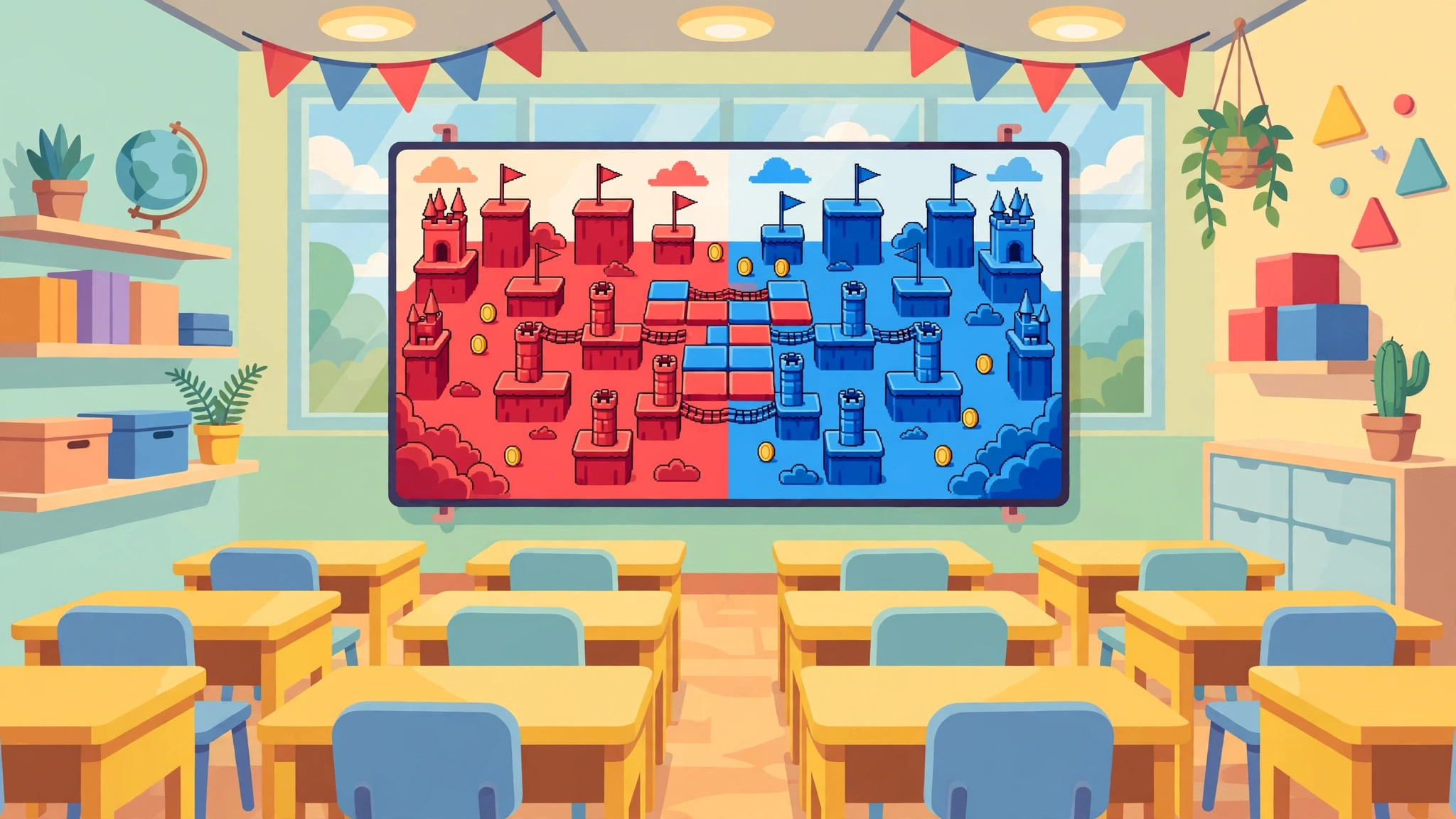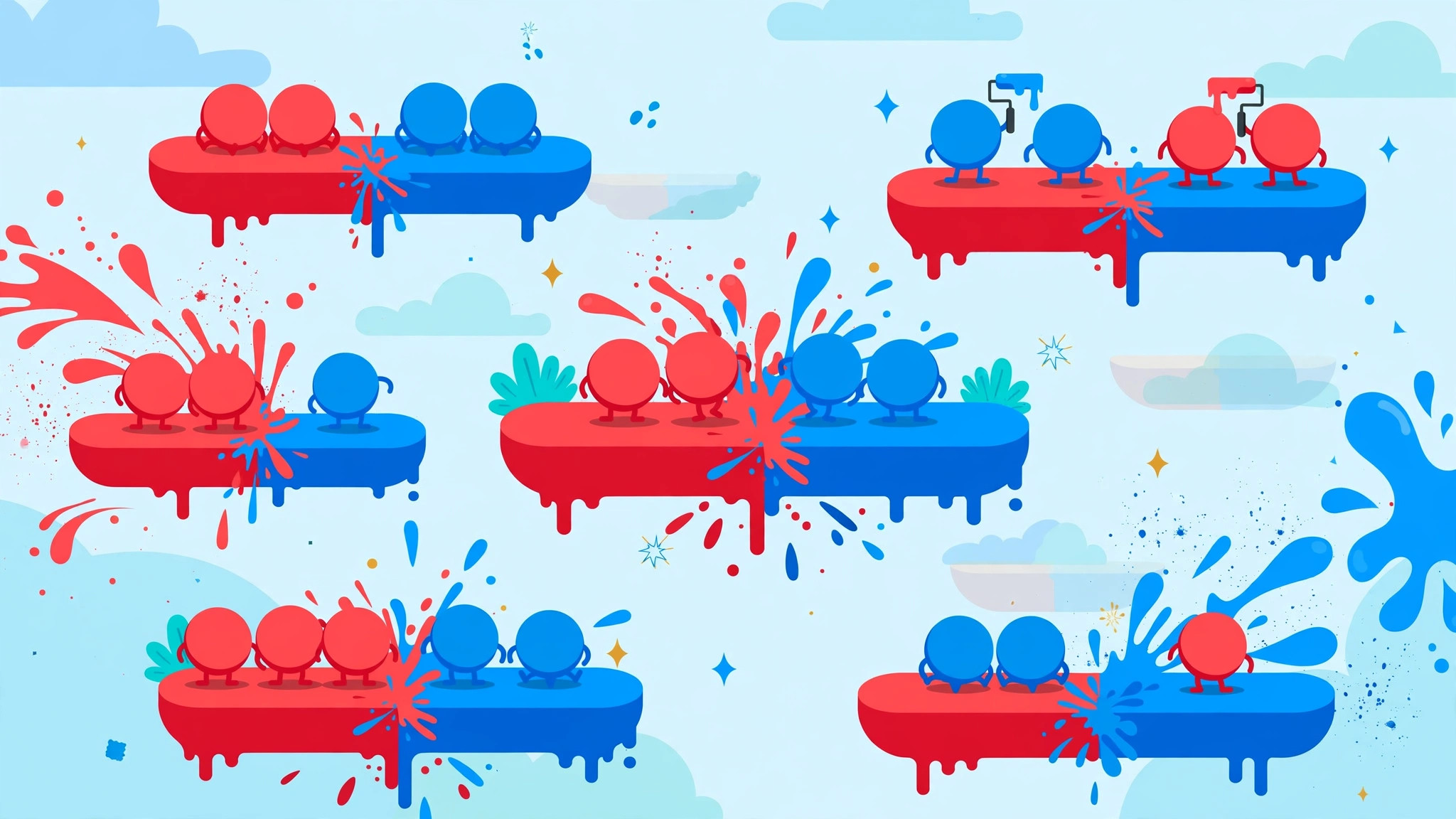
Imagine a platformer where the floor itself is the scoreboard. In Gimkit Color Clash, every platform you touch turns your team’s color, every platform your rivals touch turns theirs, and the whole map becomes a live, shifting picture of who is winning. There are no eliminations and no knockouts. There is just territory, and the question of whether your team can hold more of it than the other side when time runs out.
Gimkit Color Clash is one of Gimkit’s 2D modes, and it is built on the same foundation as the rest of the family: you play as a Gim, you move and jump between platforms, and answering questions correctly earns the energy that powers everything you do. What makes the mode special is how peaceful its competition is. Nobody gets launched, frozen, or sent back to spawn. The contest is purely about coverage, positioning, and teamwork, which makes it one of the most welcoming PvP modes for younger students and mixed-ability classes. This guide explains how a match works, how territory is really won and lost, and the team strategy that quietly takes over maps.
how to play color clash
A Gimkit Color Clash match splits the class into two teams, each with its own color, on a stage made of platforms at different heights. The core mechanic could not be simpler to explain, which is part of the mode’s charm: stand on a platform and it becomes yours.
Here is the flow of a match:
- Teams form and the map starts neutral. When the game begins, platforms are unclaimed. The opening seconds are a land rush, so fast starters paint a lot of the map quickly.
- Answer questions to earn energy. Energy fuels your movement across the stage. The faster your team answers, the faster it can reach, claim, and re-claim platforms.
- Claim platforms by occupying them. Moving onto a platform claims it for your team, painting it your color. Claiming takes presence: you have to actually get there and stand your ground.
- Steal territory the same way. Your rivals’ platforms are not locked. Run across them and they flip to your color, which means no lead is ever fully safe until the match ends.
- Defend what matters. High-traffic platforms and the approaches to your home area flip constantly. Smart teams keep at least some presence near their core territory instead of chasing every distant square.
- The most territory wins. When the game ends, the team holding the most platforms takes the match. The map at the final second is the scoreboard, painted for everyone to see.
That final picture is one of the lovely things about the mode. Instead of an abstract points total, students see the result spread across the whole stage, and the post-game conversation (“how did they take the whole top row?”) is genuinely tactical.
If your class enjoys platform movement without eliminations, Color Clash pairs naturally with the platform fighting of Gimkit Knockback for older students and the team-territory thinking of Gimkit Capture the Flag. Our roundup of Gimkit 2D modes places it in the full lineup.
color clash strategy
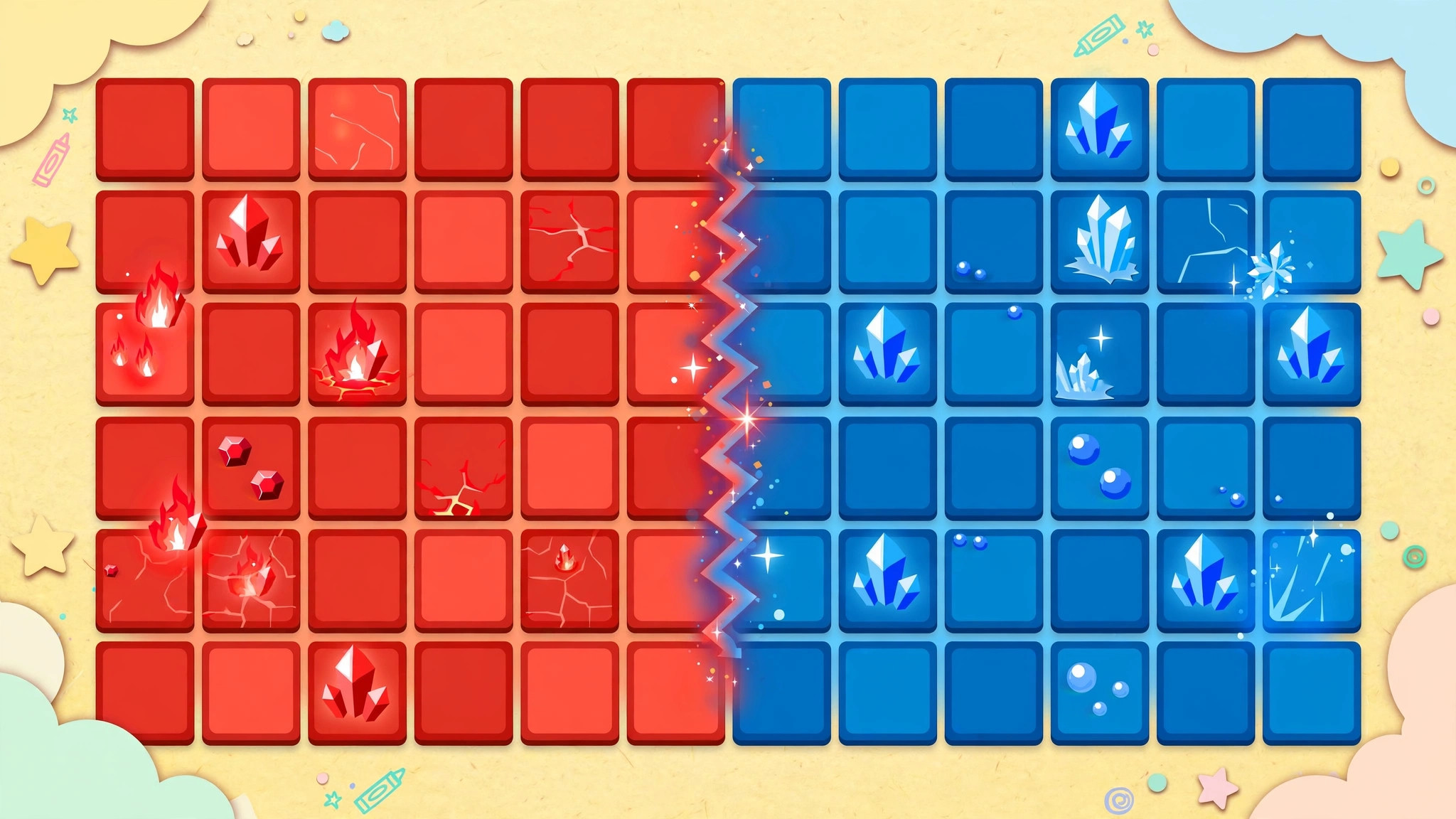
Because nobody can be eliminated, Gimkit Color Clash is won by teams that think like painters rather than fighters. These are the habits that consistently take maps:
- Spread out from the first second. The opening land rush rewards coverage, not clustering. If three teammates run the same route, two of them are wasting their legs. Split the map into rough zones and send one player to each.
- Claim in loops, not lines. Run circuits. A looping route repaints platforms rivals flipped behind you while also pushing into new ground. Straight-line runners leave a trail that gets erased as fast as they make it.
- Prioritize junctions. Platforms that connect areas, the crossroads of the stage, flip the most and matter the most. A player stationed near a junction quietly defends several platforms at once.
- Defend your core first. Distant outposts are vanity. If your home territory is being repainted while you chase the far corner, you are trading guaranteed ground for speculative ground, and it rarely pays.
- Answer like it is your job, because it is. Energy decides how much of the map your team can even reach. The side that answers more questions covers more ground, full stop. Slow periods in your answering show up in the paint within a minute.
- Save a final push. In the last stretch, fresh claims near your own territory are safer points than heroic raids. Bank the ground you can hold until the whistle.
- Watch the map, not your player. Glance at the overall color balance regularly. Teams lose Color Clash matches by winning their local corner while the rest of the map quietly changes color.
There is a nice strategic subtlety here for teachers to point out afterwards: Color Clash is a game about marginal gains. No single platform wins it. The winning team is simply the one that wasted the fewest trips, answered the most questions, and kept re-painting what the other side painted. That is a memorable, painless little lesson in how small consistent efforts beat occasional heroics, delivered by a platformer.
Comebacks: how losing teams take the map back
Because platforms can always be re-claimed, no Gimkit Color Clash match is ever truly over early, and comebacks follow a recognizable pattern when they happen. If your team is down by a wide margin with half the match gone, the answer is almost never “try harder everywhere.” It is to shrink the map.
Losing teams usually lose because they are spread thin: one player defending home, two chasing far corners, everyone repainting alone. The comeback starts by abandoning the far corners entirely. Concede the outposts you cannot hold and stack your players into one region you can dominate, ideally your home territory and the junctions around it. A smaller map that is solidly yours beats a large map that is half yours and leaking.
From that base, push outward in waves. Send two players along one route together, painting as they go, while the rest hold the core. Paired painters flip platforms twice as fast as solo ones and can immediately re-flip anything a defender contests. Most importantly, keep answering questions at full pace during the comeback. Energy is what makes waves possible, and a trailing team that answers well will literally move more paint around the map than a leading team that relaxes.
Teachers watching a match can spot the turning point easily: it is the moment the trailing team stops scattering. Pointing that out in a thirty-second debrief (“you won the last five minutes because you stopped splitting up”) teaches the exact teamwork lesson the mode was built for, and it tends to make the rematch much closer and much louder.

Color Clash in the classroom
Gimkit Color Clash might be the most classroom-friendly competitive mode on Gimkit. There are no weapons, no knockouts, and no moment where a student is publicly eliminated in front of their friends. Every player contributes for the entire match, the score is visible as a picture rather than a ranking of names, and even the least confident student can hold a junction and genuinely matter. For elementary classes and anxious learners, those properties are gold.
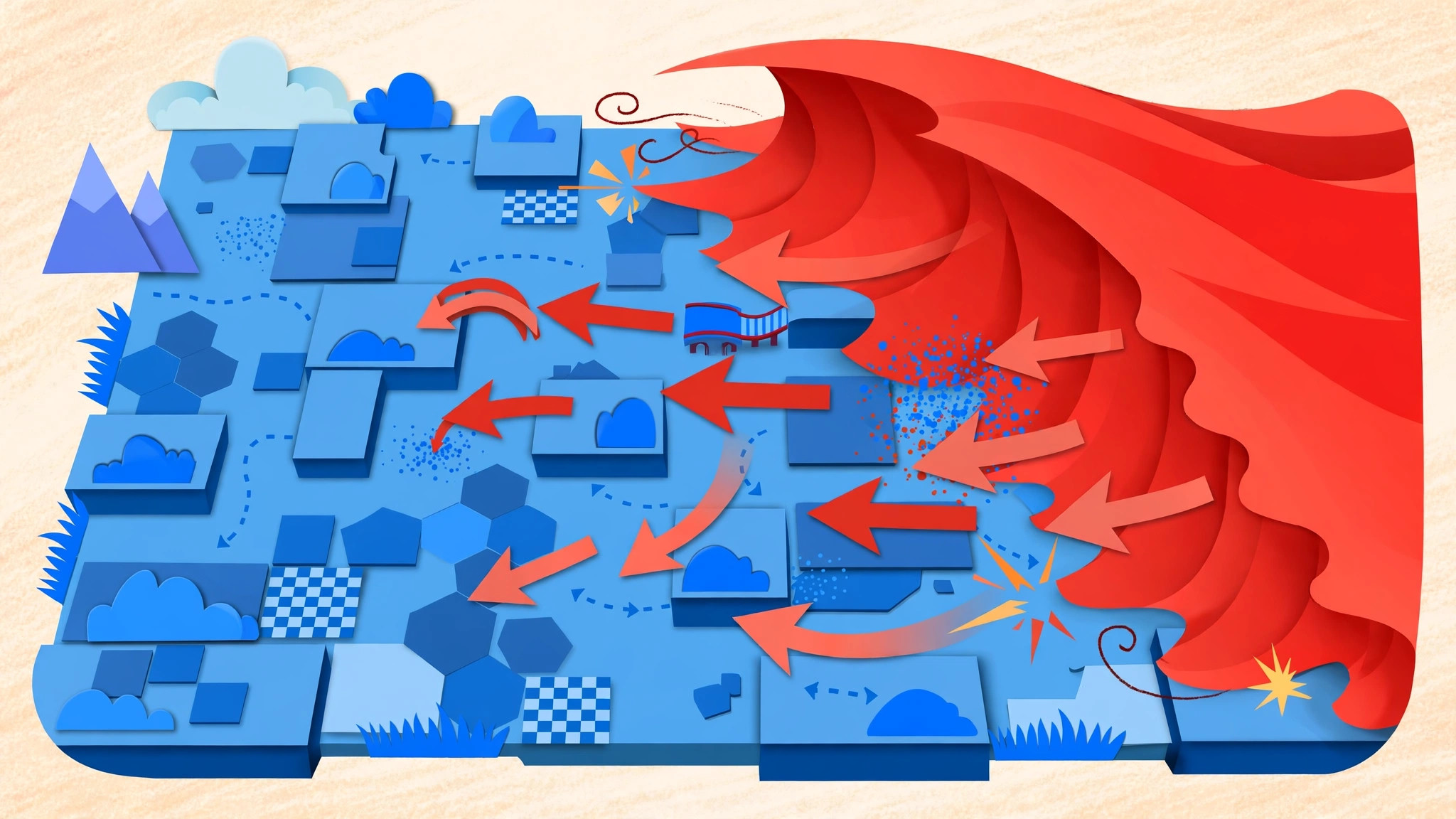
It is also a smart choice for teachers introducing team modes for the first time. The teamwork Color Clash teaches, splitting a map, covering zones, defending home ground, is the same teamwork that Capture the Flag and Blastball later demand at higher speed and pressure. Think of Gimkit Color Clash as the training ground for Gimkit’s team library.
Practical notes: matches are at their best with enough players that both teams can actually cover the map, and hosts can review the game options before starting. Like other 2D modes, Color Clash awards XP for correct answers and objectives, feeding into GimBucks and cosmetics. Featured modes rotate on the free plan while Gimkit Pro unlocks all modes; if Color Clash is missing from your picker, the official Gimkit Help Center can confirm current availability.
Frequently asked questions
How do you claim a platform in Color Clash?
Stand on it. Platforms your team occupies turn your team’s color, and platforms are stolen the same way, simply by an opponent standing on them.
Can you be eliminated in Color Clash?
No. There are no knockouts or eliminations. Every player plays the whole match, and the competition is entirely about holding the most territory at the end.
What decides the winner in Color Clash?
Territory. When the game ends, the team whose color covers the most platforms wins. The final state of the map is the scoreboard.
Does Color Clash give XP and GimBucks?
Yes. It is a 2D mode, and 2D modes award XP for correct answers and objectives. That XP converts into GimBucks for Gims, trails, and stickers.
How is Color Clash different from Capture the Flag?
Both are team territory games, but Capture the Flag centers on stealing one flag from an enemy base, while Color Clash is about claiming and holding platforms all over the map at once.
Do platforms stay your color once you claim them?
Only until an opponent stands on them. Nothing in Color Clash is permanent, which is the point: a lead is a responsibility, not a trophy. Teams that treat claimed platforms as finished business watch them change color behind them. The habit that wins matches is looping back over your own territory regularly, repainting what rivals touched, instead of only pushing forward into new ground.
Split up. The opening seconds of a Gimkit Color Clash match are a land rush over neutral platforms, so a team that fans out in different directions paints far more of the map than a team that runs together. Agree on rough zones before the match starts, sprint to yours, and paint everything you pass on the way.