

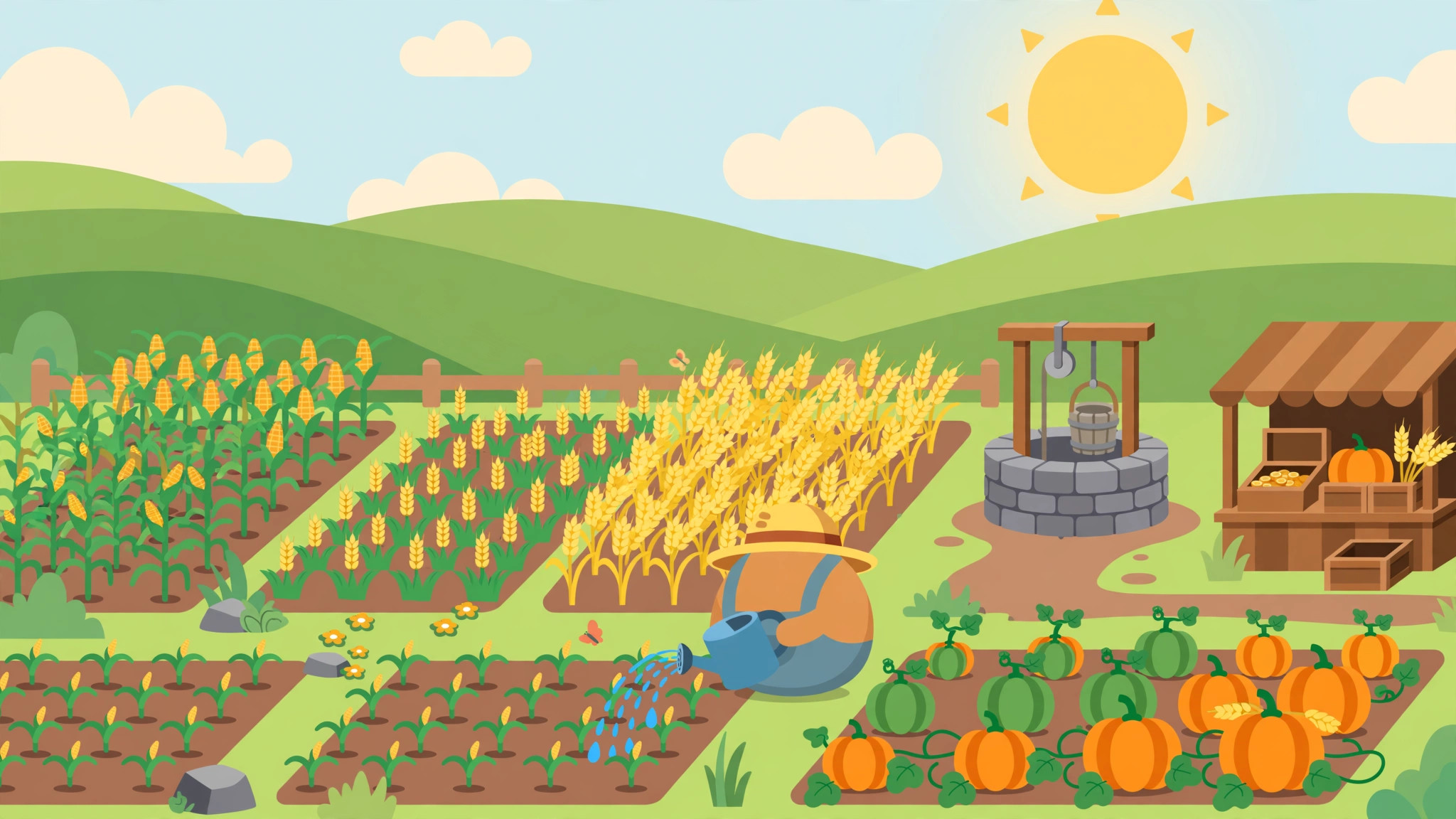
Some Gimkit modes are races. Gimkit Farmchain is a business. You start with a patch of farmland, a water well, and a handful of corn seeds, and everything you build comes from one loop: answer questions to earn energy, spend that energy to grow crops, then sell the harvest for cash and reinvest in something better.
Farmchain is one of Gimkit’s 2D modes, but it plays at a calmer pace than the PvP modes. There is no one chasing you. The pressure comes from your own decisions: which crops to plant, when to harvest, and how fast to unlock the next tier. It is also one of the few modes designed to work as homework, which makes it a favorite for teachers who want a game students can play solo. This guide covers the full loop, the strategy behind it, and the crop ladder worth climbing.
how to play farmchain
Every action on your farm runs on energy, and energy comes from answering questions correctly. That single fact shapes the whole game: the faster and more accurately you answer, the faster your farm grows. Here is the loop step by step:
- Answer questions to earn energy. Energy is your working currency. It refills your ability to water, plant, and expand.
- Get water from the well. Water is drawn from the farm’s well and costs energy, so every bucket is a small investment decision.
- Buy and plant seeds. Each crop costs a seed, energy, and water to plant. Corn is your starting crop and its seed is free.
- Wait for crops to grow. Every crop has a growing time, from a few seconds for corn to several minutes for top-tier produce.
- Harvest before crops go bad. Most crops spoil after a set window once they are ready. A forgotten field is wasted energy.
- Sell your harvest for cash. Produce sells for more than the seed cost, and the profit funds your next, better planting.
The second system to learn is research. At the lab, you can convert energy into research points, and research unlocks new crops. Early on you can only grow corn. Each research tier opens a more valuable crop, from wheat and potatoes all the way up to the legendary GimBerry. Balancing farm work against research is the core strategic tension of the mode: energy spent in the lab slows today’s harvest but unlocks tomorrow’s profits.
Farmchain can be played live like other modes, and it is also one of the solo-friendly modes available for Gimkit assignments, alongside the assignment-exclusive Cash Tycoon mode. Teachers can set a cash goal, a question goal, or both, and students play at their own pace while their progress saves automatically.
farmchain strategy
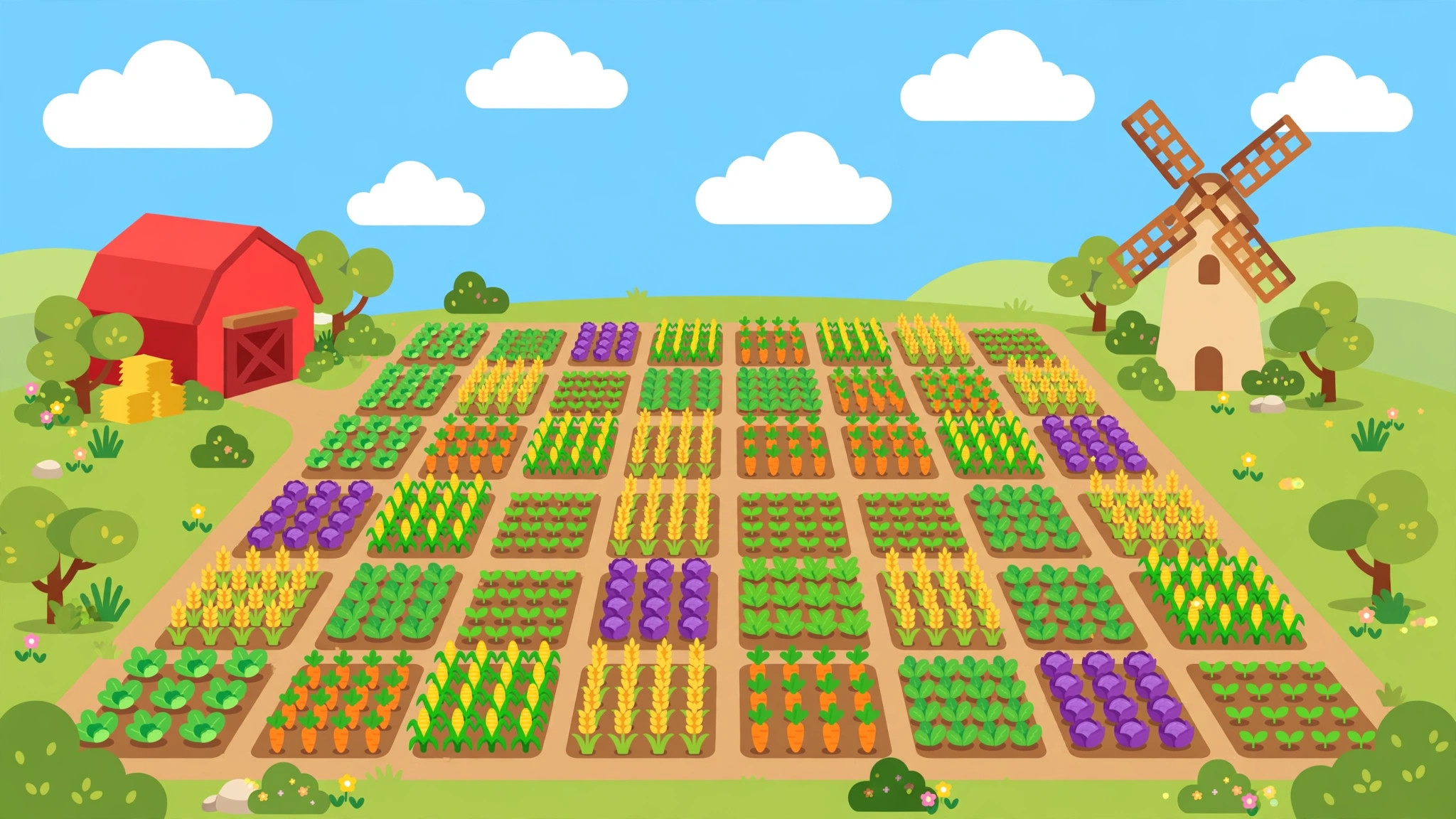
New farmers usually make the same mistake: they plant the most expensive crop they can afford, once, and then stand around waiting. Farmchain rewards the opposite approach: constant small cycles that keep energy and cash flowing.
- Live on corn early. Corn’s seed is free, it grows in seconds, and it never goes bad. It is the perfect engine for building your first bank of cash and energy while you fund research.
- Treat energy as the real budget. Seeds are cheap; energy is not. Before planting anything, check that you will still have energy left to water and harvest it.
- Unlock crops in order. Research wheat as soon as you can afford it, then keep climbing steadily. Skipping tiers sounds fast, but mid-tier crops are what pay for the expensive research later.
- Plant in batches you can harvest. A field of ten raspberries is only profitable if you are there when they ripen. Plant what you can actually collect inside the spoilage window.
- Use special seeds mid-game. Special crops like the Cash Berry and the Energy Bar convert energy directly into cash or more energy. They shine once your basic operation is running and you have surplus energy to convert.
- Save the top tier for the endgame. Oranges and GimBerries have long grow times and big energy costs, but their sell prices dwarf everything else. They are how high scores happen.
- In assignments, pace yourself. Because progress saves, short focused sessions beat one long grind. Set a personal crop goal for each session.
Notice what is missing from this list: luck. Farmchain has no opponents and no random disasters. Your final cash is a direct record of your decisions and your answering speed, which is exactly why teachers like it as a measurable homework mode. Our overview of Gimkit 2D modes shows how Farmchain compares with the rest of the 2D lineup.
farmchain best crops
The crop ladder is the heart of the mode. Each crop costs research to unlock, takes longer to grow, and sells for roughly double its seed price. Based on the in-game values, here is the ladder from first planting to endgame:
- Corn — free seed, sells for $5, grows in about 5 seconds, never spoils. Your starter engine.
- Wheat — $25 seed, sells for $50, grows in about 10 seconds. The first research unlock and a big early upgrade.
- Potato — $150 seed, sells for $300, grows in about 30 seconds. Where batch planting starts to matter.
- Grapes — $750 seed, sells for $1,500, grows in about a minute. Solid mid-game money.
- Raspberry — $4,000 seed, sells for $8,000, grows in about 2 minutes, but spoils fast once ripe. High profit, high attention.
- Watermelon — $20,000 seed, sells for $40,000, grows in about 3 minutes. The first true endgame crop.
- Coffee Bean — $100,000 seed, sells for $200,000, grows in about 4 minutes with a very short harvest window. Expert territory.
- Orange — $500,000 seed, sells for $1,000,000, grows in about 5 minutes. Plant it when you can watch the timer.
- GimBerry — $5,000,000 seed, sells for $25,000,000. The final crop and the biggest single payday in the mode.
So which crops are “best” depends on your stage. For pure reliability, corn and wheat win: they cannot be wasted and they keep cash moving. For profit per plot, watermelon is the sweet spot most games, since its window is manageable and its payout is serious. The GimBerry is a victory lap, not a plan: by the time you can afford it, the game is nearly won anyway.
One more rule for every tier: the sell price only counts if you harvest in time. A smaller crop collected beats a bigger crop rotted, every single time.
Gimkit Farmchain extras: the lottery, the junkyard, and upgrades
Crops are the main economy in Gimkit Farmchain, but they are not the whole economy. Once your farm is running, a few side systems give you ways to spend surplus cash and energy, and knowing they exist changes how you plan.
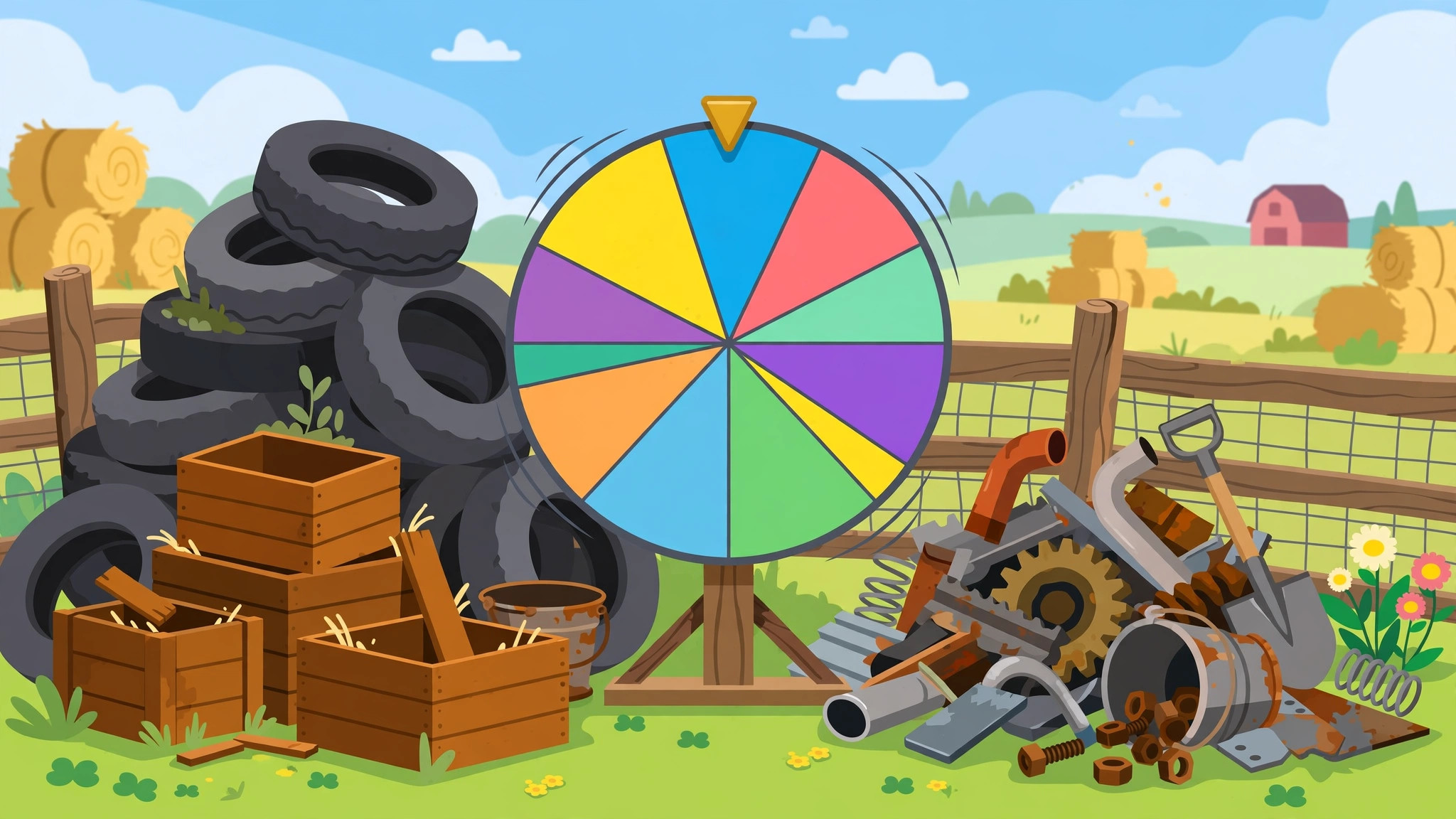
The lottery machine lets you spend cash on a chance at prizes. It is exactly what it sounds like: a gamble. Treat it the way a real business treats a raffle: only play it with money you can afford to lose, and only after your seeds, water, and research for the cycle are already paid for. Lottery winnings can accelerate a good farm, but no winning strategy is built on them.
The junkyard is the farm’s scrap corner, a place where spare items and odds and ends can be turned back into value. It reinforces the mode’s core lesson that nothing on a farm is truly waste if you manage it well. When energy is tight, clearing out what you do not need beats letting it sit idle.
Upgrades round out the extras. As your cash grows, you can improve parts of your operation so each cycle runs more efficiently. The right time to buy upgrades is when your basic loop is already profitable: upgrades multiply a working system, they do not rescue a broken one. Expand your planting and research first, then upgrade the machine you have built.
These systems are also why no two Gimkit Farmchain runs feel identical. One player might grind crops conservatively to the GimBerry, while another pours mid-game profits into the lottery and upgrades and ends up richer. Both are legitimate readings of the same economy, which gives teachers a natural discussion prompt afterwards: what did you invest in, and did it pay off?
Farmchain in the classroom
For teachers, the big advantage of Gimkit Farmchain is that it works without a live class around it. Because it is assignment-friendly, students can play it as homework with a cash goal or question goal, and reports afterwards show completion and which questions each student missed. That makes it one of the most practical review modes for flipped classrooms and sub days.
In live play, it suits classes that find PvP modes stressful. Every student runs their own farm, so nobody gets knocked out early and nobody waits on the sidelines. It is also a surprisingly good economics teaching tool: energy budgeting, reinvestment, research and development, and spoilage as waste are all real concepts hiding inside a farming game.
Farmchain awards XP like other 2D modes, so students earn progress toward GimBucks and cosmetics while they farm. The official Gimkit Help Center covers assignments and reports in more depth for teachers setting the mode up for the first time.
Frequently asked questions
Is Farmchain a single-player mode?
It can be. Farmchain works in live games, but it is also one of the solo-friendly modes teachers can assign as homework, where each student runs their own farm at their own pace.
Why did my crops disappear?
Most crops go bad if they are not harvested within a set time after ripening. Corn is the exception: it never spoils, which is why it is the safest starter crop.
What is research used for in Farmchain?
Research, earned at the lab by spending energy, unlocks new crops. Each tier opens a more valuable crop, up to the GimBerry.
Can Farmchain be assigned as homework?
Yes. It is one of the assignment-eligible 2D modes. Teachers with Gimkit Pro can set cash goals and question goals, and student progress saves automatically.
What should I plant first?
Corn, repeatedly. Its seed is free, it grows in seconds, and it cannot rot. Use the profits to fund your first research unlock: wheat.
