

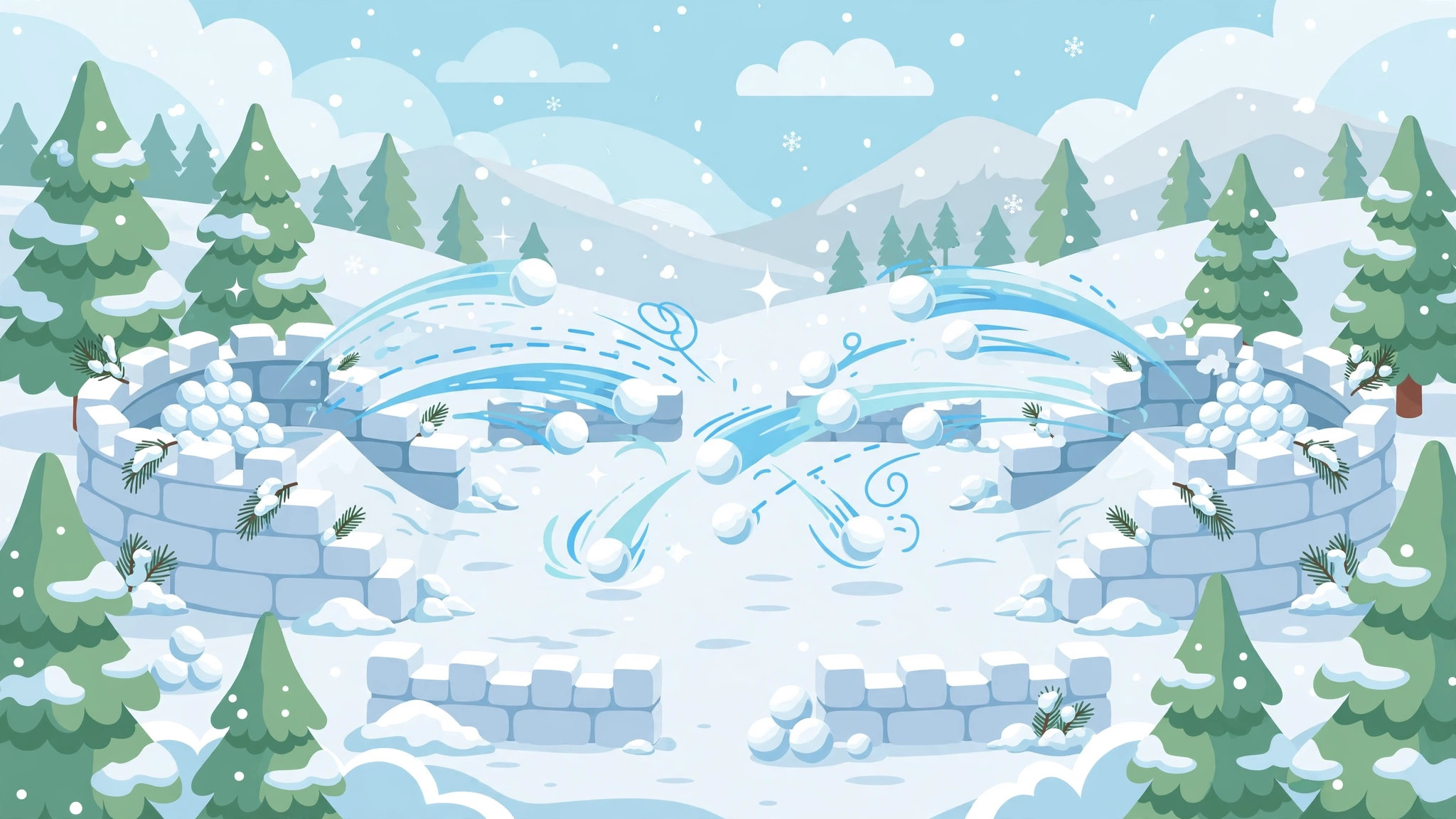
Some Gimkit modes are a gentle stroll; Snowbrawl is a snowball fight with a pop quiz inside it. Gimkit snowbrawl throws the whole class into a snowy arena where correct answers earn snowballs, snowballs knock out rivals, and the last Gim standing takes the glory. It is fast, loud, and joyfully chaotic.
This guide explains how Snowbrawl works, the aiming and movement habits that keep you alive, and the strategy that separates the brawlers from the snowmen. If Fishtopia is the platform’s spa day, Snowbrawl is its paintball weekend — plan your teaching energy accordingly.
how to play snowbrawl
Here is how to play snowbrawl from the first question. You spawn in a snowy arena as your Gim, moving with the keyboard or the on-screen joystick. Your health sits above your character, and your snowball supply is your lifeline.
The loop is beautifully simple:
- Answer questions to earn snowballs — knowledge is ammunition. Correct answers stock your supply; in this mode, your brain is quite literally your weapon.
- Aim and throw — lob snowballs at rivals; hits damage them, and enough hits knock a player out.
- Survive — dodge incoming fire, use the terrain and obstacles as cover, and stay alive while the arena’s population thins.
Hosts can shape the brawl through settings like snowball earning rates, and formats vary — free-for-all last-Gim-standing is the classroom classic. When you are knocked out, you spectate (and, in most classrooms, immediately begin offering your conqueror deeply unhelpful commentary). XP earned from your answers still counts toward your cosmetics, which softens the blow of an early exit.
A word for teachers about what Snowbrawl does to a room: it is the loudest mode in the catalogue, and that volume is information. A Snowbrawl lesson tells you instantly whether your class can handle competitive heat — and the answer varies by group, by day, and occasionally by seating plan. Run it first with a class you know well, keep the first brawl short, and debrief the sporting behaviour alongside the scores. Classes that learn to lose a brawl gracefully and demand a rematch with better questions answered have learned something no worksheet teaches.
It is also worth planning the landing. Snowbrawl energy does not evaporate at the whistle, so bookend it: a calm task immediately after, and ideally not a silent test. Teachers who schedule the brawl as the final activity of a lesson — or of the day — are working with the mode’s weather rather than against it.
snowbrawl strategy
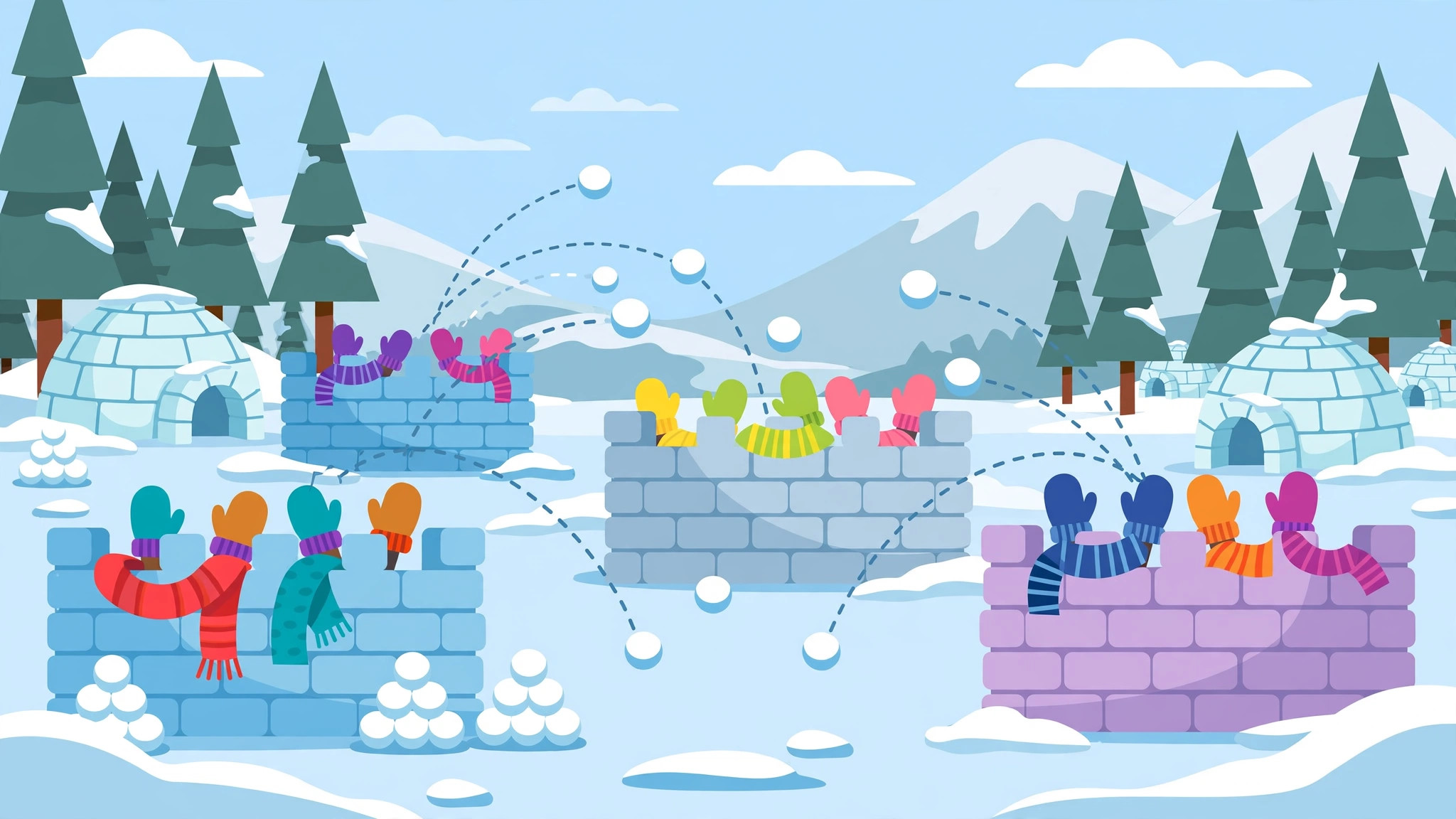
Winning snowbrawl strategy is a three-way balance between studying, shooting and surviving — and beginners almost always over-invest in shooting. The pros think differently:
- Questions are the real high ground — a player with twenty snowballs and bad aim beats a sharpshooter with three. Keep your answer accuracy high and your ammo deep before hunting anyone.
- Fight from cover, not from pride — strafe between obstacles, peek to throw, and never stand in the open admiring your last hit. The arena always has a third player watching.
- Pick your targets like a strategist — the player snowballing wildly at everyone has made themselves the arena’s problem; let others soften up the leaders while you stay stocked and healthy.
- Respect the endgame — as the arena empties, ammo conservation flips: late, every snowball should be a genuine attempt on the remaining rivals, because there is no “later” left to save for.
Movement is the skill nobody practises: constant, unpredictable motion makes you exponentially harder to hit, and it costs nothing. The students who dance between throws are the ones still standing when the snow settles.
snowbrawl tips
A pocketful of snowbrawl tips for your next class brawl:
- Learn your throw arc early — spend the chaotic opening seconds calibrating distance on safe targets before the serious fighting starts.
- Retreat to answer — when your supply runs dry, break line of sight, answer a fresh batch of questions somewhere quiet, then re-enter stocked. Feeding yourself into the fight ammo-less is charity.
- Watch the edges — most knockouts happen to players tunnel-visioned on a duel while someone wings them from the flank. A glance around between throws is free insurance.
- Stay chill when targeted — being chased is a compliment; drag your pursuer across the map through everyone else’s crossfire and let the arena solve your problem.
- Teachers: set the earning rate with intention — generous snowball rates make a joyful free-for-all; leaner rates make accuracy king. Our mode overview in Gimkit 2D modes shows where Snowbrawl sits in the wider family.
And one from the heart: if you get knocked out early, watch the best player. Snowbrawl spectating is a masterclass that costs you nothing — you will enter the next brawl noticeably better.
The brawl, decoded
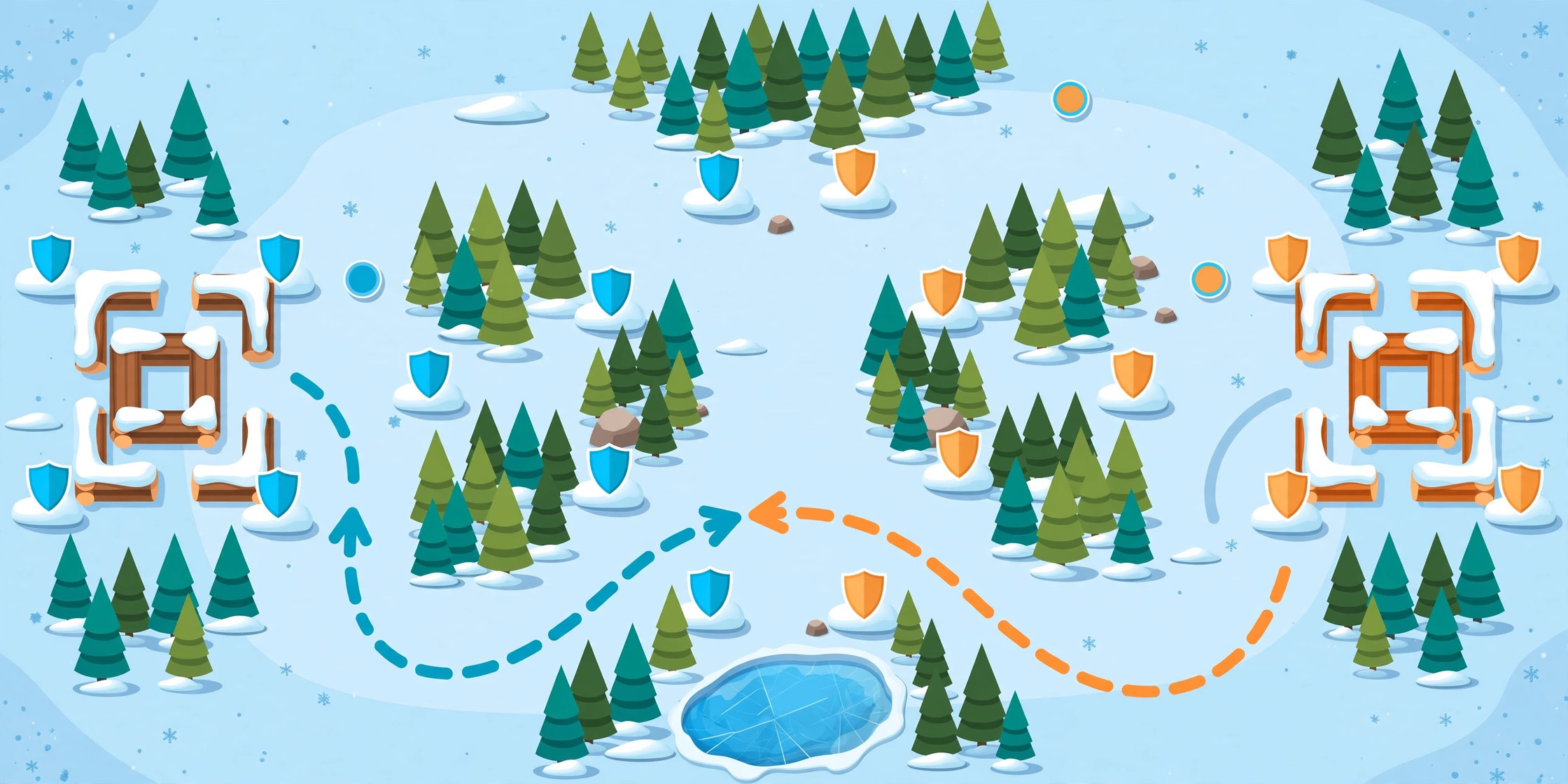
Snowbrawl rewards the student who treats questions as ammunition supply, movement as armour, and timing as everything. It is the purest expression of Gimkit’s founding joke — studying makes you powerful, literally, in a snowball fight. Embrace the chaos, keep your supply deep, and may your aim be ever true. Its wintry cousin Snowy Survival takes the same snow in a co-operative direction if your class prefers teamwork after the brawl.
For official mode rules and availability on your plan, the Gimkit Help Center is the definitive source. Now — gloves on, questions ready, and try to still be standing when the snow settles.
running a gimkit snowbrawl mini-league across the term
The mode’s chaos becomes a season with one organisational trick: a running league table. Four short gimkit snowbrawl matches across a term, points for placement, a wooden spoon for the most entertaining elimination — suddenly every brawl matters beyond its ten minutes, and students start treating question accuracy as league form. Keep matches short and identical in format so the table compares like with like, and let students maintain the standings themselves; arithmetic with a grudge is still arithmetic.
The league also solves the mode’s one social risk. A single brawl crowns a single winner and twenty-nine witnesses; a league spreads honour around — most improved, best comeback, highest accuracy across the season. By week four, gimkit snowbrawl is no longer the loud ten minutes at the end of Friday. It is the competition students check their revision against, which is exactly what a teacher designing a league quietly intended all along.
End the season the way sport does: a finals match, a ridiculous trophy, and one photograph for the classroom wall. Gimkit snowbrawl supplies the drama for free. The league just gives the drama a memory.
the rematch contract: sportsmanship as a house rule
Inscribe one law above the league: winners gloat for exactly five seconds, losers get the rematch they demand, and nobody mocks an early exit from the circle. It sounds jokey written down; in practice it becomes the constitution that lets a competitive mode run all year without a single feud surviving the weekend. Gimkit snowbrawl generates heroes daily — the contract decides whether the class produces rivals or enemies.
Teachers set the tone in the first match, usually by laughing loudest at their own demonstration defeat. A host who can lose publicly, cheerfully and briefly teaches the room’s emotional curriculum for the term in forty seconds. After that, enforcement is mostly peer pressure with better jokes — the class guards its favourite mode’s atmosphere because ruining the brawl means losing the brawl, a deterrent no behaviour policy can match.
Hold the line once, early, kindly, and the snow settles where it should: on the arena, never on the class.
snowbrawl in revision week: chaos with a bibliography
Do not overlook the brawl as a revision instrument precisely because it is the mode students beg for. Attach it to the term’s most-forgotten topic — the one nobody chooses voluntarily — and watch demand solve your curriculum problem: the questions are the ammunition, so wanting to win means wanting to practise. It is the friendliest form of academic leverage ever devised, a snowball fight where every throw is a flashcard in disguise.
Balance the chaos with one rule: the final two minutes are silent, played at full intensity but in pin-drop quiet. Classes adore the absurdity — the loudest mode on the platform ending in a library hush — and the silence concentrates aim wonderfully. Gimkit snowbrawl, it turns out, can teach even a boisterous room the discipline of a dramatic ending.
One last practical tip: keep the league’s wooden spoon genuinely desirable — engraved, photographed, fought over. A brawl where even finishing last carries a trophy students want is a brawl nobody phones in, and the season’s story writes itself from the bottom of the table upward as proudly as from the top.

frequently asked questions
How do you get more snowballs in Snowbrawl? By answering questions correctly — snowballs are earned ammunition, and the earning rate can be shaped by the host’s settings. When in doubt, stop fighting and answer: a stocked, healthy player beats a desperate sharpshooter with two snowballs and a dream almost every time.
What happens when you are knocked out? You are out of the brawl and become a spectator for the rest of the match. Your answered questions still earned their XP, and the professional move is to watch the strongest remaining player — spectating a Snowbrawl endgame is a free strategy lesson disguised as a rest.
Is Snowbrawl a team mode or free-for-all? The classroom classic is free-for-all, last Gim standing, though hosts should check the current formats available in the mode. Either way, the core economy never changes: answers are ammunition, movement is armour, and supply discipline wins.
How can I get better at aiming? Practise the throw in the chaotic opening, when the stakes are low, and learn your distance judgement on real targets. Then make the pros’ adjustment: take one beat to line up each throw instead of spamming — a snowball that hits is worth three that decorate the scenery.
